
- India
- Aug 06
ICAR develops indigenous vaccine for African swine fever
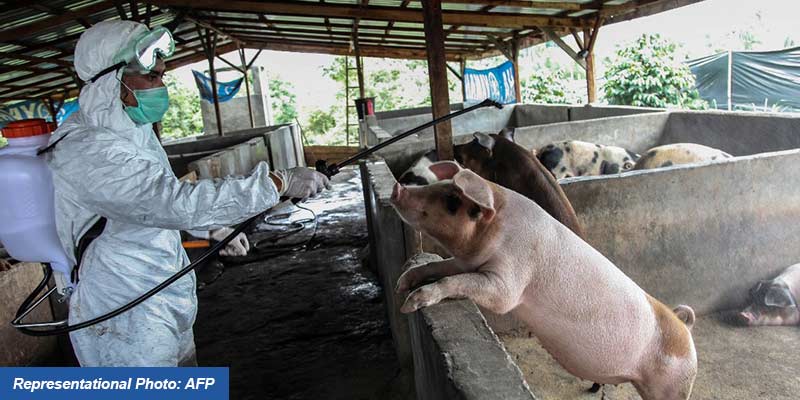
• Scientists at ICAR-National Institute of High Security Animal Diseases (ICAR-NIHSAD), Bhopal, have developed India’s first indigenous MA-104 cell line-based live attenuated African swine fever (ASF) vaccine for pigs.
• The indigenous vaccine is expected to substantially reduce pig mortality, minimise economic losses and improve the livelihoods of pig farmers across the country.
• By providing an effective preventive tool against one of the world’s most destructive livestock diseases, it will significantly strengthen India’s animal health security and support the sustainable growth of the pig farming sector.
• The vaccine has successfully undergone comprehensive laboratory evaluation and virulence reversion studies.
• The vaccine is recommended for healthy pigs above eight weeks of age and is administered as a 1 mL intramuscular injection, followed by a booster dose 14 days after the primary vaccination.
African swine fever
• African swine fever (ASF) is a contagious viral disease that affects pigs of all ages, inducing a haemorrhagic fever. It can appear in a variety of forms ranging from peracute, acute, subacute, to chronic and unapparent.
• It is most often recognised in the acute form with an associated lethality of up to 100 per cent.
• ASF is considered endemic in most countries in sub-Saharan Africa, but is also very dynamic, with new areas often being affected. The upsurge is largely driven by the pig sector’s tremendous growth in Africa.
• It is caused by a large DNA virus of the Asfarviridae family, which also infects ticks of the genus Ornithodoros.
• Although signs of ASF and classical swine fever (CSF) may be similar, the ASF virus is unrelated to the CSF virus.
• Since its first detection in India in 2020, ASF has spread to several states and Union Territories, resulting in massive pig mortality, disruption of pig production, restrictions on animal movement and trade, and significant livelihood losses for smallholder pig farmers, particularly in the northeastern region.
• Disease control has largely relied on rapid diagnosis, culling of infected animals and strict biosecurity measures.
Routes of transmission can include:
1) Direct contact with infected domestic or wild pigs.
2) Indirect contact, through ingestion of contaminated material (eg: food waste, feed or garbage).
3) Contaminated fomites or biological vectors.
• ASF is a severe threat to pig production systems. It not only threatens food security and challenges the livelihoods of pig producers and other actors in the supply chain, but may also have major consequences on international trade as a result of trade restrictions.