
- India
- Aug 07
President Murmu presents Sant Kabir Handloom Awards
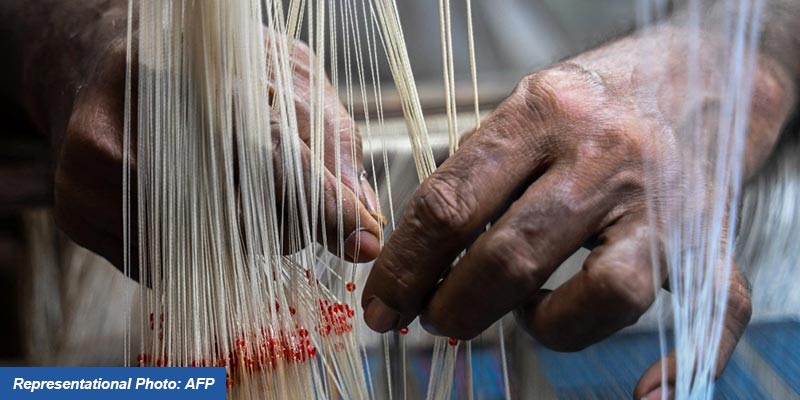
• The Ministry of Textiles celebrated National Handloom Day on August 7 to honour the handloom weavers in the country and also highlight India’s handloom industry.
• The first National Handloom Day was celebrated in 2015.
• August 7 was chosen as the National Handloom Day to commemorate the Swadeshi Movement, which was launched in 1905 in Calcutta Town Hall to protest against the partition of Bengal by the British Government.
• The movement was aimed at reviving domestic products and production processes. It encouraged indigenous industries and the spirit of Swadeshi, which included handloom weavers as well.
India’s handloom sector
• India’s handloom tradition has deep historical roots, with its earliest traces dating back to the Indus Valley Civilisation.
• The handloom sector is one of the largest unorganised economic activities of India.
• Handloom weaving remains rooted in manual craftsmanship and household enterprises.
• The sector has advantage of being less capital intensive, minimal use of power, being eco-friendly, flexibility of small production, openness to innovations and adaptability to market requirements.
• Its identity is closely connected to the weaver, the region and the knowledge involved in creating each textile.
• The Fourth All India Handloom Census 2019-20, the comprehensive official census of the sector, recorded around 31.45 lakh handloom households. It also counted 35.22 lakh handloom weavers and allied workers across the country. Of these, 8.48 lakh were allied workers engaged in pre-loom and post-loom activities such as winding, warping, dyeing and calendaring.
• Women form the majority of India’s handloom workforce. They account for 25.46 lakh, or more than 72 per cent of the total workers engaged in weaving and allied activities.
12th National Handloom Day celebrations
• President Droupadi Murmu graced the 12th National Handloom Day celebrations and presented the Sant Kabir Handloom Awards and the National Handloom Awards 2025 at the Rashtrapati Bhavan Cultural Centre on August 7.
• The President presented 22 awards, comprising three Sant Kabir Handloom Awards and 19 National Handloom Awards, recognising outstanding achievements in weaving, innovation, design development, marketing initiatives, start-up ventures and producer companies associated with the handloom sector.
• Instituted under the Handloom Marketing Assistance (HMA) component of the National Handloom Development Programme (NHDP), these awards represent the highest national recognition for excellence in India's handloom ecosystem.
• The Sant Kabir Handloom Award, the country’s highest honour for handloom weavers, recognises extraordinary craftsmanship, lifelong dedication and sustained contribution towards preserving and promoting India’s weaving traditions. The award carries Rs 3.5 lakh, a mounted gold coin, ‘tamrapatra’, shawl and certificate.
• The National Handloom Award honours handloom weavers and other stakeholders who have demonstrated outstanding creativity, quality, innovation and excellence while preserving traditional skills and embracing modern techniques. It includes Rs 2 lakh, a tamrapatra, shawl and certificate.
• The awardees are selected through a rigorous multi-level evaluation process involving expert committees to ensure transparency, objectivity and recognition of excellence across all segments of the handloom sector.