
- India
- Aug 10
- Sreesha V.M
UPI free for citizens, merchants may face nominal fee, clarifies govt
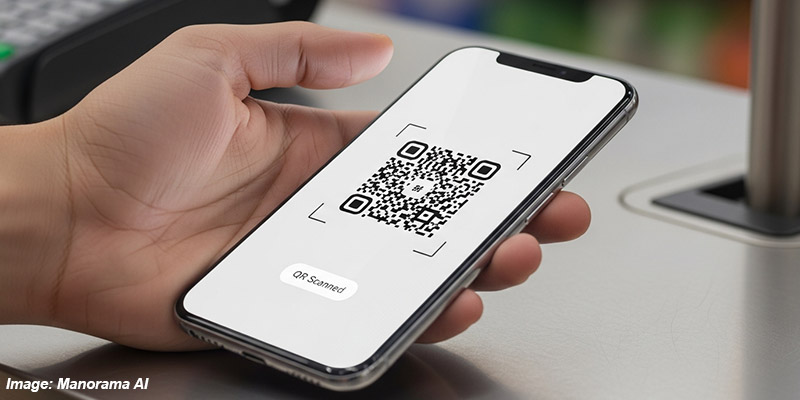
• The Ministry of Finance clarified that consumers will not have to pay transaction charges for using UPI.
• Any future Merchant Discount Rate (MDR), if introduced, would apply only to a limited set of merchant transactions above a specified threshold and at a nominal rate, which would be lower than typical debit and credit card MDRs.
• All person-to-person UPI transactions will continue to be free, the ministry said.
• The clarification comes after an amendment to the Payment and Settlement Systems Act, 2007, sparked a debate over whether the government was preparing to impose charges on UPI transactions.
• The proposed change to Section 10A of the law is an enabling provision and does not itself impose an MDR, the ministry said.
What is Merchant Discount Rate?
• The Merchant Discount Rate (MDR) is a fee charged by payment processors, banks, or card networks to business owners for processing digital payments by a customer.
• Since January 2020, to promote digital transactions, MDR has been made zero for BHIM-UPI transactions through amendments in Section 10A in the Payments and Settlement Systems Act, 2007 and section 269SU of the Income-tax Act, 1961.
What is Unified Payments Interface (UPI)?
• Before 2016, India used a number of different systems to transfer money between banks. The traditional forms included National Electronic Funds Transfer (NEFT) and Real-Time Gross Settlement (RTGS). With the plethora of systems, rules and growing paper burden, there was a need for a unified system that could automate and standardise India’s payment platforms.
• In 2016, the National Payments Corporation of India (NPCI) set out with a mandate to change the face of India’s payment systems. It developed the Unified Payments Interface (UPI) as an architecture framework with a set of standard Application Programming Interface (API) specifications to facilitate online payments.
• UPI is an instant payments platform built over the Immediate Payment Service (IMPS) infrastructure, India’s pre-existing real-time interbank electronic fund transfer service.
• The aim was to simplify and provide a single interface across all NPCI systems, thereby creating interoperability and a superior customer experience.
• The pilot programme, with 21 member banks, was launched on April 11, 2016.
• The UPI is a system that powers multiple bank accounts into a single mobile application (of any participating bank), merging several banking features, seamless fund routing and merchant payments into one hood.
• It also caters to the “peer to peer” collect request which can be scheduled and paid as per requirement and convenience.
• It facilitates immediate money transfer through mobile devices round the clock.
• A user seeking to make a payment can open an app and use that to make a transfer to a user of a different payments app.
• The NPCI, which runs UPI, sits in the middle and ensures that the payer’s and payee’s banks debit and credit the amount accordingly.
Growth of UPI
• UPI has transformed digital payments in India and emerged as one of the fastest-growing payment platforms globally.
• The volume of UPI transactions has increased significantly from 3,873 crore transactions in CY 2021 to 22,828 crore transactions in CY 2025. The total value of transactions grew from Rs 72 lakh crore in CY 2021 to Rs 300 lakh crore in CY 2025. The CAGR of the UPI transaction during this period is 55.8 per cent in terms of volume and 43 per cent in terms of value.
• In July 2026, as many as 2,366 crore UPI transactions were processed worth Rs 29.9 lakh crore.
• The platform is now live in 11 foreign countries, with several others expressing interest in adopting or integrating UPI.
Why the govt brings in amendment to Payment and Settlement Systems Act?
• The proposed framework is aimed at creating a more sustainable revenue model for UPI as transaction volumes surge and the system requires continued investment in cybersecurity, fraud prevention and payment infrastructure.
• It is necessary to increase competition by encouraging more companies to expand their operations, which requires a self-sustaining revenue model.
• Reliance on subsidies alone is not viable for the next wave of growth.
• The ministry said that a balanced framework is required to ensure that UPI remains robust, inclusive, and future-ready.
• The amendment authorises the government to permit banks and other service providers to levy charges on payments through UPI and other notified electronic payment modes.
• If Parliament passes the Taxation and Other Laws (Amendment) Bill, 2026, the UPI and Services Steering Committee headed by the National Payments Corporation of India (NPCI) will decide on the MDR, if any.
(The author is a trainer for Civil Services aspirants.)