
- India
- Aug 14
- Sreesha V.M
Lok Sabha sends FCRA Bill to JPC
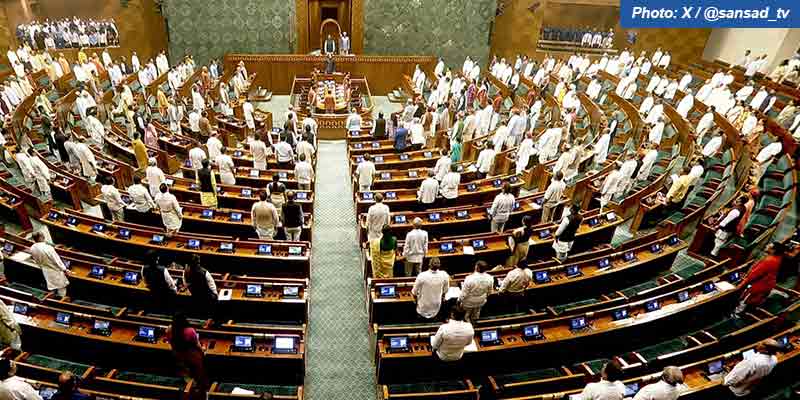
• The Lok Sabha sent the Foreign Contribution (Regulation) Amendment Bill, 2026, to a 31-member Joint Parliamentary Committee (JPC) amid protests by opposition parties.
• The motion to refer the Bill to the joint committee was moved by Minister of State for Home Nityanand Rai.
• The committee has been asked to submit its report to the Lok Sabha by the last day of the first week of the Winter Session of Parliament in 2026.
• The Bill was introduced in the Lok Sabha on March 25 and proposes tighter government oversight over non-governmental organisations (NGOs) and foreign funding in the country.
• The 31-member joint committee will comprise 21 members from the Lok Sabha and 10 from the Rajya Sabha.
• The Lok Sabha members will be nominated by Speaker Om Birla, while those from the Rajya Sabha will be nominated by Chairman C.P. Radhakrishnan.
Why the govt brings in amendments?
• The Foreign Contribution (Regulation) Act, 2010 regulates the acceptance and utilisation of foreign contribution and foreign hospitality to ensure that such inflows do not adversely affect national interest, public order or national security.
• The Act came into force on May 1, 2011 and has been amended in 2016, 2018 and 2020.
• At present, approximately 16,000 associations are registered under the Act and receive around Rs 22,000 crore annually.
• Over the period, certain operational and legal gaps have been identified, particularly in relation to the management of foreign contribution and assets created therefrom in cases where registration is cancelled, surrendered or otherwise ceases.
• Section 15 of the Act provides for vesting of assets, but the absence of a comprehensive framework for supervision, management and disposal of such assets has led to administrative uncertainty and scope for misuse.
• Further, multiplicity of investigations, inconsistency in penalties, absence of timelines for utilisation, lack of express provision for cessation of registration, and ambiguity regarding treatment of assets during suspension have resulted in implementation challenges.
The amendment the Act aims introduce a comprehensive statutory framework for vesting, supervision, management and disposal of foreign contribution and assets through a designated authority, including provisional and permanent vesting:
i) To provide timelines for receipt and utilisation under prior permission.
ii) To provide for cessation of certificate.
iii) To regulate handling of assets during suspension.
iv) To rationalise penalties.
v) To require prior approval of the central government for initiation of investigation.
(The author is a trainer for Civil Services aspirants.)