
- India
- Aug 17
Bar Council of India (BCI) chairman apologises to law students
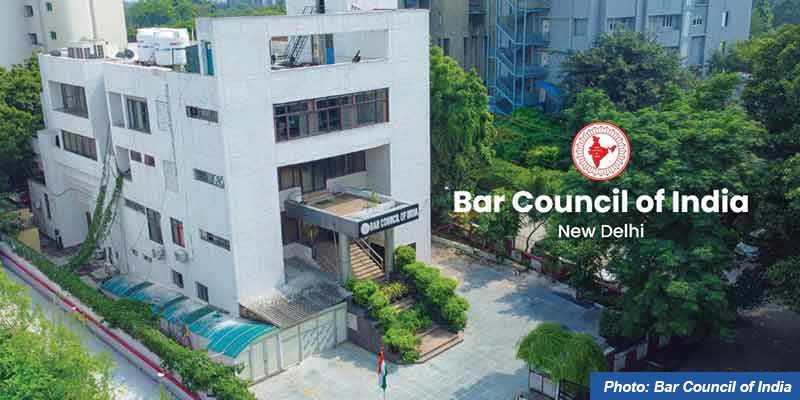
• Bar Council of India (BCI) chairperson Manan Kumar Mishra apologised to law students after facing criticism over a now-withdrawn order to state bar councils not to enrol any of the current batch of graduating NALSAR students as advocates.
What was the controversy about?
• The controversy began after a section of students of NALSAR University of Law wrote to the vice chancellor, registrar and professors of the institution, opposing any proposal to invite Chief Justice of India Surya Kant as chief guest to the varsity’s convocation.
• In a circular, BCI chairperson Mishra said it was examining allegations regarding a campaign against the CJI’s participation in the university's convocation and had sought a report identifying those responsible.
• The decision was reversed within hours following criticism from members of the legal fraternity.
• Chief Justice of India Surya Kant sharply pulled up the BCI for the order and said it was “dialogue between students and me”.
• The NALSAR Student Bar Council subsequently demanded a public apology from Mishra.
Bar Council of India
• The Bar Council of India (BCI) is a statutory body created by Parliament to regulate and represent the Indian bar.
• The BCI was constituted under the Advocates Act, 1961.
• It has been empowered among other things, to lay down standards of professional conduct and etiquette for lawyers and to maintain and improve the standards of legal education in the country.
• While the state bar councils are the authorities for enrolment of advocates, the state bar councils and the Bar Council of India together enforce discipline among lawyers.
• The BCI acts as appellate authority in respect of disciplinary matters.
• The Council meets at regular intervals to transact business in accordance with the agenda circulated to the members.
• It performs certain representative functions by protecting the rights, privileges and interests of advocates and through the creation of funds for providing financial assistance to organise welfare schemes for them.
Functions of BCI:
i) To lay down standards of professional conduct and etiquette for advocates.
ii) To lay down procedure to be followed by its disciplinary committee and the disciplinary committees of each state bar council.
iii) To safeguard the rights, privileges and interests of advocates.
iv) To promote and support law reform.
v) To deal with and dispose of any matter which may be referred to it by a state bar council.
vi) To promote legal education and to lay down standards of legal education.
vii) To recognise universities whose degree in law shall be a qualification for enrolment as an advocate.
viii) To organise legal aid to the poor.
ix) To recognise on a reciprocal basis, the foreign qualifications in law obtained outside India for the purpose of admission as an advocate in India.
Members of BCI
• The Bar Council of India consists of members elected from each State Bar Council, the Attorney General of India, and the Solicitor General of India who is an ex-officio member.
• The members from the State Bar Councils are elected for a period of five years.
• The Council elects its own chairman and vice-chairman for a period of two years from among its members.