
- India
- Aug 18
- Sreesha V.M
India launches grasslands, open natural ecosystems guide
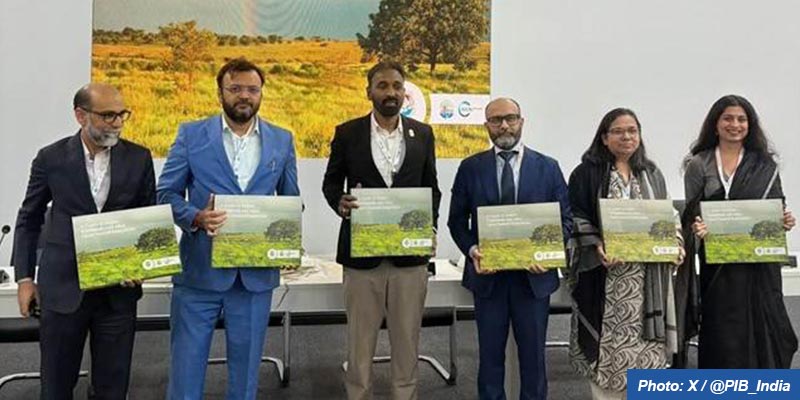
• India launched its first-ever guide to grasslands and other open natural ecosystems (ONEs) at the 17th Session of the Conference of the Parties (COP17) to the United Nations Convention to Combat Desertification (UNCCD) in Ulaanbaatar, Mongolia.
• The document highlights the rich diversity, ecological significance and socio-economic importance of India’s grasslands, savannas, and deserts.
• Union Environment Minister Bhupender Yadav termed the guide an important step towards recognising India’s open natural ecosystems and stressed the need for their science-based conservation alongside forests.
• The guide brings together information on major open natural ecosystems across India, covering their geographical settings, ecological characteristics, biodiversity, and the communities and tribes associated with them.
• It also contains thematic sections on pastoralism, fire ecology and carbon sequestration.
• India’s open natural ecosystems range from Himalayan and Terai grasslands to the Thar and Banni landscapes, Deccan savannas, rocky plateaus, ravines, scrublands, coastal ecosystems, and desert landscapes.
• These ecosystems support diverse biodiversity, contribute to soil and water processes, store substantial carbon in their soils, and sustain pastoral, livestock-based and agricultural livelihoods.
• The guide is expected to serve as a valuable resource for policymakers, researchers, conservation practitioners, development agencies and communities working towards the conservation, restoration and sustainable management of India’s grasslands and other open natural ecosystems.
(The author is a trainer for Civil Services aspirants.)