
- India
- Aug 19
176 billion banknotes in circulation in India
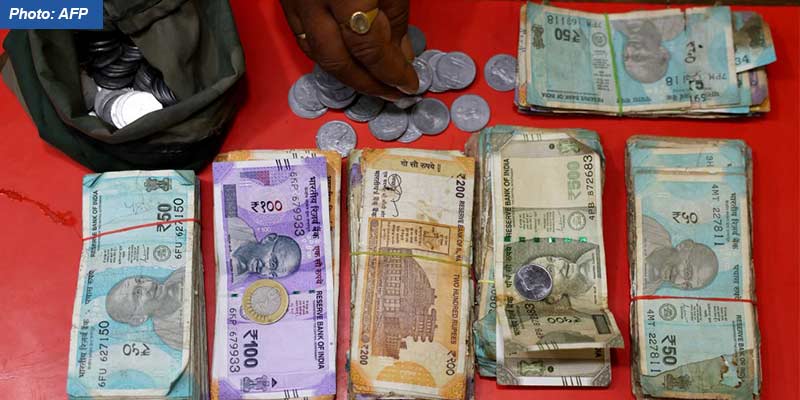
• The Reserve Bank of India (RBI) is grappling with the ‘paradox’ of growing currency in circulation despite the jump in digital payments.
• At present, 176 billion banknotes are in circulation in India, Reserve Bank Deputy Governor S.C. Murmu said.
• By comparison, roughly 56 billion US dollar bills and 30 billion euro banknotes were in circulation at the end of 2025.
• He was speaking at a global seminar on cash ecosystems organised by Bank Indonesia in Jakarta.
• Currency in circulation continues to grow at double-digit rates even as cash’s share of individual transactions declines, thanks to growing digital payment adoption.
• That combination makes future demand harder to predict, which complicates RBI’s planning for production and distribution capacity.
How RBI manages currency ecosystem?
• When the RBI was established in 1935, regulating the issue of banknotes was one of the principal reasons for its creation.
• It is enshrined in the preamble of the RBI Act, and it is what drives to tightly manage the full currency ecosystem: planning, production, distribution, and disposal.
• Over the past few years, the RBI produced between 28 and 30 billion banknotes annually across six denominations, and disposed of roughly 21 billion pieces a year.
Five-year forward projection
• Every year, the RBI runs a five-year forward projection of currency demand, built from two components.
i) Transactional demand is estimated from expected changes in currency in circulation, driven by GDP growth, interest rates, food inflation, and the pace of digital payment adoption, etc.
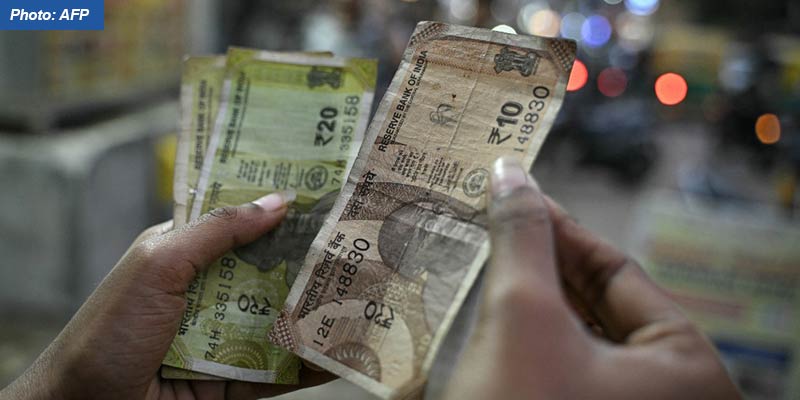
ii) Replacement demand reflects the need to retire older notes and keep the notes in people’s hands fit for use. It is governed by the Clean Note Policy, in place since 1999, which commits RBI to making good-quality banknotes available to every citizen, in the denomination and place of their choice. The RBI has laid down clear quality parameters for banks to assess notes in circulation, and continuously replace those assessed unfit.
RBI’s Currency Chest mechanism
• The banknote paper mills, four currency printing presses, and ink production units are all owned and controlled by the RBI and the government of India.
• Getting currency from RBI presses to every corner of India, and getting soiled notes back is a serious logistical operation.
• RBI manages it through a decentralised structure built around two channels.
• One is 19 Regional Offices of RBI spread across the country.
• Second is a much larger network of Currency Chests operated by partner banks with distributed reach into every part of the country.
• A Currency Chest, is operated by a designated commercial bank, cooperative bank, or government treasury on RBI’s behalf.
• It may be a standalone building or housed within a bank’s premises, but the cash inside it remains RBI’s property at all times.
• RBI licenses Currency Chests only after evaluating a bank’s financial strength, and sets technical requirements they must meet, including minimum processing capacity and enough certified note-sorting machines to process soiled notes and detect counterfeits.
• Every withdrawal and deposit is reported in real time on RBI’s Central Cash Accounting System, and Currency Chests go through periodic inspection and audit.
• When a bank deposits excess cash into a Currency Chest, it is treated as a remittance to RBI, reducing that bank’s cash holdings.
• When it withdraws, that is treated as a withdrawal from RBI, increasing the bank’s cash in hand.
From soiled notes to fresh banknotes
• This is also where the Clean Note Policy becomes operational.
• Currency Chests put fresh banknotes and coins into circulation, pool circulated notes coming back from bank branches, sort them, and forward soiled or mutilated notes to RBI for eventual disposal. Roughly 21 billion pieces are disposed of each year.
• Currency Chests also run periodic note-exchange and coin-distribution campaigns, and, under Linkage Scheme, serve as the parent facility for a defined set of bank branches, meeting their daily cash needs and absorbing their end-of-day excess cash.
• This network proved its worth during India’s two major currency transitions in recent memory: the 2016 demonetisation exercise and the 2023 withdrawal of the Rs 2000 note.
• In both cases, Currency Chests served as the primary collection and redistribution points, ensuring both transitions were coordinated nationwide.
Last-Mile Distribution of currency
From the Currency Chest network, currency reaches the public through four channels:
i) Directly through RBI’s 19 Regional Offices, a small share of the total.
ii) Through bank branches.
iii) Through more than 250,000 ATMs and cash dispensers operated by banks and third-party operators.
iv) Through millions of business correspondents, who carry much of this load in rural areas and smaller towns.
• Cash remains a significant mode of payment in the Indian economy. Preserving trust in it, through clean notes, secure logistics, and a currency ecosystem people can rely on, is central to preserving monetary sovereignty itself.