
- India
- Aug 22
- Sreesha V.M
SC reduces 3-year practice period to 1 year for judicial service
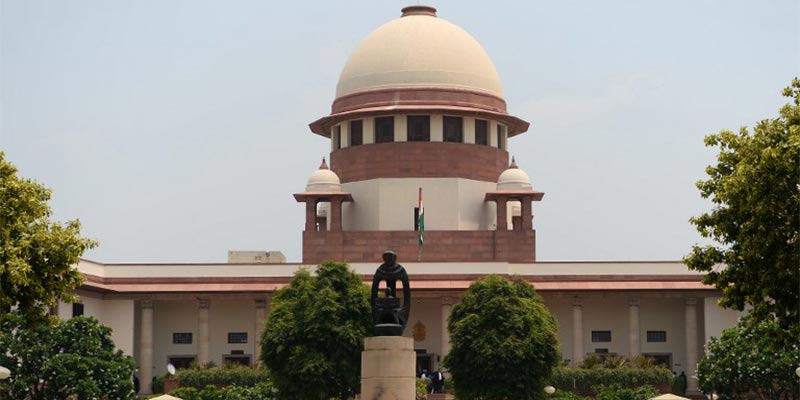
• The Supreme Court reduced the mandatory requirement of three-year legal practice to one year to take entry level judicial service examination.
Review petition against SC verdict
• On May 20, 2025, a bench headed by then Chief Justice of India B.R. Gavai had barred fresh law graduates from appearing in the entry-level judicial services examination, fixing a minimum three-year law practice criterion.
• A bench of Chief Justice Surya Kant and Justices A.G. Masih and K. Vinod Chandran, in a majority verdict of 2:1, modified the May 2025 verdict and relaxed the mandatory three-year legal practice criteria for law graduates aspiring to become judicial officers.
• Justice Vinod Chandran, who was part of the May 2025 verdict, dissented with the view of the CJI and Justice Masih and dismissed the review petitions.
Key points of the SC verdict:
• Trainee judicial officers shall undergo a compulsory period of one year of intensive training at the concerned State Judicial Academy.
• During the period of such training, the trainee judicial officers shall be paid a fixed emolument equivalent to one-half of the remuneration payable to a judicial magistrate first class in the concerned state.
• Upon successful completion of the year-long institutional training, the trainee judicial officers should undergo a further year of structured ‘law clerkship’.
• The first six months shall be spent as a law clerk under the supervision of the principal district/district and sessions judges or members of the higher judicial services, and the remaining six months under the supervision of a sitting judge of the concerned High Court.
• This period shall be treated as equivalent to one year of practice at the Bar for the purpose of satisfying the eligibility requirement.
• The arrangement has the further advantage of enabling senior judicial officers to observe the performance of the trainee over a sustained period before the trainee is entrusted with independent judicial work.
(The author is a trainer for Civil Services aspirants.)