
- India
- Aug 25
UPI completes 10 years of digital payments
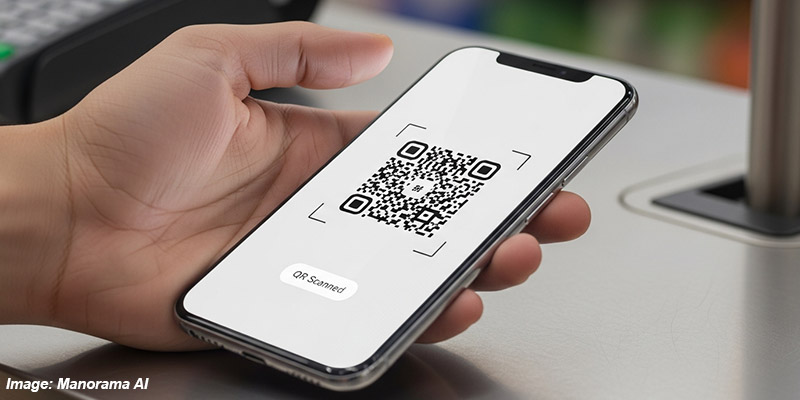
• The Unified Payments Interface (UPI), launched on August 25, 2016, completed 10 years of transforming digital payments in India.
• UPI has emerged as the backbone of India’s digital payments ecosystem and a critical driver of financial inclusion.
• UPI is one of the most successful pillars of India’s Digital Public Infrastructure (DPI), providing an interoperable, real-time payments platform that enables seamless peer-to-peer and peer-to-merchant transactions through a single application.
What is Unified Payments Interface (UPI)?
• Before 2016, India used a number of different systems to transfer money between banks. The traditional forms included National Electronic Funds Transfer (NEFT) and Real-Time Gross Settlement (RTGS). With the plethora of systems, rules and growing paper burden, there was a need for a unified system that could automate and standardise India’s payment platforms.
• In 2016, the National Payments Corporation of India (NPCI) set out with a mandate to change the face of India’s payment systems. It developed the Unified Payments Interface (UPI) as an architecture framework with a set of standard Application Programming Interface (API) specifications to facilitate online payments.
• UPI is an instant payments platform built over the Immediate Payment Service (IMPS) infrastructure, India’s pre-existing real-time interbank electronic fund transfer service.
• The aim was to simplify and provide a single interface across all NPCI systems, thereby creating interoperability and a superior customer experience.
• The pilot programme, with 21 member banks, was launched on April 11, 2016.
• The UPI is a system that powers multiple bank accounts into a single mobile application (of any participating bank), merging several banking features, seamless fund routing and merchant payments into one hood.
• It also caters to the “peer to peer” collect request which can be scheduled and paid as per requirement and convenience.
• It facilitates immediate money transfer through mobile devices round the clock.
• A user seeking to make a payment can open an app and use that to make a transfer to a user of a different payments app.
• The NPCI, which runs UPI, sits in the middle and ensures that the payer’s and payee’s banks debit and credit the amount accordingly.
Growth of UPI
• UPI has witnessed a steady and broad‑based expansion in institutional participation since its launch.
• The number of banks on UPI increased from 44 banks in FY 2016-17, to 703 banks by FY 2025-26.
• This onboarding covers public sector banks, private banks, small finance banks, payment banks, and cooperative banks, enabling UPI's deep geographic reach.
• The year 2026 marked a significant milestone in the growth trajectory of UPI.
• Monthly transaction volumes crossed 2,300 crore transactions for the first time in May 2026, reaching 2,320 crore transactions, signalling a new scale of adoption.
• This momentum continued through the year, with July 2026 recording 2,366 crore transactions, the highest monthly transaction volume in UPI’s decade‑long journey.
• As of 2025, UPI accounts for nearly 49 per cent percent of the world’s real-time payment transaction volume, a milestone recognised by the International Monetary Fund (IMF).
• With over 66 crores transactions processed daily, UPI has surpassed global payment network, reinforcing India’s position as the world leader in instant, secure, and inclusive digital payments.
• The platform is now live in 11 foreign countries, with several others expressing interest in adopting or integrating UPI.