
- India
- Aug 28
Amit Shah attends 9th National Security Strategy Conference
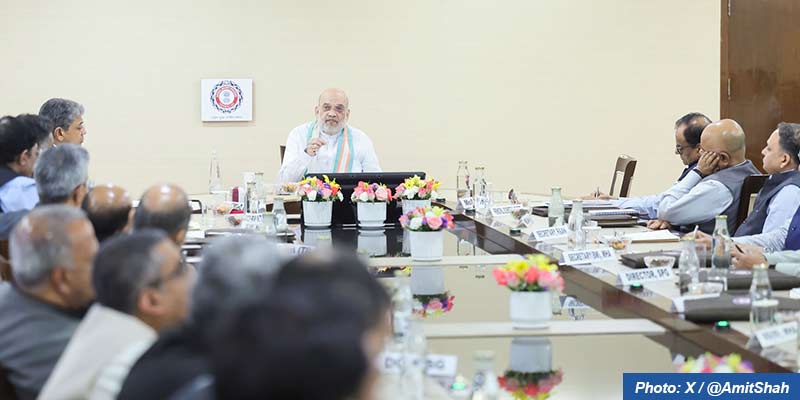
• Union Home Minister Amit Shah attended the 9th two-day National Security Strategies Conference (NSSC) in New Delhi on August 24 and 25.
• NSSC is being held every year in hybrid format since 2021, with the objective of finding solutions to major national security challenges using the extensive experience of cutting-edge level officers working at the grass roots level in collaboration with domain experts.
• Senior police officers from across the country, Directors General of Police (DGPs) of all states, and representatives of central security agencies participated in the two-day conference, both in person and virtually.
Key points highlighted by Shah:
• The forum of NSSC should look at the trends of the coming 15-20 years and decide which problem may arise and what should be the strategy to prevent it. The responsibility is to anticipate the challenges that may emerge in the future and ensure that they do not arise in the first place.
• Taking the country’s counter-terrorism policy titled ‘PRAHAAR’ from a document to a daily practice for the complete eradication of terrorism, and using it to dismantle terrorist networks.
• The Narcotics Control Vision Document 2026-2029 should be implemented on the ground by the police forces of all states to protect the next generation, and that they should work on the three Ds — Detect, Disrupt and Destroy — for a drug-free India.
• Over the past eight months, the Ministry of Home Affairs visited all the land-border states and shared a document outlining a four-pronged border security approach. The goal is to make the country infiltration-free in the shortest possible time, and for this purpose, every state should designate a nodal officer not below the rank of Senior IG or Additional DG.
• India’s security landscape cannot be shaped by looking only at developments within the country. Security policy must take into account global instability, energy-resource insecurity, supply chain disruptions, growing radicalism, and cyber and misinformation warfare.
• A holistic approach to security, vigilance, and coordination with all departments and state governments is essential, and no success can be achieved if this comprehensive approach is abandoned.