
- India
- Sep 07
- Sreesha V.M
Amit Shah unveils roadmap to make India drug-free by 2029
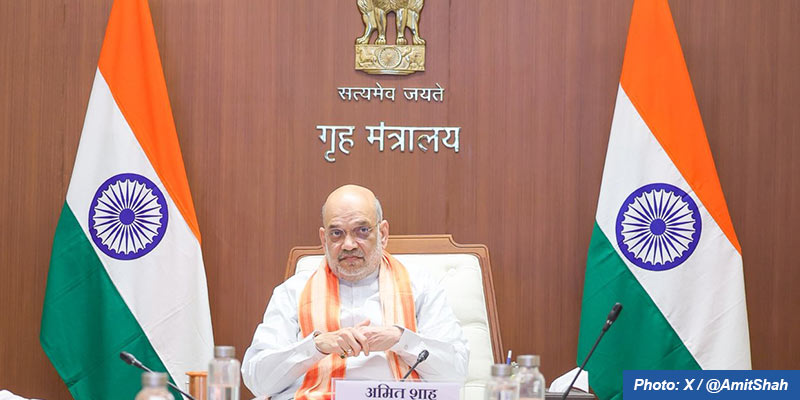
• Union Home Minister Amit Shah said the central government has prepared a roadmap to make India drug-free by 2029.
• The Centre has adopted a coordinated, nationwide strategy to dismantle the entire narcotics network, from drug trafficking and financing to rehabilitation, as part of its goal of ‘Drug-Free India’ by 2029.
• The earnings from narcotics are also used for terrorism. The narco-terror module is active in many countries of the world, and the entire world is today grappling with this problem.
Key initiatives in the field of drug law enforcement:
• In 2019, a four-tier Narco-Coordination Centre (NCORD) mechanism was created.
• A model for the formation of dedicated Anti-Narcotics Task Forces was sent to all states and Union Territories, and a Joint Coordination Committee was constituted.
• With the coordination of central agencies, state governments and their departments, a scientific method was adopted to address large networks, inter-state and international links, and operational gaps.
• The government launched MANAS helpline number — 1933 — designed as a unified platform for citizens to report drug-related issues via multiple communication.
• The cadre of the Narcotics Control Bureau (NCB) was restructured.
• A national database of narcotics offenders was created through the National Integrated Database on Arrested Narco-Offenders (NIDAAN) portal. It provides data of narcotics offenders involved in narcotics offences under Narcotic Drugs & Psychotropic Substances (NDPS) Act, 1985.
• Using CCTNS (Crime & Criminal Tracking Network System) data and integrated data fusion, a data-based map of hotspots, modus operandi and seizures across the country was prepared.
Highlights of the roadmap:
• A three-year roadmap from July 2026 to July 2029 has been prepared.
• A decision has been taken to achieve all targets in a time-bound manner.
• The period from 2026 to 2029 has been declared as mission mode.
• Timelines have been fixed, different ministries have been made accountable, measurable outcomes have been decided, and quarterly reviews along with outcome-based accountability will be ensured.
This roadmap is based on four pillars:
i) Intelligence and operation-based enforcement.
ii) Precursor and synthetic drugs control.
iii) Demand and harm reduction.
iv) Capacity building and coordination.
• All these pillars together will prepare dossiers of drug kingpins, coordinate on backward-forward linkages, and tighten the noose through financial investigation of every case involving commercial quantities.
• The BSF, CISF, Indian Coast Guard, Customs and DRI will carry out risk-based profiling and install scanners at land borders, ports, airports and cargo for sharper surveillance.
• The CBI, Ministry of External Affairs and Interpol will bring back the fugitives.
• The Enforcement Directorate, Financial Intelligence Unit and the banking system will catch the money trail.
• The Ministry of Education, Youth Affairs and Sports, along with educational institutions, are taking a resolve to make educational institutions drug-free.
• The social justice, health department and jail administration together are going to increase the number of de-addiction centres threefold to 1,751.
(The author is a trainer for Civil Services aspirants.)