
- India
- Sep 08
DAC clears proposals worth Rs 1.10 lakh crore
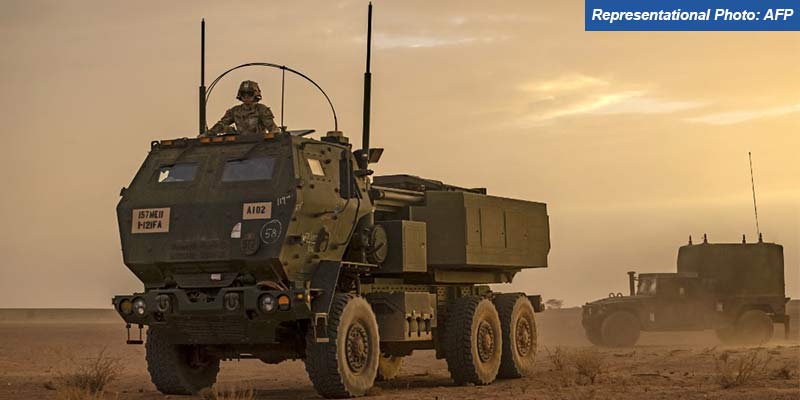
• The Defence Acquisition Council (DAC), under the chairmanship of Defence Minister Rajnath Singh, approved various acquisition proposals of the defence forces at an estimated cost of about Rs 1,10,000 crore.
What is the role of the Defence Acquisition Council?
• Pursuant to the recommendations made by the group of ministers on reforming the national security system in February 2001, a separate, dedicated structure for defence procurement was set up.
• In continuation of its efforts to streamline defence procurement procedures and to reduce timelines so as to ensure timely delivery of equipment to the armed forces, various measures to simplify the defence procurement procedure have been undertaken.
• A Defence Acquisition Council (DAC) was created as an overarching structure with the defence minister as its chairman.
• The DAC is the highest decision-making body of the defence ministry on procurement.
• The defence minister is the chairman of DAC. Its members include Chief of Defence Staff (CDS) and chiefs of Army, Navy and Air Force.
• The main objective of the DAC is to ensure expeditious procurement of the approved requirements of the armed forces in terms of capabilities sought and time frame prescribed by optimally utilizing the allocated budgetary resources.
Its functions include:
i) Give in principle approval of a 15 years Long Term Integrated Perspective Plan (LTIPP) for defence forces.
ii) Accord of acceptance of necessity to acquisition proposals.
iii) Categorisation of the acquisition proposals relating to ‘Buy’, ‘Buy & Make’ and ‘Make’.
iv) Look into issues relating to single vendor clearance.
v) Take decisions regarding ‘offset’ provisions in respect of acquisition proposals above Rs 300 crore.
vi) Take decisions regarding Transfer of Technology under the ‘Buy & Make’ category of acquisition proposals.
vii) Field trial evaluation.
• In the financial year 2025-26, approval for 55 proposals amounting to Rs 6.73 lakh crore has been accorded by the DAC.
• Moreover, capital procurement contracts for 503 proposals amounting to Rs 2.28 lakh crore have been signed in the current fiscal year.
• Both the quantum of approval given and capital contracts signed, so far, has been the highest in any given financial year.
Key projects that got approved in the last meeting:
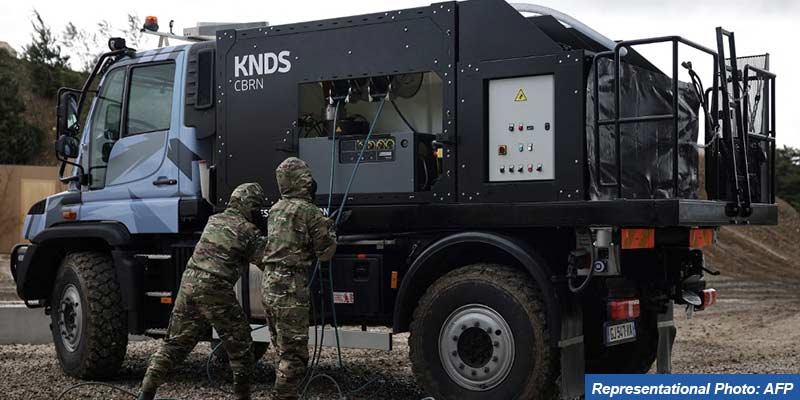
• For the Indian Army, approval was granted for the procurement of Chemical Biological Radiological and Nuclear (CBRN) Recce Vehicles, High Mobility Vehicles (HMV), Self-Propelled Mechanical Mine Layers (MML), Advanced Light Helicopters (ALHs), Trawl Tanks and Sarvatra Bridge System.
• The HMVs will enhance operational capabilities, logistic support and mobility in challenging terrains.
• The MMLs will achieve the desired operational capability in terms of fast and responsive minelaying in difficult terrains.
• The ALHs will execute complex missions across all terrains and operational situations for the Indian Army and the Indian Air Force.
• The Trawl Tanks and Bridge System will be utilised to provide composite crossings to fighting formations during operations in varied terrains.
• For the Indian Navy, Acceptance of Necessity (AoN) was accorded for the procurement of Arudhra Radars, Design & Development and subsequent procurement of Marine Gas Turbines (MGT).
• Arudhra Radar will replace the existing Air Route Surveillance Radars at various Naval Air Stations and MGT, a warship propulsion system, will reduce dependency on foreign vendors.
• For the Indian Air Force, approval was granted to various proposals to enhance the war-fighting capability of fighters, transports and helicopters.
• Approval was also accorded for procuring Ground-Based Multi-Purpose Jammer (GBMPJ) and installing Defence Forces Secure Access Card (DEFSAC) System.
• The GBMPJ will provide effective jamming against radars of adversaries and DEFSAC will replace existing paper based identity card/passes/permits with an interoperable Radio Frequency Identification-based smart cards system.
• Of the total AoNs accorded, approximately 98 per cent of procurements will be made from the Indian industry.