
- India
- Sep 30
Detention under NSA can’t be based on confession statement, rules SC
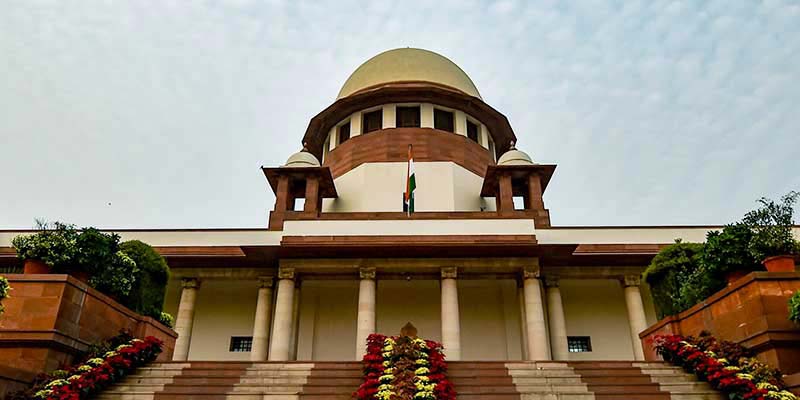
• The Supreme Court ruled that the confession statement of an accused made before a police officer cannot be the basis for detaining him under the National Security Act (NSA).
What was the case about?
• Tension brewed in Sambhal in November 2024, when a court-ordered survey of the Shahi Jama Masjid was being carried out there following claims that a temple previously existed at the site.
• On November 24, during a second round of the survey, protesting locals clashed with security personnel, which led to the death of four people and injuries to dozens.
• An accused named Mulla Afroz was arrested nearly two months after the incident.
• The Uttar Pradesh Police invoked the National Security Act (NSA) against Afroz in October 2025 for his alleged role in the 2024 communal violence in Sambhal.
• The detention order was passed against Afroz on October 13, 2025.
What the SC bench said about detention under NSA?
• A bench of Justices Dipankar Datta and Sheel Nagu said preventive detention has always been regarded as an exceptional measure.
• Although constitutionally recognised, it operates as a departure from the ordinary guarantees of personal liberty embodied in Article 21 of the Constitution and, therefore, must be invoked with the utmost circumspection and only in those rarest of rare cases where the circumstances genuinely warrant such exercise.
• A confessional statement made before a police officer cannot, by itself and in the absence of any independent material lending support thereto, constitute a basis for forming the subjective satisfaction necessary to sustain an order of preventive detention.
• To permit such a course would be to allow a detention order to rest upon a foundation which the law itself regards with suspicion and excludes from evidentiary consideration.
• If the detaining authority has relied upon other materials apart from the confessional statement, the court has to ascertain whether the detention can be upheld based on such other materials.
Key facts on National Security Act:
• The National Security Act (NSA), 1980 provides for preventive detention in certain cases and empowers the central government and state governments to make orders for detaining certain persons if satisfied that such detention is necessary for preventing acts prejudicial to the defence of India, the security of India, the security of the State, the maintenance of public order or the maintenance of supplies and services essential to the community.
• The maximum detention period is 12 months, though it can be revoked earlier.
• The NSA can be invoked by the local administration and has to be ratified by a board headed by a former High Court judge.
• As it is preventive detention and not arrest, there is no legal obligation to present the detainee before a court of law.