
- India
- Oct 01
- Sreesha V.M
Cabinet clears phase-3 of Green Energy Corridor scheme
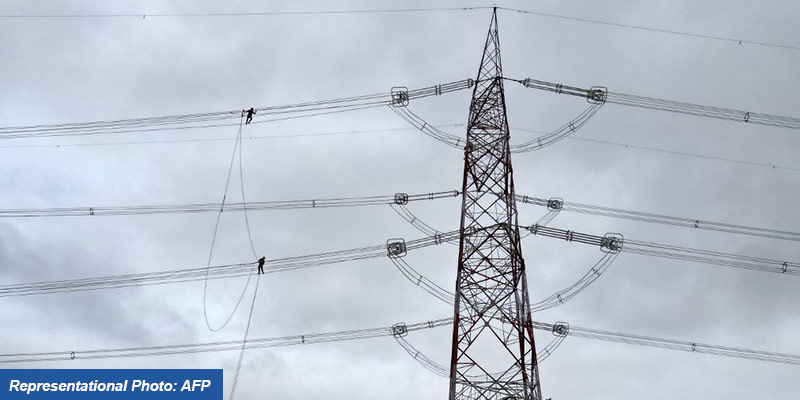
• The Union Cabinet, chaired by Prime Minister Narendra Modi, approved the Green Energy Corridor Phase-III (GEC-III) scheme with an outlay of Rs 1.86 lakh crore.
What is Green Energy Corridor (GEC) scheme?
• The Intra-State Transmission System (InSTS) Green Energy Corridor (GEC) scheme was approved by the Cabinet Committee on Economic Affairs (CCEA) in 2015.
• The Ministry of New and Renewable Energy (MNRE) is implementing the scheme in 10 states — Andhra Pradesh, Gujarat, Himachal Pradesh, Karnataka, Kerala, Madhya Pradesh, Maharashtra, Rajasthan, Tamil Nadu and Uttar Pradesh.
• A total of 9,856 circuit km (ckm) intra-state transmission lines and 24,300 MVA sub-station have been commissioned under the GEC scheme.
• The scheme will facilitate grid integration and power evacuation within the states/UTs of India.
Highlights of phase-3:
• The scheme provides for deployment of 50 GWh of Battery Energy Storage Systems (BESS) at the Renewable Energy (RE) developer/generator end or any other location of importance for grid flexibility to address intermittency, congestion, peak-hour curtailment and meet non-solar hour demand.
• The scheme is targeted to be set up by FY 2032-33 with total project outlay of Rs 1,86,405 crore, comprising Rs 1,36,378 crore for the development of Intra-State Transmission Systems (InSTS) under GEC-III, Rs 50,000 crore for 50 GWh of Battery Energy Storage Systems (BESS).
• It involves a total central financial support of Rs 54,082 crore.
• The Central Financial Assistance (CFA) will help in offsetting the Intra-State transmission charges and thus keep the power costs down.
• All greenfield projects under the InSTS component will be implemented through Tariff Based Competitive Bidding (TBCB) mode, while brownfield upgradation and network strengthening works will be executed under Cost Plus Basis (CPB).
• The State Transmission Utilities will be the overall implementing agency, and Transmission Service Providers (TSPs) will participate under TBCB on a Build-Own-Operate-Maintain (BOOM) model.
Expected outcomes:
• The scheme will help in achieving the target of 900 GW installed Non-Fossil capacity by 2035.
• It will also contribute to long-term energy security of the country and promote ecologically sustainable growth by reducing carbon footprint.
• It will generate large direct & indirect employment in the power sector, manufacturing, and construction industries.
• Battery Energy Storage System (BESS) manufacturing and deployment will additionally generate employment in the domestic energy storage industry.
• The scheme will also generate long-term skilled employment in operation, maintenance, and grid management across participating states.
(The author is a trainer for Civil Services aspirants.)