
- India
- Oct 10
Centre launches JOSH teams for TB elimination drive
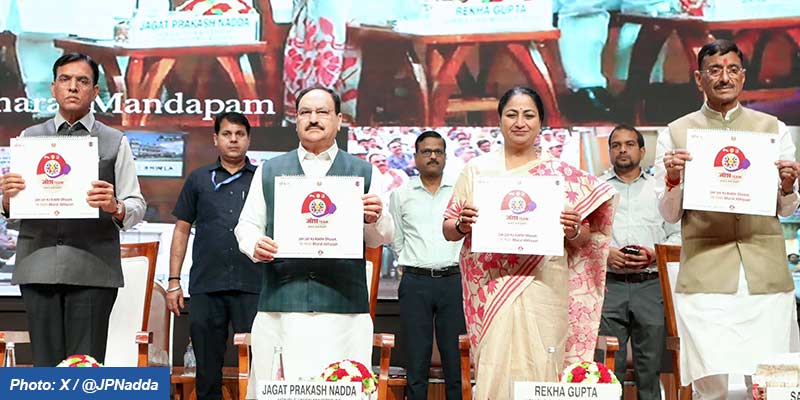
• Union Minister for Health and Family Welfare J.P. Nadda launched JOSH (Joint Squad for Health) teams under the TB Mukt Bharat Abhiyaan in New Delhi on October 8.
What is the purpose of JOSH teams?
• The JOSH initiative is being implemented by the Ministry of Health and Family Welfare in collaboration with the Ministry of Youth Affairs & Sports and the Ministry of Defence.
• It marks a significant step towards strengthening youth-led community participation in India’s efforts to eliminate tuberculosis.
• The teams will work at district and block levels, supported by digital mechanisms for monitoring and implementation.
• The initiative seeks to harness the energy, outreach and commitment of young people to take the message of TB prevention, early diagnosis, timely treatment and stigma reduction to communities across the country.
• As many as 6,347 JOSH squads have been constituted, bringing together 31,429 MY Bharat volunteers and 26,794 NCC cadets.
• Each JOSH team comprises five MY Bharat volunteers and five NCC cadets and is led by a designated Class-I officer at the block/ward level.
The teams are envisaged to function as an important community-level interface for the TB elimination programme by:
i) Undertaking regular outreach and field-level activities to improve public understanding of TB.
ii) Promoting early diagnosis and treatment.
iii) Addressing myths and misconceptions.
iv) Encourage greater community participation.
• The launch of JOSH teams builds on the spirit of collective action by creating a dedicated platform for youth to become active partners in the TB Mukt Bharat Abhiyaan.
Key facts about TB:
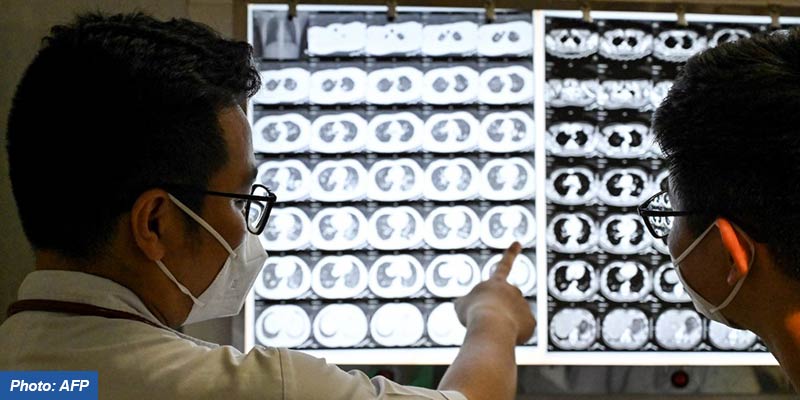
• Tuberculosis is caused by bacteria (Mycobacterium tuberculosis) that most often affect the lungs. It can spread when people who are sick with TB expel bacteria into the air – for example, by coughing.
• Every year, 10 million people fall ill with TB. Despite being a preventable and curable disease, 1.5 million people die from TB each year.
• TB is the leading cause of death of people with HIV and also a major contributor to antimicrobial resistance.
• Most people who develop the disease are adults.
• TB is preventable and curable. About 85 per cent of people who develop TB disease can be successfully treated with a 4/6-month drug regimen. Treatment has the added benefit of curtailing onward transmission of infection.
• Economic and financial barriers can affect access to health care for TB diagnosis and completion of TB treatment; about half of TB patients and their households face catastrophic total costs due to TB disease.
• Progress towards universal health coverage (UHC), better levels of social protection and multisectoral action on broader TB determinants are all essential to reduce the burden of TB disease.
National Tuberculosis Elimination Programme
• India’s TB incidence (new cases emerging each year) reduced by 21 per cent (from 237 per lakh population in 2015 to 187 per lakh population in 2024), as per the WHO’s Global TB Report.
• This is one of the highest declines in TB incidence globally, outpacing reductions noted among other high-burden countries.
• India’s innovative case finding approach, driven by the swift uptake of newer technologies, decentralisation of services and large scale community mobilisation, has led to the country’s treatment coverage to surge to over 92 per cent in 2024, from 53 per cent in 2015.
• As many as 26.18 lakh TB patients were diagnosed in 2024, out of an estimated incidence of 27 lakh cases.
• This has helped reduce the number of “missing cases” — those who had TB but were not reported to the programme — from an estimated 15 lakhs in 2015 to less than one lakh in 2024.
• India’s TB mortality rate has decreased from 28 per lakh population in 2015 to 21 per lakh population in 2024, reflecting significant progress in reducing deaths due to TB.
• Since its launch in December 2024, TB Mukt Bharat Abhiyan (National TB Elimination Programme) has achieved extensive reach, screening over 19 crore vulnerable individuals for TB across the country leading to the detection of over 24.5 lakh TB patients, including 8.61 lakh asymptomatic TB cases.
• The Ministry of Health and Family Welfare has also expanded nutritional support provided to TB patients.
• The Direct Benefit Transfer (DBT) under the Ni-kshay Poshan Yojana (NPY) was increased from Rs 500 to Rs 1,000 per month per patient for the entire treatment duration.
• Since its launch in April 2018, Rs 4,406 crore have been disbursed directly into the bank accounts of 1.37 crore beneficiaries.
