
- India
- Oct 12
How Jantar Mantar became a site of protests in Delhi?
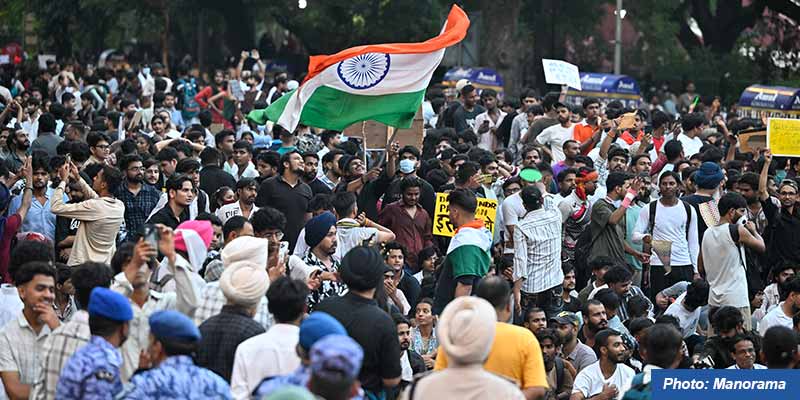
• Delhi Police has denotified Jantar Mantar as a designated site for protests and named three new spots for holding such demonstrations, according to an official order.
• Delhi Police Commissioner Anurag Kumar issued the order on October 11, naming Ramlila Maidan, Burari Ground and CBD Ground as the new designated sites for protests and demonstrations.
• The Ministry of Home Affairs had constituted a committee to examine alternative proper venues for citizens’ right to organise protest/demonstrations in place of the existing ‘designated site’.
• Based on the committee’s recommendations, Jantar Mantar as a protest venue has been de-notified, the order said.
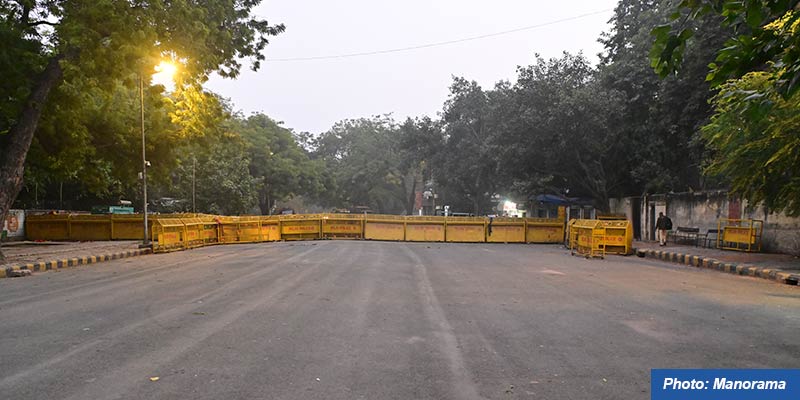
• The move comes amid heightened security arrangements in the national capital following calls to gather for protests at Jantar Mantar.
What is Jantar Mantar?
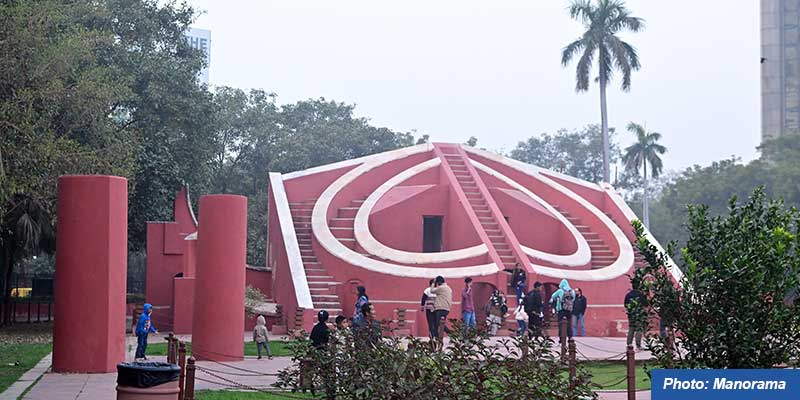
• Jantar Mantar is an astronomical observatory built in the early 18th century by Maharaja Sawai Jai Singh II.
• The name comes from the Sanskrit words “yantra”, meaning instrument, and “mantra”, meaning formula.
• Jai Singh built five observatories across India — in Delhi, Jaipur, Ujjain, Varanasi and Mathura.
• Jai Singh had found the existing astronomical instruments too small to take correct measurements and so he built these larger and more accurate instruments.
• The Mathura observatory was demolished before 1857.
• Jaipur’s Jantar Mantar is a UNESCO World Heritage Site.
How Jantar Mantar became a site of protests in Delhi?
• Over the centuries, the observatory’s location in the heart of the capital, close to Parliament, government offices and Connaught Place, gradually gave the adjoining road a different identity.
• Delhi is the centre of power and hence aggrieved citizens from all over the country throng the city to get their voices heard.
• Mass protests have been prevalent in Delhi since colonial times in the form of hartals, satyagraha against the British rule and later Emergency era protests, farmers’ agitations, Mandal Commission protests, the Jan Lokpal protests and the December 2012 gang-rape protests, to name a few.
• Until the 1980s, people had unrestricted rights to hold dharnas, protests and agitations in the Boat Club lawns near India Gate along the Rajpath road.
• After the farmers’ agitation led by Mahendra Singh Tikait in 1988, protests at Boat Club lawns were restricted.
• From 1993, the main place where the protests were allowed was Jantar Mantar road, a stretch between the Ashoka Road and Parliament Street.
• Jantar Mantar has been the site for peaceful protests and by the nature of the stretch of road, it is easily managed and gives visibility considering the proximity of the venue to the Parliament.
• In 2017, Tamil Nadu farmers staged a 41-day protest to highlight agrarian distress, seeking relief from mounting debts, drought-related losses and other problems affecting their livelihoods.
• In 2023, prominent wrestlers, including Olympic medallists, staged a sit-in against then Wrestling Federation of India chief Brij Bhushan Sharan Singh.
• In July 2026, students and other protesters led by the Cockroach Janta Party (CJP) gathered over the NEET-UG paper leak row, intensifying public scrutiny of the examination system. This sparked a massive uproar that condensed around the Jantar Mantar before spilling onto capital streets, and culminating in the resignation of Union Education Minister Dharmendra Pradhan.
SC quashes NGT order on protests at Jantar Mantar
• In July 2018, the Supreme Court ruled that there cannot be a “complete ban” on holding protests and sit-ins at places like Jantar Mantar and Boat Club.
• In October 2017, the NGT had banned all protests and dharnas around Jantar Mantar, saying such activities violated environmental laws.
• The NGT noticed that Jantar Mantar Road became a ground for raising protests by various groups, political and non-political. Such protests are not temporary or transient. The protestors put up tents and other arrangements where people have been staying for many months. Some of the structures have been on the side of the street.
• During the course of a heavy protest day, the police completely blocks the road of Jantar Mantar by barricading which coerces the residents of the area to park their vehicles elsewhere and make way to their residences on foot.
• The protestors continuously play drums, music, microphones, etc which disturb the peace and tranquility of the place. The noise emanating from the said area on account of aforesaid loudspeakers, etc generates noise which exceeds the permissible limit.