
- India
- Nov 05
Cabinet approves scheme to promote processing of critical minerals
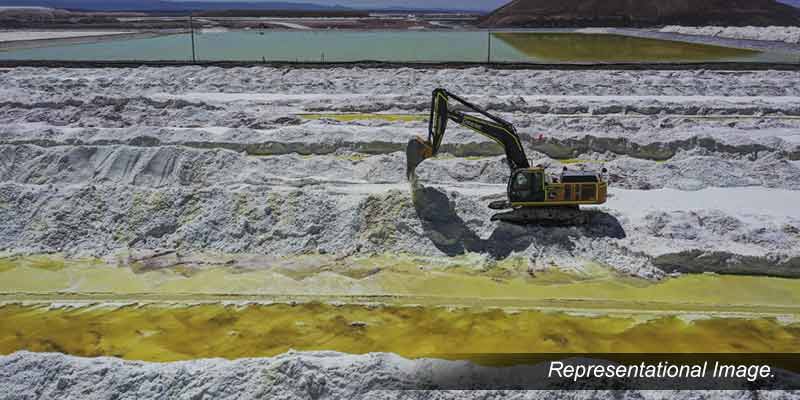
• The Union Cabinet approved the ‘Capex Support Scheme to Promote Critical Mineral Processing’ with a financial outlay of Rs 2,814 crore over a period of five years.
• The scheme period is from FY 2026-27 to 2030-31.
What are critical minerals?
• One definition suggests that a mineral is labelled as critical when the risk of supply shortage and associated impact on the economy is higher than the other raw materials.
• They are metals, non-metals and minerals that are considered vital for the economic well-being of the world’s major and emerging economies, yet whose supply may be at risk due to geological scarcity, geopolitical issues, trade policy or other factors.
• Critical minerals are essential for economic development and national security. The lack of availability of these minerals or even concentration of existence, extraction or processing of these minerals in few geographical locations may lead to supply chain vulnerability and disruption.
• The future global economy will be underpinned by technologies that depend on minerals such as lithium, graphite, cobalt, titanium, and rare earth elements (REE).
• Each country has its own classification of raw materials or critical minerals depending on levels of economic development, industry requirements, national interests and security concerns, technology, market changes and natural resource endowment.
• The most common framework widely adopted for evaluating material criticality is based on a metal’s supply risk and the impact of a supply restriction.
• Critical minerals include rare earth elements (REEs) and platinum-group elements.
• Critical minerals are crucial for manufacturing advanced technologies like mobile phones, computers, fiber-optic cables, semiconductors, and banknotes.
• They are essential for low-emission technologies such as electric vehicles, wind turbines, solar panels, and rechargeable batteries.
• Critical minerals form the foundation of a modern, net-zero economy.
Significance of the scheme
• Processing of critical minerals remains geographically concentrated in a few global locations.
• This exposes supply chains to geopolitical disruptions, price volatility, and potential supply restrictions, posing severe threats to supply chain resilience and economic security.
• This has implications for national security, economic sovereignty, and the timely achievement of decarbonisation targets.
• India remains substantially dependent on imports for refined intermediates and high-purity materials, owing to the nascent stage of domestic beneficiation and processing infrastructure for critical minerals, including lithium, nickel, cobalt.
• Domestic processing capacity for critical minerals remains limited, with commercial-scale projects facing challenges relating to high capital requirements, limited availability of suitable technologies and constrained access to raw materials.
• Domestic processing capacity is therefore imperative for maximising value addition, achieving import substitution, and establishing resilient end-to-end value chains.
Highlights of the scheme
• The ‘Capex Support Scheme to Promote Critical Mineral Processing’ has been formulated to provide targeted capital expenditure support for the establishment and operationalisation of domestic processing facilities.
• The scheme aims to develop domestic processing capabilities in India to support value addition within the country, reduce import dependence, and develop value chain.
• It targets processing of lithium and nickel ores/intermediary products into high purity compounds.
• Cobalt is also expected to be recovered as a by-product of nickel production.
• This will support critical sectors such as electric mobility, Battery Energy Storage System (BESS), electronics, defence, speciality steel, etc.
• Under the scheme, capital subsidy of 30 per cent of eligible investment will be provided for setting up four critical mineral processing plants, comprising two lithium processing plants (with a minimum capacity of 30 kilotonnes each) and two nickel processing plants (with a minimum capacity of 50 kilotonnes each).
• The maximum capital support will be capped at Rs 500 crore per lithium beneficiary and Rs.900 crore per nickel beneficiary, respectively.
• The selection of beneficiaries shall be carried out through a two-stage process.
• In the first stage, applications shall be assessed for technical qualification, and only technically qualified applicants shall be eligible to participate in the second stage of financial bidding.
• For each mineral, two beneficiaries shall be selected based on the least-cost criterion.
• The incentives will be disbursed in three tranches linked to the achievement of specified milestones.