
- India
- Nov 06
Amit Shah inaugurates Martyrs’ Memorial of the First War of Independence in Ambala
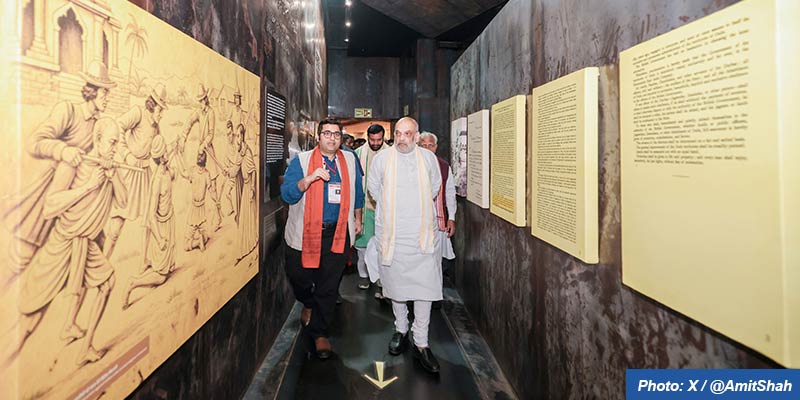
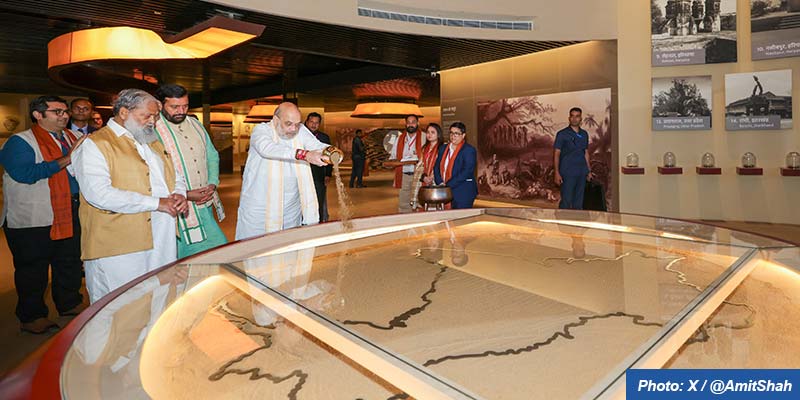
• Union Home Minister Amit Shah inaugurated the Martyrs’ Memorial of the First War of Independence of 1857 in Ambala, Haryana on November 5.
• The memorial in Ambala Cantt was built in honour of those who sacrificed their lives during the first war of independence in 1857.
• The memorial is spread over 22 acres of land and showcases historical events linked to the 1857 freedom struggle in 22 galleries.
Key points on India’s First War of Independence in 1857:
• The Indian Rebellion of 1857 began as a mutiny of sepoys of East India Company’s army on May 10, 1857, in Meerut.
• The revolt began when some of the sepoys of the 3rd Cavalry regiment refused to use the greased cartridges.
• Their refusal to use the greased cartridges was regarded by the British authorities as an action of insubordination and was punished accordingly.
• On March 29, 1857 the sepoys at Barrackpore refused to use the greased cartridges and Mangal Pandey attacked and fired at the adjutant.
• The regiment was disbanded and sepoys found guilty of rebellion punished.
• In May 1857, as many as 85 sepoys of the 3rd Cavalry regiment on their refusal to use the greased cartridges were court-martialled and sentenced to long terms of imprisonment.
• On May 10, 1857, the sepoys broke out in open rebellion, shot their officers, released their fellow sepoys and headed towards Delhi.
• General Hewitt, the Officer Commanding at Meerut had 2,200 European soldiers at his disposal but did nothing to stem the rising tide.
• The rebels had seized Delhi on May 12, 1857.
• Lieutenant Willoughby, the officer-in-charge of the magazine at Delhi, had offered some resistance, but was overcome. The palace and the city were occupied.
• Bahadur Shah II was proclaimed the emperor of India. The loss of Delhi was a serious loss of prestige to the English.
• Very soon the rebellion spread throughout northern and central India at Lucknow, Allahabad, Kanpur, Bareilly, Banaras, in parts of Bihar, Jhansi and other places.
• The rebellion was completely suppressed in July 1857.
• However, the momentum continued to serve as the main source of inspiration for the people, who vigorously fought the British to free the motherland.
• Thus, it became India’s First War of Independence against colonial rule.