
- India
- Nov 07
India hosts inaugural BIMSTEC maritime security exercise
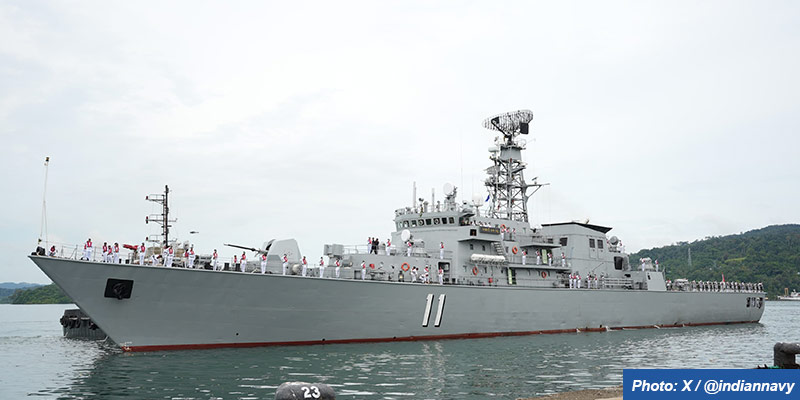
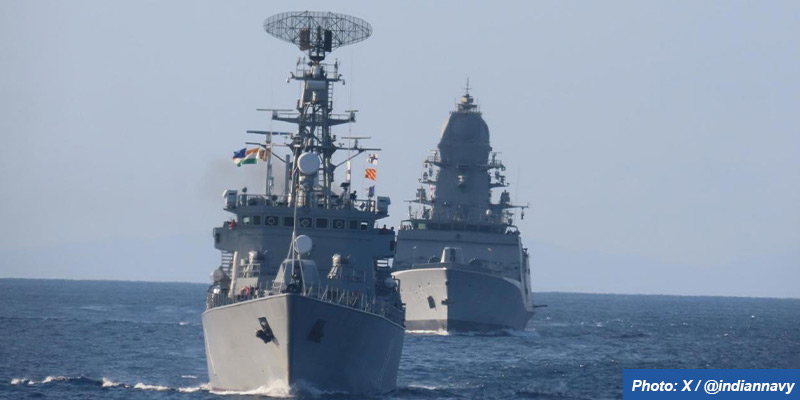
• India hosted the inaugural BIMSTEC Maritime Security Exercise at Sri Vijaya Puram (formerly known as Port Blair) in the Andaman and Nicobar Islands from October 30 to November 3.
• Bringing together Bangladesh, Bhutan, India, Myanmar, Nepal, Sri Lanka and Thailand, the exercise reinforces the shared commitment of member states towards regional security, stability and prosperity in the Bay of Bengal.
• Building upon the outcomes of the 6th BIMSTEC Summit under the theme “BIMSTEC: Prosperous, Resilient and Open”, the exercise provides a practical framework for enhancing maritime cooperation and operational linkages among participating nations.
• It reflects BIMSTEC’s collective resolve towards “Translating Vision to Action” by advancing cooperation in areas of mutual maritime interest and strengthening regional security mechanisms.
• The Bay of Bengal remains a critical maritime space connecting South and South-East Asia and supporting trade, connectivity, energy security and economic growth.
• The exercise aims to enhance interoperability, strengthen maritime domain awareness, improve coordination mechanisms and promote the exchange of best practices among BIMSTEC member states.
• It also highlights the strategic importance of the Andaman and Nicobar Islands and the role of the Andaman and Nicobar Command (ANC), India’s first integrated tri-service command.
What is BIMSTEC?
• The Bay of Bengal Initiative for Multi-Sectoral Technical and Economic Cooperation (BIMSTEC) comprises India, Bangladesh, Myanmar, Sri Lanka, Thailand, Bhutan and Nepal.
• It is a regional bloc comprising seven countries lying in the littoral and adjacent areas of the Bay of Bengal constituting a contiguous regional unity.
• This sub-regional organisation came into being on June 6, 1997 through the Bangkok Declaration. It constitutes five countries from South Asia (Bangladesh, Bhutan, India, Nepal and Sri Lanka) and two from Southeast Asia (Myanmar and Thailand).
• Initially, the economic bloc was formed with four member states with the acronym BIST-EC (Bangladesh, India, Sri Lanka and Thailand Economic Cooperation). Following the inclusion of Myanmar on December 22, 1997 during a special ministerial meeting in Bangkok, the group was renamed BIMSTEC (Bangladesh, India, Myanmar, Sri Lanka and Thailand Economic Cooperation).
• With the admission of Nepal and Bhutan at the sixth ministerial meeting in February 2004, the name of the grouping was changed to Bay of Bengal Initiative for Multi-Sectoral Technical and Economic Cooperation (BIMSTEC).
• The BIMSTEC region is home to about 1.8 billion people, accounting for about 22 per cent of the global population with a combined GDP of $4.5 trillion.
• The BIMSTEC Secretariat is situated in Dhaka.
• India has been pushing for making BIMSTEC a vibrant forum as various regional initiatives under South Asian Association for Regional Cooperation (SAARC) were not moving forward primarily due to non-cooperation from Pakistan.
• For India, BIMSTEC is a natural choice to take forward key foreign policy priorities like ‘Neighbourhood First’ and ‘Act East’ as the bloc enjoys the strength of connecting South and Southeast Asia.
• Initially, six sectors — trade, technology, energy, transport, tourism and fisheries — were included for sectoral cooperation. It was later expanded to 14 areas of cooperation.