
- India
- Nov 11
- Sreesha V.M
Transforming islands into high-value marine fisheries hubs
• India ranks among the leading fisheries and aquaculture producing nations globally, with seafood exports valued at around Rs 73,890 crore during FY 2025-26, underscoring the sector’s growing importance in the national economy and global seafood trade.
• India is endowed with a vast and diverse marine resource base, supported by a coastline of approximately 11,099 km and an Exclusive Economic Zone (EEZ) of nearly 24 lakh sqkm.
• With an estimated marine fisheries potential of 58.6 lakh MT within its EEZ, the sector plays a vital role in sustaining the livelihoods of nearly 50 lakh fishers, while contributing significantly to food security, nutrition, employment, income generation and export earnings.
• Under Pradhan Mantri Matsya Sampada Yojana (PMMSY), substantial investments have been envisaged for the island territories to strengthen fisheries development.
Island-led fisheries development
• Lakshadweep and the Andaman & Nicobar Islands occupy a distinctive position in India’s marine geography.
• Together accounting for nearly 40 per cent of the country’s Exclusive Economic Zone, the two island groups extend India’s presence across the Arabian Sea and the Bay of Bengal, with access to rich oceanic fishing grounds and major tuna migration routes.
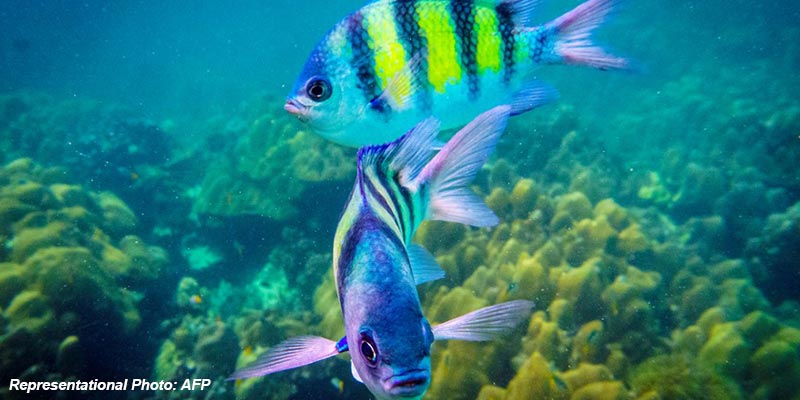
• Lakshadweep’s lagoon systems, coral reefs and surrounding deep-sea waters offer favourable conditions for tuna fisheries, seaweed cultivation and reef-based livelihoods.
• The Andaman & Nicobar Islands, with their extensive coastline, diverse marine habitats and proximity to Southeast Asian maritime routes, provide similar opportunities for expanding sustainable fisheries, mariculture and value-added seafood production.
• Their ecological richness and strategic location make these islands central to India’s efforts to build a more diversified and ocean-based fisheries economy.
• Andaman & Nicobar Islands have been allocated an investment of Rs 218 crore, while Lakshadweep has been earmarked Rs 175 crore, to unlock the fisheries potential of these strategically important maritime regions.
• The Union Budget 2025-26 outlined an enabling framework for the sustainable harnessing of fisheries resources from the Exclusive Economic Zone and the High Seas, with special emphasis on Lakshadweep and the Andaman & Nicobar Islands.
Special focus on tuna
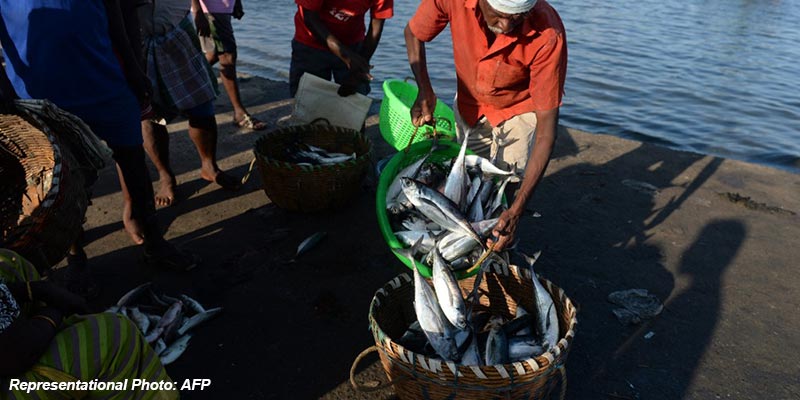
• Tuna has emerged as the centrepiece of the government’s strategic roadmap for high-value marine fisheries.
• In Lakshadweep, a five-year plan seeks to double tuna production to 50,000 tonnes, supported by the induction of deep-sea vessels, mother vessels and the islands’ traditional, ecologically sound pole and line fishery.
• In the Andaman & Nicobar Islands, a dedicated Tuna Cluster under PMMSY is accelerating fleet modernisation and infrastructure development, including new vessels, upgraded fishing fleets and expanded cold storage capacity.
• The Marine Products Export Development Authority’s (MPEDA) strengthened presence is expected to improve market access and facilitate direct exports from the islands.
• The government is also advancing seaweed and ornamental fisheries as complementary pillars of the island economy.
• Lakshadweep’s clean lagoon systems and the coral-rich ecosystems of the Andaman & Nicobar Islands offer favourable conditions for sustainable seaweed cultivation, with potential applications across food, nutraceuticals, cosmetics, pharmaceuticals and bio-industrial products.
• With Lakshadweep notified as a dedicated Seaweed Cluster, the roadmap envisages large-scale cultivation, seed banks, hatcheries and capacity building to develop a reliable seaweed value chain.
• Ornamental fisheries add another high-value opportunity, particularly in Lakshadweep, which hosts over 300 reef-associated ornamental species.
(The author is a trainer for Civil Services aspirants.)