
- India
- Nov 12
MHA reduces visa categories from 13 to 9
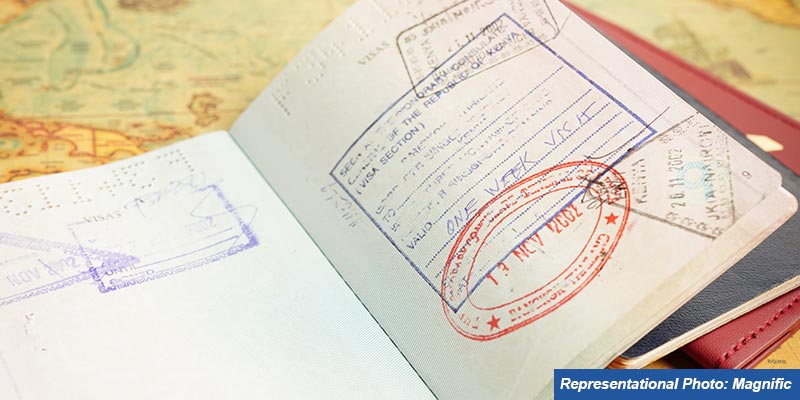
• The government has reduced the number of the main Indian visa categories from 13 to nine and sub-categories from 49 to 23 to simplify the process for foreign nationals.
Simpler, purpose-based visa framework
• The revised framework comprises nine main categories — Business, Diplomatic, Work, Journalist, Medical, Official, Student, Visitor and Miscellaneous visas.
• The decision aims at making it more compact, coherent and responsive to the requirements of foreign nationals visiting India.
• While considering the simplification of the Indian visa regime, the government studied the visa systems of developed countries and global standards.
• The consolidation of similar purposes of travel is aimed at providing greater clarity and ease in identifying the appropriate visa category while facilitating legitimate foreign arrivals.
• This will reduce time and effort required to complete an application and enhance administrative efficiency by facilitating more focused scrutiny and processing of visa application.
• To implement the changes, the Ministry of Home Affairs (MHA) is updating its IT systems, and visas will be granted under the revised framework by the end of this year.
What is a visa?
A visa is an official document that allows the bearer to legally enter a foreign country. The visa is usually stamped or glued into the bearer’s passport. There are several different types of visas, each of which afford the bearer different rights in the host country.
The revised visa framework
1) Business Visa: It has been consolidated into B-1 and B-2. The B-1 visa covers long-term, licence-based business activities, including foreign nationals seeking to establish industrial or business ventures in India. The B-2 visa covers short-term, contract-based business activities, including production investment business, conferences, sports, performative arts and films.
2) Diplomatic Visa: Diplomats including UN diplomats assigned to India or visiting India and their dependents.
3) Work Visa: Long-term employment with Indian companies/organisations, working in NGOs and missionary activities.
4) Journalist Visa: Journalists accredited in India.
5) Medical Visa: The Medical Visa framework retains separate provisions for treatment under conventional and AYUSH systems. The M-1 visa covers medical treatment other than treatment under AYUSH systems, while the M-3 visa covers treatment under AYUSH systems. Both visas, including their e-visa variants, will be granted for one year as a default option with multiple entries. Corresponding medical attendant visa provisions are also available. The M-2 and M-4 visas will be granted to attendants of M-1 and M-3 visa holders, respectively. The arrangement would give patients greater predictability when treatment involves multiple consultations, follow-up appointments or staged procedures. The availability of attendant visas also facilitates support by accompanying persons and will encourage medical value tourism in India.
6) Official Visa: Non-diplomatic officials including UN non-diplomatic officials assigned to India or on a visit to India and their dependents.
7) Student Visa: It has been consolidated into two broad sub-categories. The S-1 visa covers school, graduate and postgraduate education, while the S-2 visa covers PhD and research scholars in Indian universities, visiting faculty, foreign research students visiting India for research, scientific and anthropological expeditions, internships and exchange students, among other specified academic activities. For foreign students enrolled in Indian educational institutions through the Study in India portal, the e-S1 visa may be granted for up to five years or for the duration of the academic course, whichever is less, with multiple entries.
8) Visitor Visa: The tourist visa has been renamed visitor visa, reflecting a broader range of permitted purposes beyond conventional tourism. The category has been consolidated into two sub-categories, V-1 and V-2. The V-1 visa covers short-term activities such as business meetings, medical consultations, wellness retreats, short-duration medical treatment and short-term courses in Indian languages, music, art and craft. It is granted for 30 days with multiple entries. The V-2 visa is intended for longer-duration visits, with validity of one, five or 10 years, as specified. It covers activities permissible under V-1 and mountaineering. For mountaineering, a visa of six months with multiple entries will be granted.
9) Miscellaneous Visa: The Miscellaneous Visa covers persons of Indian origin and their spouses and children, those joining specified institutions such as the Auroville Foundation, dependents of foreign nationals on long-duration visas, stay visas for Afghan nationals, long-term visas for certain categories of nationals from neighbouring countries and other purposes not covered under any other visa category.