
- India
- Nov 14
3 beaches in Maharashtra receive ‘Blue Flag’ certification
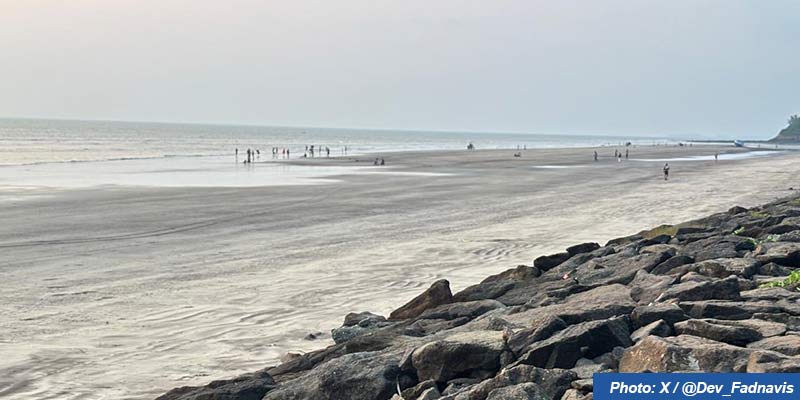
• Three beaches in Maharashtra — Ladghar and Guhagar in Ratnagiri district and Shrivardhan in Raigad district — have received the ‘Blue Flag’ certification for the 2026-27 season.
What is Blue Flag?
• The ‘Blue Flag’ is one of the world’s most recognised voluntary eco-labels awarded to beaches, marinas and sustainable boating tourism operators.
• The programme is operated under the Foundation for Environmental Education (FEE) and is headquartered in Copenhagen, Denmark.
• The Blue Flag programme started in France in 1985 and has been implemented in Europe since 1987, and in areas outside Europe since 2001, when South Africa joined.
• The mission is to promote sustainability in the tourism sector, through environmental education, environmental protection and other sustainable development practices.
• The recommendations are done by an independent national jury composed of eminent environmentalists and scientists.
• The eco-label is accorded based on 38 stringent criteria in six major heads. They are:
i) Education, information and stakeholder engagement
ii) Resource management and environmental action
iii) Biodiversity and sensitive area management
iv) Water quality, pollution prevention and waste management
v) Accessibility and visitor facilities
vi) Safety and services.

• The ‘Blue Flag’ beach is an eco-tourism model endeavouring to provide the tourists/beachgoers clean and hygienic bathing water, facilities/amenities, safe and healthy environment and sustainable development of the area.
• Sites and operators must demonstrate compliance with applicable criteria and maintain compliance during the award period.
• There are 5,297 Blue Flag sites across 52 countries.
• Out of these, there are 4,391 beaches, 749 marinas and 157 sustainable tourism boats.
• Blue Flag Beaches programme in India was initiated in 2018 in partnership with the Ministry of Environment Forests and Climate Change (MoEFCC) and the respective coastal states and Union Territories.
• India has over 20 beaches with Blue Flag certification.