
- India
- Nov 21
AERB clears first approach to criticality of RAPP-8 at Rawatbhata
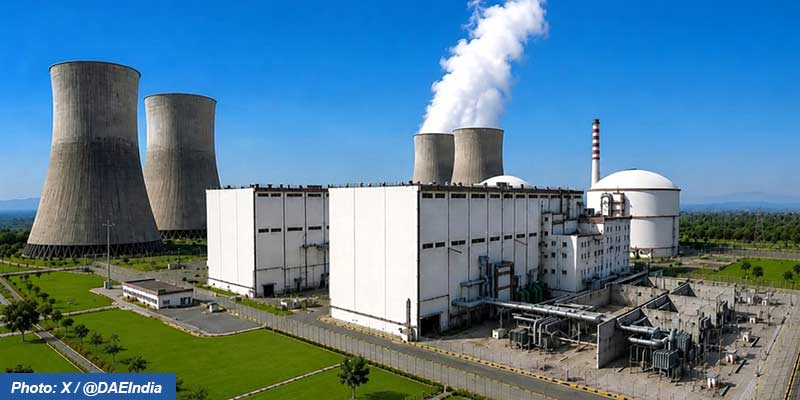
• The Atomic Energy Regulatory Board (AERB) has granted permission for the first approach to criticality (FAC) of Rajasthan Atomic Power Project Unit-8 (RAPP-8) on November 19.
• RAPP-8 is located at Rawatbhata Nuclear Power Plant site in Chittorgarh district of Rajasthan.This site currently has eight nuclear power plant units.
• RAPP-8 is the fourth unit of India’s indigenously designed and constructed 700 MWe Pressurised Heavy Water Reactor (PHWR) series.
• The other three units of this design are Kakrapar Atomic Power Station Units 3 and 4 in Gujarat and RAPP Unit-7 in Rajasthan.
What do you mean by criticality?
• Criticality is the normal operating condition of a reactor, in which nuclear fuel sustains a fission chain reaction. A reactor achieves criticality (and is said to be critical) when each fission event releases a sufficient number of neutrons to sustain an ongoing series of reactions. It means the plant is now set to generate power.
• FAC marks an important stage in the commissioning of RAPP-8, paving the way for subsequent commissioning phases leading towards commercial electricity generation, subject to satisfactory completion of the prescribed tests and requisite regulatory permissions.
• AERB’s permission follows a comprehensive safety review of the reactor's design, construction, commissioning test results and operational preparedness.
• The regulatory review process included detailed assessments by AERB and its safety review committees, complemented by regulatory inspections, and deliberations by the Board of AERB.

Atomic Energy Regulatory Board (AERB)
• The Atomic Energy Regulatory Board (AERB) was constituted on November 15, 1983 by the President of India by exercising the powers conferred by Section 27 of the Atomic Energy Act, 1962 (33 of 1962) to carry out certain regulatory and safety functions under the Act.
• The regulatory authority of AERB is derived from the rules and notifications promulgated under the Atomic Energy Act, 1962 and the Environment Protection Act, 1986.
• Its headquarters is situated in Mumbai.
• The mission of the AERB is to ensure the use of ionising radiation and nuclear energy in India does not cause undue risk to the health of people and the environment.
• The Board comprises six members of which two are whole time members including the chairman. The other whole-time member is the executive director of the AERB Secretariat who is an ex-officio member of the Board. • The other four members are eminent experts from various disciplines relevant to the mandate of the board.
• Regional Regulatory Centres (RRCs) of AERB set up at Kolkata, Chennai and New Delhi carry out regular surveillance of the radiation facilities in eastern, southern and northern zones respectively.
• AERB has a Safety Research Institute (SRI) located at Kalpakkam, Tamil Nadu, which carries out research in safety related topics.