
- India
- Nov 23
EPFO approves Systematic Withdrawal Plan (SWP) for its members
• The Employees’ Provident Fund Organisation (EPFO) has approved a significant overhaul of its provident fund withdrawal framework.
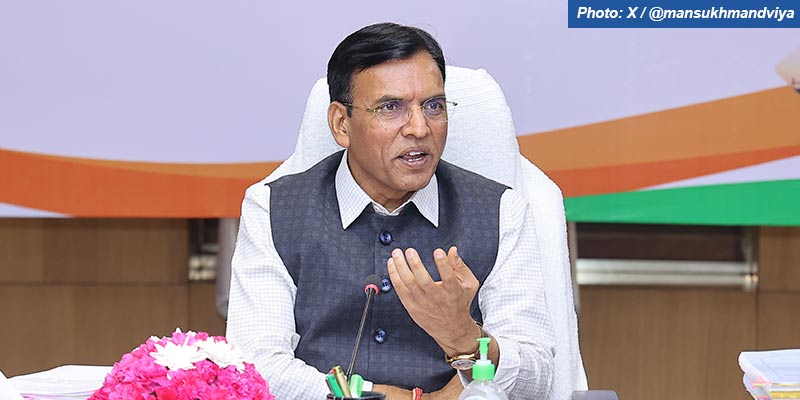
• The decision was taken at the 240th meeting of the Central Board of Trustees (CBT), chaired by Union Labour and Employment Minister Mansukh Mandaviya on November 19.
Key reforms announced:
1) Introduction of Systematic Withdrawal Plan (SWP) for EPFO Members
• It will enable retiring EPFO members to receive their accumulated provident fund savings in periodic instalments instead of withdrawing the entire amount in one go.
• Around 6.32 lakh EPFO members aged above 55 years possess provident fund accumulations exceeding Rs 5 lakh are expected to be the primary beneficiaries of the proposed SWP framework during the initial phase.
• Retiring members will be able to withdraw their accumulated provident fund savings at regular intervals, such as monthly, quarterly or half-yearly, based on their preference.
• This facility would provide members with a structured source of periodic income while allowing the remaining corpus to continue generating returns, thereby helping augment their retirement income and supplement their pension benefits.
• The facility would be entirely voluntary, with no compulsion on members to opt for withdrawals.
• The option may also be extended to eligible family members/beneficiaries, ensuring greater flexibility and financial security for the family.
• This aims to ensure stable post-retirement income, reduce reinvestment risks, strengthen fund sustainability and facilitate the extension of social security coverage to gig and platform workers.
• The SWP needs a corresponding Income Tax Act amendment, which is being taken up with the Finance Ministry.
2) Review of waiting period for final PF withdrawal
• A provision had earlier been made for earmarking 25 per cent of the contributions in the members’ account as minimum balance to be maintained by the member at all times.
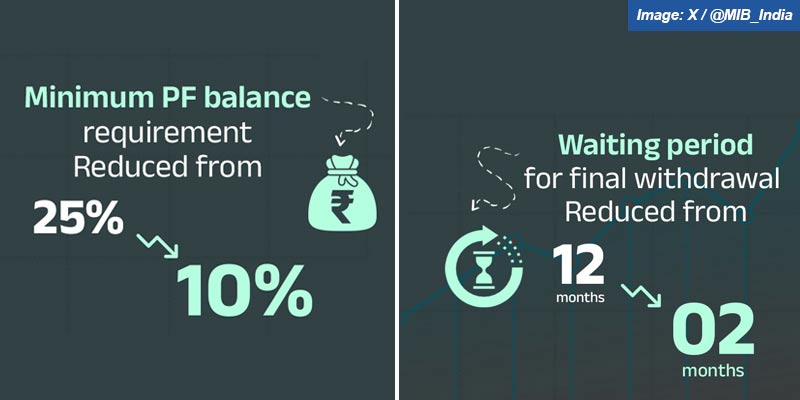
• Now, the minimum balance requirement for EPF has been reduced from existing 25 per cent to 10 per cent.
• The waiting period for final PF withdrawal after unemployment drops to two months from 12. This reverses the change introduced in October 2025, when the period was extended to 12 months.
• Under the revised provision, eligible members who leave employment and remain unemployed would be able to seek final settlement after two months instead of waiting for a year.
• The change is particularly relevant for workers who lose their jobs, leave employment or experience prolonged gaps between jobs and need access to their accumulated savings.
Employees’ Provident Fund Organisation (EPFO)
• The Employees’ Provident Fund came into existence with the promulgation of the Employees’ Provident Funds Ordinance in November, 1951, with a view to provide for the institution of provident funds for employees in factories and other establishments.
• It was replaced by the Employees’ Provident Funds and Miscellaneous Provisions Act on March 4, 1952.
• The Scheme framed under section 5 of the Act was brought into force in stages and was enforced in its entirety by November 1, 1952. This date is now celebrated as the Foundation Day of EPFO.
• The EPFO is responsible for administration of the Employees Provident Funds and Miscellaneous Provisions Act, 1952.
• The Act extends to the whole of India.
• The Central Board (EPF) is a tripartite statutory body constituted by the central government under Section 5A of the Act.
• It has the responsibility to administer the Act and the three schemes framed under the Act. The Union Minister for Labour & Employment is the chairman of the Board. The tenure of the Board is five years.
• EPFO operates one of the world's largest social security systems, administering the Employees’ Provident Fund (EPF), Employees' Pension Scheme (EPS) and Employees' Deposit Linked Insurance Scheme (EDLI).