
- India
- Nov 23
- Sreesha V.M
First SCO Civilisational Dialogue Forum issues Indraprastha Communique
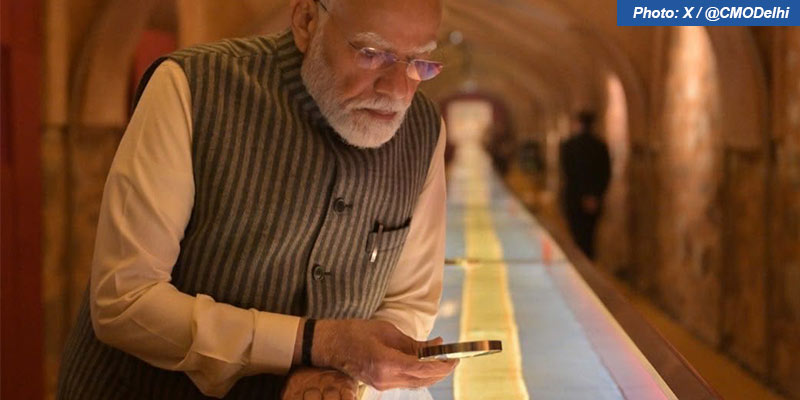
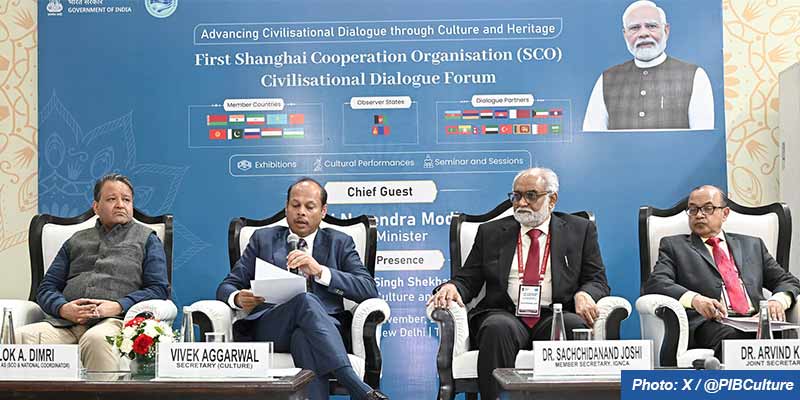
• The First Shanghai Cooperation Organisation (SCO) Civilisational Dialogue Forum concluded in New Delhi on November 22 and came out with an outcome document — Indraprastha Communique.
• It called for the protection of cultural heritage, including from illicit trafficking, and “respecting every civilisation as an equal voice”.
• It was organised jointly by the Ministry of Culture, and the Ministry of External Affairs, with the Indira Gandhi National Centre for the Arts (IGNCA) serving as the knowledge partner.
• The Forum brought together 116 delegates from 22 countries.
• Pakistan's Federal Minister Musadik Masood Malik attended the Forum.
What was the Forum about?
• The initiative builds upon the proposal made by PM Modi at the SCO Summit in Tianjin, China in 2025 to establish a dedicated platform for civilisational dialogue under the SCO framework.
• The proposal was subsequently welcomed in the Bishkek Declaration of SCO in September 2026.
• Conceived as a platform for dialogue among the diverse civilisational traditions of the SCO region, the Forum enabled participating countries to reflect on their historical interconnections and consider how these enduring links could inform contemporary cultural cooperation.
• Across three days, the programme combined high-level deliberations, thematic exchanges, heritage engagements and cultural presentations.
• As an outcome of the Forum, Indraprastha Communique was prepared to capture the principal themes, perspectives and areas of convergence emerging from the three days of deliberations.
• It reflects the discussions held during the Forum and is intended to provide a useful reference for taking forward continued dialogue and cultural cooperation among SCO countries.
• The communique is named after the ancient moniker of the region where the Purana Qila is situated.
What is the SCO?
• The Shanghai Cooperation Organisation (SCO) is an intergovernmental organisation founded in Shanghai on June 15, 2001. It was founded by the presidents of China, Kazakhstan, Kyrgyzstan, Russia, Tajikistan and Uzbekistan.
• These countries, except for Uzbekistan, had been members of the Shanghai Five group, formed on April 26, 1996 with the signing of the Treaty on Deepening Military Trust in Border Regions.
• The SCO Charter was signed during the St Petersburg heads of state meeting in June 2002 and entered into force on September 19, 2003. This is the fundamental statutory document which outlines the organisation’s goals and principles, as well as its structure and core activities.
• The Heads of State Council (HSC) is the supreme decision-making body in the SCO. It meets once a year and adopts decisions and guidelines on all important matters of the organisation.
• The Council of Heads of Government (Prime Ministers) meets once a year to discuss the strategy of multilateral cooperation and priority areas within the Organisation, determine fundamental and topical issues in economic and other spheres, and approve the budget of the SCO.
• There are also mechanisms for meetings on foreign affairs, national defence, security, economy and trade, culture, health, education, transport, emergency prevention and relief, science and technology, agriculture, judiciary, tourism, industry, energy, poverty alleviation, sports, etc.
• The SCO is an influential economic and security bloc and has emerged as one of the largest transregional international organisations.
Members of SCO
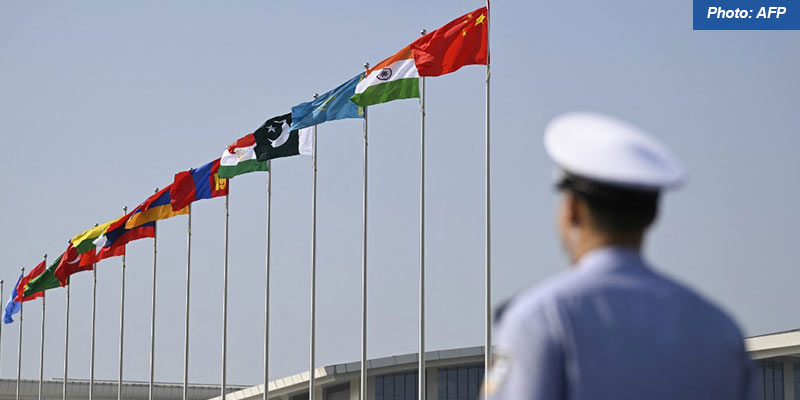
• The SCO currently comprises ten member states (China, India, Iran, Kazakhstan, Kyrgyzstan, Russia, Pakistan, Tajikistan, Uzbekistan and Belarus).
• Other observer states interested in acceding to full membership are Afghanistan and Mongolia.
• There are 15 dialogue partners — Azerbaijan, Armenia, Bahrain, Egypt, Cambodia, Qatar, Kuwait, Lao People’s Democratic Republic, Maldives, Myanmar, Nepal, the United Arab Emirates, Saudi Arabia, Turkey and Sri Lanka.
• India, Iran and Pakistan were admitted as observers at the 2005 summit. On June 9, 2017, at the historic summit in Astana, India and Pakistan officially joined the SCO as full-fledged members.
• In July 2023, Iran became a permanent member of the SCO at an India-hosted virtual summit of the grouping.
• The SCO has two permanent bodies — the SCO Secretariat in Beijing and Executive Committee of the Regional Anti-Terrorist Structure (RATS) in Tashkent.
• The chairmanship of the SCO is by rotation for a year by the Member States.
The SCO’s main goals are:
i) Strengthening mutual trust and neighbourliness among the Member States.
ii) Promoting their effective cooperation in politics, trade, economy, research, technology, culture, education, energy, transport, tourism, environmental protection and other areas.
iii) Making joint efforts to maintain and ensure peace, security and stability in the region.
iv) Moving towards the establishment of a democratic, fair and rational new international political and economic order.
India and the SCO
• India was made an observer at the July 2005 Astana Summit and has generally participated in the ministerial-level meetings of the grouping, which focus mainly on security and economic cooperation in the Eurasian region.
• India and Pakistan became its permanent members in 2017.
• India has shown keen interest in deepening its security-related cooperation with the SCO and its Regional Anti-Terrorism Structure (RATS), which specifically deals with issues relating to security and defence.
(The author is a trainer for Civil Services aspirants.)