
- India
- Nov 24
- Sreesha V.M
India unveils Rs 15,000 crore development package for Nepal
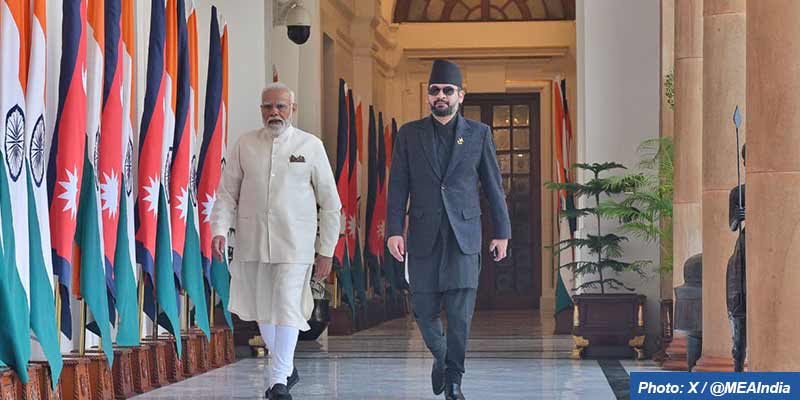
• Nepal Prime Minister Balendra Shah undertook a State Visit to India from November 22 to 23.
• This visit was PM Shah’s first visit to India after his assumption of office.
• Prime Minister Narendra Modi held talks with his Nepalese counterpart.
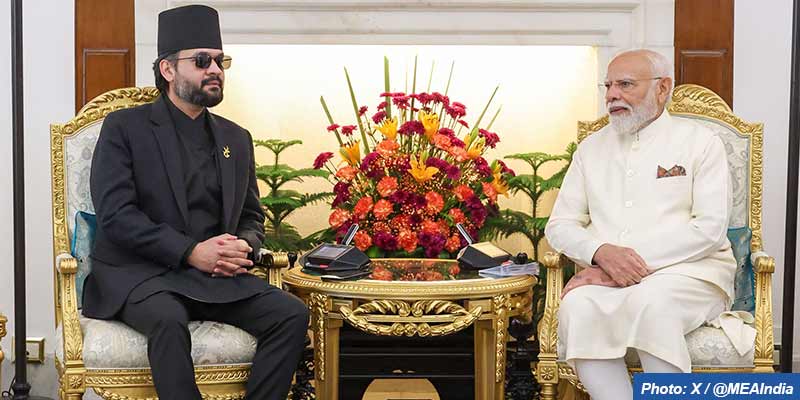
Key outcomes of the meeting:
• India will extend development assistance of Rs 15,000 crores. It will comprise a grant assistance of Rs 3,500 crores for post-disaster reconstruction and new infrastructure projects in Nepal; and a Rupee-denominated Line of Credit of Rs 11,500 crores for energy sector projects.
• The two leaders adopted a joint vision for a “Viksit Bharat and Samunnat Nepal”. It provides the roadmap for an aspirational and future-oriented partnership between India and Nepal.
• The two PMs flagged off the inaugural Sarayu-Kamala Express rail service between Ayodhya and Janakpur. This rail service will not only improve connectivity but also give a fillip to religious and cultural tourism along the 'Ramayana Circuit', and strengthen the civilisational ties between India and Nepal.
• Both sides agreed to explore similar connections to develop Buddhist and Shiv-Shakti religious tourism circuits.
• The two leaders laid virtually the foundation stone for a new Integrated Check Post (ICP) at Banbasa and welcomed the progress in the construction of the ICPs at Bhairahawa, Sunauli and Dodhara-Chandani. Three ICPs between India and Nepal are already operational.
• A new cross-border motorable bridge between Dharchula (India) and Darchula (Nepal) was inaugurated by the leaders. This will help improve direct connectivity between Western Nepal and India.
• The two leaders laid virtually the foundation stone for the 669 MW Lower Arun Hydro-Electric Project.
• In an expansion of cross-border petroleum infrastructure between India and Nepal, they dedicated to the people of Nepal phase II of the Motihari-Amlekhgunj Pipeline.
• They also laid virtually the foundation stone for the development of a petroleum terminal at Jhapa, Nepal and emphasized the importance of early commencement of work on the petroleum pipeline between Siliguri and Jhapa.
• The announced a new connectivity avenue for Nepal’s transit trade through Deendayal Port in Kandla, Gujarat. Further, access to Paradip port in Odisha will also be made available once requisite infrastructure is in place.
• The leaders announced setting up an Agro-Industrial Park in Chitwan with grant assistance from India.
• India would set up an off-shore IIT campus in Nepal. This will serve as a force-multiplier in Nepal’s education sector and also promote job creation.
• Finalisation of the Field Location Survey for the proposed Raxaul–Kathmandu electrified broad-gauge railway line.
• Both sides agreed that the existing unidirectional B345 Kathmandu-Bhairahawa-Lucknow route, will be made bidirectional.
(The author is a trainer for Civil Services aspirants.)