
- World
- Mar 13
MPs reject May’s 'improved' Brexit deal
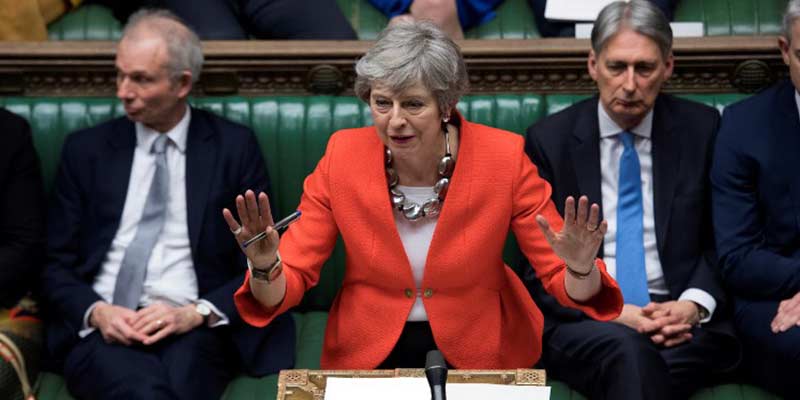
British Prime Minister Theresa May suffered yet another crushing Parliament defeat over Brexit when MPs overwhelmingly rejected her plan to quit the EU, plunging the UK into a further period of political uncertainty just 17 days before its divorce from the bloc.
May’s pleas in the House of Commons for lawmakers to support her draft exit deal, or run the risk of a chaotic exit from the EU or no Brexit at all, were rejected by 391 votes to 242 on March 12. May was hopeful that last-minute concessions from the EU would swing the vote in her favour, but many MPs dismissed those changes as ineffectual or cosmetic.
What happens next?
The vote puts Britain in uncharted territory with no obvious way forward. Exiting the EU without a deal, delaying the March 29 divorce date, a snap election or even another referendum are all now possible. May might even try a third time to get parliamentary support in the hope that hardline Eurosceptic MPs in her Conservative Party, the most vocal critics of her withdrawal treaty, might change their minds if it becomes more likely that Britain might stay in the EU after all. Opposition Labour Party leader Jeremy Corbyn called for a general election to allow the British public to decide who should lead them into the next phase of Brexit.
Two more votings this week
The historic bruising for May in January led her to seek changes to the agreement in order to table a second “meaningful vote” before Parliament that she hoped would stand a better chance of being voted through. She made a statement to the Commons soon after the bruising result was announced to confirm that Parliament will vote on a new motion to decide if the UK should leave the EU within the March 29 deadline without any deal in place.
In an unusual move, she announced that all Conservative Party MPs will be given a free vote on the issue instead of being made to vote in a particular way by the government. “This is an issue of grave importance for the future of our country. Just like the referendum, there are strongly held and equally legitimate views on both sides. For that reason, I can confirm that this will be a free vote on this side of the House,” she said.
There is unlikely to be a majority in favour of a no-deal chaotic Brexit, which would then give way to a third parliamentary motion to determine if the March 29 deadline needs to be extended, which would then have to be ratified by the EU.
‘Legal risk on Irish backstop’
The March 12 result was a decisive rejection of government strategy even after May had claimed significant changes to the controversial Irish backstop clause had been achieved. The Irish backstop, an insurance policy designed to maintain an open border on the island of Ireland between UK territory Northern Ireland and EU member-state Ireland has been the biggest sticking point for many MPs.
UK Attorney General Geoffrey Cox confirmed that the legal risk from the controversial Irish backstop “remains unchanged”, leading to hard Brexiteers from the Conservative Party refusing to back the so-called “improved” divorce arrangement. In his official advice as the country’s chief legal adviser, Cox said the extra assurances won by May do “reduce the risk that the UK could be indefinitely and involuntarily detained” in the backstop if talks on the two sides’ future relationship broke down due to “bad faith” by the EU. However, he reiterated that “legal risk remains unchanged” and if no such agreement can be reached due to “intractable differences”, the UK would have “no internationally lawful means” of leaving the backstop without EU agreement.
EU says it can’t do more
The UK Parliament’s rejection makes crashing out of the EU without a deal much more likely, the EU said, as it warned there is no more it can do. Senior EU officials lined up to voice regret at the result, and to hammer home the message that Brussels would not make any further concessions to help May win over recalcitrant MPs. A spokesman for European Council president Donald Tusk said he regretted the result, but warned that from Brussels’ viewpoint “it is difficult to see what more we can do”.
Clock ticking for May
The March 29 deadline kicked in when the UK triggered Article 50 of the Lisbon Treaty following a referendum in favour of Brexit by nearly 52 per cent in June 2016. If Britain quits the world’s biggest trading bloc without a deal, business leaders warn it would bring chaos to markets and supply chains, and other critics say could cause shortages of food and medicines.