
- World
- Jul 18
Short Takes / Thirty Meter Telescope
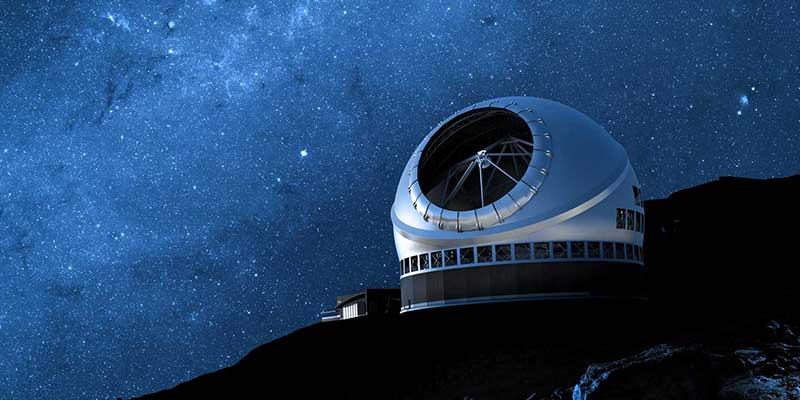
Protesters block telescope project in Hawaii
Protesters led by a group of native Hawaiian elders delayed the start of construction for a giant new telescope atop Hawaii’s tallest mountain, but officials began making arrests and vowed the project would ultimately proceed.
Construction crews had planned to begin moving heavy equipment up the access road on July 17 to break ground on the site of the Thirty Meter Telescope (TMT), expected to be one of the world’s most advanced.
Demonstrators formed a human blockade for a third straight day of an access road leading to an area they consider sacred ground at the summit of Mauna Kea, a dormant volcano on Hawaii’s Big Island and site of the planned $1.4 billion observatory.
Astronomers consider the Mauna Kea summit, already dotted with telescopes, one of the world’s best places for viewing the cosmos. The consortium behind the TMT observatory includes astronomers from the California Institute of Technology, as well as Japan, India and Canada.
Native Hawaiians say the project will disturb holy ground crucial to their connection with ancestors and the heavens.
The peak of Mauna Kea, which stands 4,205 m tall, is not only the highest point in Hawaii but ranks as the world’s tallest mountain as measured from base to summit. The summit of M Everest in the Himalayas is the highest point on Earth, standing 8,848 m above sea level.
What is the TMT?
The Thirty Meter Telescope (TMT) is a new class of extremely large telescopes that will allow us to see deeper into space and observe cosmic objects with unprecedented sensitivity.
With its 30 m prime mirror diameter, the TMT will be three times as wide, with nine times more area, than the largest currently existing visible-light telescope in the world.
This will provide unparalleled resolution with TMT images more than 12 times sharper than those from the Hubble Space Telescope.
When operational, TMT will provide new observational opportunities in essentially every field of astronomy and astrophysics. Observing in wavelengths ranging from the ultraviolet to the mid-infrared, this unique instrument will allow astronomers to address fundamental questions in astronomy ranging from understanding star and planet formation to unraveling the history of galaxies and the development of large-scale structure in the universe.
Who is building it?
The Thirty Meter Telescope is being designed and developed by the TMT International Observatory (TIO).
It is a non-profit international partnership between the California Institute of Technology, the University of California, the National Institutes of Natural Sciences of Japan, the National Astronomical Observatories of the Chinese Academy of Sciences, the Department of Science and Technology of India, and the National Research Council (Canada). The Association of Universities for Research in Astronomy (AURA) is a TIO associate and major funding for TMT has been provided by the Gordon & Betty Moore Foundation. The TIO will also run the TMT operations once the telescope is completed.
The Indian connection
The TMT project is the joint responsibility of the Department of Science & Technology (DST) and the Department of Atomic Energy (DAE) from India.
Hanle in Ladakh was one of the sites considered for hosting the telescope. Hanle being a protected area, the project required clearances from state and central agencies such as environmental, defence, external affairs and home affairs.
The Cabinet has given its approval for India’s participation in the TMT project at a total cost of Rs 1,299.8 crore from 2014 to 2023.
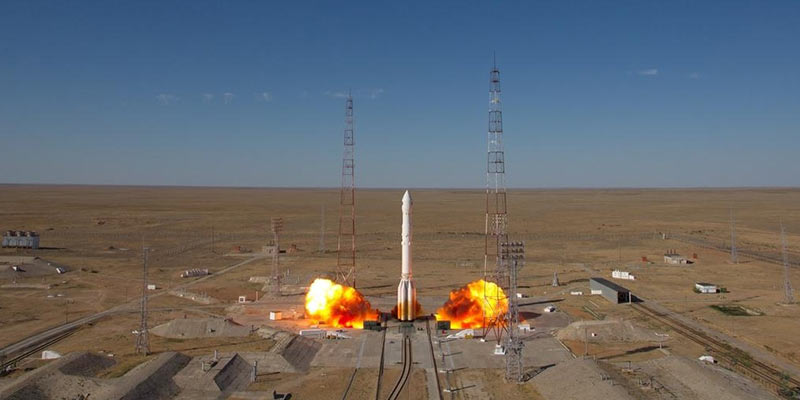
Russia sends telescope into space after delays
Russia launched a space telescope on July 13 from the cosmodrome in Baikonur, Kazakhstan, in a joint project with Germany.
The launch was originally scheduled for June 21, but was postponed twice because of a battery problem.
A video posted on the website of Roscosmos, the Russian space agency, showed a Proton-M rocket carrying the Spektr-RG taking off from the launch pad.
The Spektr-RG, developed with Germany, is a space observatory intended to replace the Spektr-R, known as the “Russian Hubble”, which Roscosmos said it lost control of in January. Spektr-R was launched in 2011 to observe black holes, neutron stars and magnetic fields. Its successor will take up similar duties.
The Spektr-RG aims to conduct a complete X-ray survey of the sky by 2025, the first space telescope to do so.
A third satellite, Spektr-UF, is slated to launch in 2025 and will be equipped for visible-light and ultraviolet observations.
Since 2011, Russia has been the only country capable sending teams to the International Space Station (ISS).
The next launch to the ISS is scheduled for July 20 and will carry an Italian and US astronauts together with a Russian cosmonaut.