
- World
- Feb 28
Our planet gets a temporary mini-moon
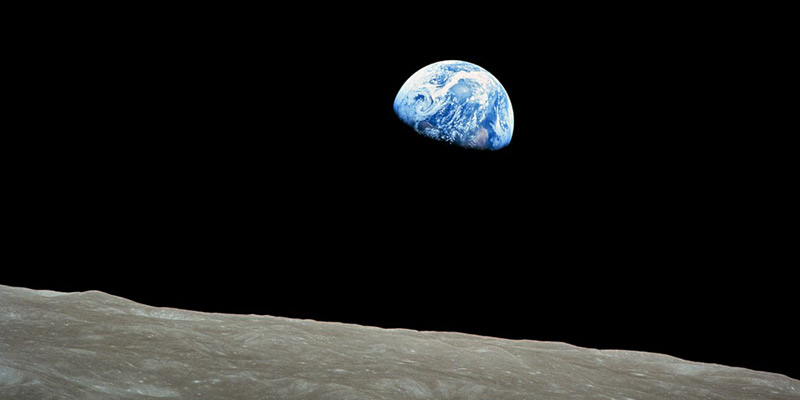
Earth has acquired a second ‘mini-moon’ about the size of a car, according to astronomers who spotted the object circling our planet.
A mini-moon, also known as a temporarily captured object, is a space rock that gets caught in Earth’s orbit for several months or years before shooting off into the distant solar system again or burning up in our planet’s atmosphere.
The object - roughly 1.9-3.5 metres in diameter - was observed by researchers Kacper Wierzchos and Teddy Pruyne at the Catalina Sky Survey in Arizona on the night of February 15. “Big news. Earth has a new temporarily captured object / possible mini-moon called 2020 CD3”, likely to be a C-type asteroid, Wierzchos tweeted on February 26.
Catalina Sky Survey is supported by the Near-Earth Object Observations Programme, which reports to NASA’s Planetary Defence Coordination Office. Specialists at Catalina help NASA discover and track near-Earth objects that could be potentially hazardous to the planet.
Its route suggests it entered Earth’s orbit three years ago. The astronomer said it was a “big deal” as “this is just the second asteroid known to orbit Earth (after 2006 RH120, which was also discovered by the Catalina Sky Survey)”.
In September 2006, observers at the Catalina Sky Survey in Arizona found an object orbiting the Earth. A closer inspection revealed that the object was a natural body and was called 2006 RH120. It was a tiny asteroid measuring just a few metres across but it still qualified as a natural satellite just like the moon. By June 2007, it was gone.
The Smithsonian Astrophysical Observatory’s Minor Planet Center, which collects data on minor planets and asteroids, said “no link to a known artificial object has been found”, implying it was likely an asteroid captured by Earth’s gravity.
“Orbit integrations indicate that this object is temporarily bound to the Earth,” it said.
Tech entrepreneur Elon Musk said the car-sized object was not the Tesla Roadster he launched into space in 2018, which is now orbiting the sun.
Earth’s new neighbour is not in a stable orbit around the planet and is unlikely to be around for very long.
“It is heading away from the Earth-moon system as we speak,” Grigori Fedorets, research fellow at Queen’s University Belfast in Northern Ireland, told New Scientist magazine, and was likely to escape in April.
Manorama Yearbook app is now available on Google Play Store and iOS App Store