
- World
- May 28
Explainer / United Nations Command
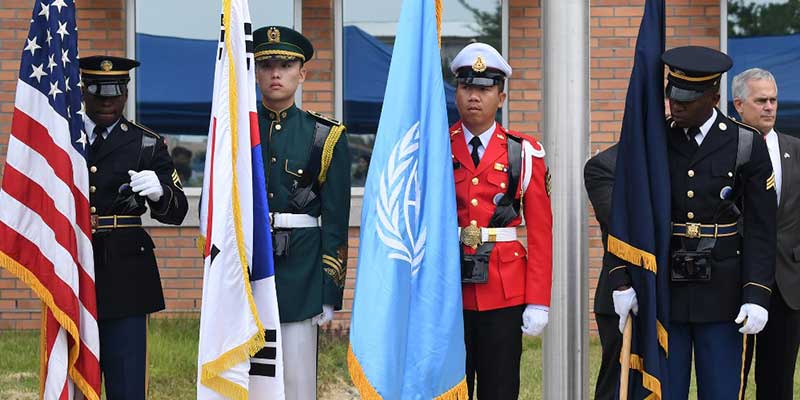
Both North and South Korea violated the armistice agreement that governs their shared border when their troops exchanged gunfire on May 3, the US-led United Nations Command (UNC) said.
A multinational UNC special investigation team concluded that troops from both sides had violated the agreement, which has been in place since the 1950-1953 Korean War ended with an armistice rather than a peace treaty.
The UNC, which is commanded by an American general, oversees affairs in the heavily fortified Demilitarized Zone (DMZ) between the two Koreas, which remain technically at war.
What is the purpose of UN Command?
Following the invasion of North Korea in South Korea in 1950, the UN called on countries to unite and assist South Korea.
The UN Security Council named the US as executive agent to implement the resolution and direct UN military operations in Korea.
US President Harry S. Truman ordered Douglas MacArthur, Commander-in-Chief, Far East Command, to provide whatever assistance was needed to repel this invasion. General MacArthur committed US air and naval forces and on July 24, in Tokyo, established General Headquarters, United Nations Command.
Troop units from other countries of the UN also arrived. During the three years of the Korean War, military forces of these nations fought together as members of the UNC.
On July 27, 1953, the shooting ended. An armistice was signed at Panmunjom which provided for the end of the fighting and eventual political settlement of the war. The shooting ended, but the troops remained, each side pulling back 2,000 meters from the last line of military contact to insure peace, to watch the Demilitarized Zone (DMZ), and to guard against any resumption of hostilities.
What is DMZ?
The DMZ, which was established as a buffer at the end of the Korean War, is a de facto border separating North and South Korea. It is officially jointly overseen by North Korea and the UN Command.
Unlike its name, the DMZ is the world’s most heavily fortified border, guarded by mines, barbed wire fences and combat troops on both sides. Gunfire exchanges inside the DMZ are not unusual, but no deadly clashes have occurred in recent years. About 28,500 US troops are stationed in South Korea.
The recent incident came amid a deadlock in negotiations between North Korean and US officials on the North’s nuclear weapons programme.
‘Both countries breached the armistice’
North Korean troops in a guard post committed a violation when they fired four rounds of 14.5mm ammunition at a UNC guard post on the southern side of the Military Demarcation Line (MDL) that divides the DMZ, the UNC said in a statement.
South Korean and US officials have said they believe the gunshots were an accident, but the UNC said “the investigation was unable to definitively determine if the four rounds were fired intentionally or by mistake”.
North Korean military officials acknowledged the receipt of questions from the investigators, but have not provided an official response, the UNC said. North Korea has not commented publicly on the incident.
South Korean troops also violated the armistice agreement when they fired two volleys of gunfire back toward North Korea half an hour later, the UNC concluded.
South Korea’s defence ministry said it regretted the UNC findings, and they lacked substantive investigation into North Korea’s role. The South Korean military followed proper procedures in responding to the shooting, a ministry statement said.
Manorama Yearbook app is now available on Google Play Store and iOS App Store