
- World
- Jul 15
Explainer / South China Sea dispute
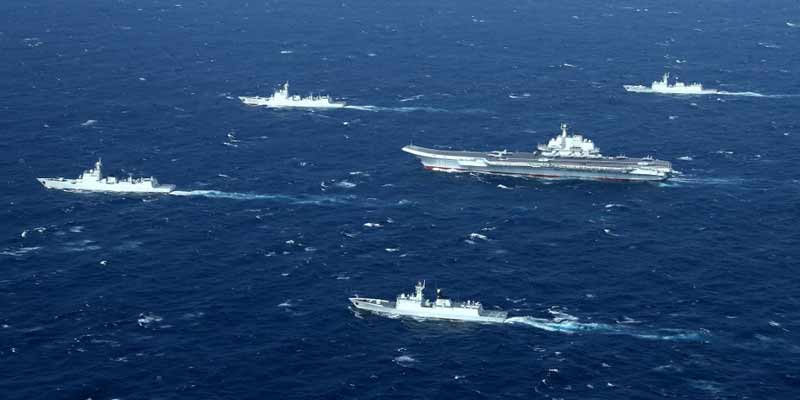
Refuting US allegations of building a “maritime empire” in the disputed South China Sea, China claimed its jurisdiction over the vast ocean existed for more than 1,000 years and accused Washington of attempting to sow discord between Beijing and the Southeast Asian countries.
In a major policy speech on July 13, US Secretary of State Mike Pompeo said the world will not allow China to treat the strategically important South China Sea (SCS) as its “maritime empire” and vowed to support worried Southeast Asian countries against Beijing’s “campaign of bullying” to control the resource-rich region.
Significance of South China Sea
Beijing claims almost all of the 1.3 million square mile South China Sea as its sovereign territory. China has been building military bases on artificial islands in the region also claimed by Brunei, Malaysia, the Philippines, Taiwan and Vietnam.
About $3 trillion worth of trade passes through the waterway each year.
Control of the South China Sea would allow China to dominate a major trade route through which most of its imported oil flows. It would also allow China to disrupt, or threaten to disrupt, trade shipments to all countries in East and Southeast Asia — as well as deny access to foreign military forces, particularly the US.
Beijing has impeded commercial activity like fishing or mineral exploration by countries like Vietnam and the Philippines, claiming that the ownership of territory belonged to China for hundreds of years.
US-China dispute on the issue
China’s claim to the South China Sea is based in history, dating back to records from the Xia and Han dynasties. China delineates its claims via the nine-dash line, which Chiang Kai Shek advanced in 1947. During China’s republican era, China surveyed, mapped and named 291 islands and reefs in the region.
The US contends that the South China Sea is international water, and sovereignty in the area should be determined by the United Nations Convention on Laws of the Sea (UNCLOS).
UNCLOS states that countries can’t claim sovereignty over any land masses that are submerged at high tide, or that were previously submerged but have been raised above high tide level by construction.
In 2016, a ruling by Permanent Court of Arbitration under the UNCLOS invalidated most of China's claims to maritime rights in the South China Sea. The ruling came about as a result of the Philippines challenging China’s claims in an arbitration court. However, China has rejected the ruling.
The US sends warships regularly through the strategic waterway to demonstrate freedom of navigation there.
Pompeo said that America stands with its Southeast Asian allies and partners in protecting their sovereign rights to offshore resources, consistent with their rights and obligations under international law.
Reacting to Pompeo’s statement, Chinese foreign ministry spokesman Zhao Lijian told a media briefing in Beijing that the secretary of state’s remarks neglected the history and facts about the SCS.
His remarks also breaches the US government’s open commitment to not taking position on sovereignty related issues of the SCS, Zhao said.
Manorama Yearbook app is now available on Google Play Store and iOS App Store