
- World
- Aug 12
Putin claims Russia has developed world’s first COVID-19 vaccine
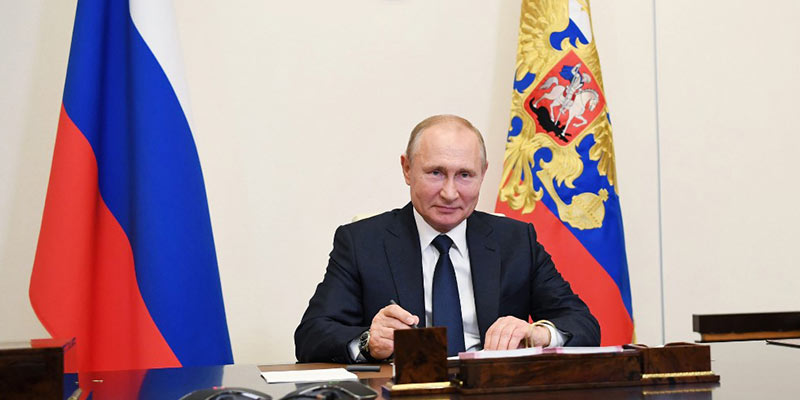
President Vladimir Putin said that Russia has become the first country to grant regulatory approval to a COVID-19 vaccine after less than two months of human testing.
The vaccine, which will be called ‘Sputnik V’ in homage to the world’s first satellite launched by the Soviet Union in 1957, has however not yet completed its final trials.
Moscow’s decision to grant approval before then has raised concerns among some experts. Russian officials said it provided safe and stable immunity.
A viral vector vaccine
The vaccine has been developed by the Gamaleya Research Institute of Epidemiology and Microbiology.
Putin said one of his daughters had been inoculated with the vaccine.
It is reportedly a viral vector vaccine, meaning it employs another virus to carry the DNA encoding of the needed immune response into cells.
It is based on the adenovirus, which causes the common cold, that Gamaleya researchers have engineered to carry the gene for the surface protein, or spike, of SARS-CoV-2.
The Russian business conglomerate Sistema has said it expects to put the vaccine into mass production by the end of the year.
Why are experts concerned by the announcement?
Scientists have raised concerns about the speed of development of Russian vaccine, suggesting that researchers might be cutting corners and coming under pressure from authorities to deliver.
The approval by the health ministry comes before the start of a larger trial involving thousands of participants, commonly known as a Phase III trial. Such trials, which require a certain proportion of participants to catch the virus to observe the vaccine’s effect, are normally considered essential precursors for a vaccine to receive regulatory approval.
The World Health Organisation said any WHO stamp of approval on a COVID-19 vaccine candidate would require a rigorous safety data review. “We are in close contact with the Russian health authorities and discussions are ongoing with respect to possible WHO pre-qualification of the vaccine,” the UN agency said.
Germany said Russia’s COVID-19 vaccine had not been sufficiently tested, adding the aim was to have a safe product rather than just being first to start vaccinating people.
More than 100 possible COVID-19 vaccines are being developed around the world. Only a few are in final Phase III human trials.