
- World
- Jan 07
Saudi Arabia, allies restore ties with Qatar
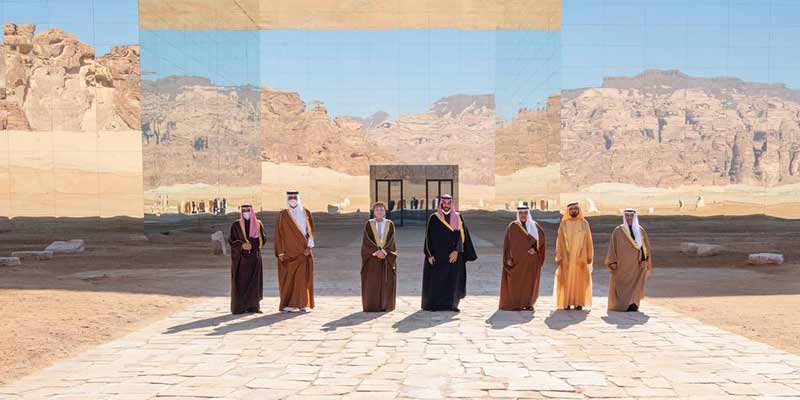
• Saudi Arabia and its allies — Egypt, the United Arab Emirates and Bahrain — have announced to restore ties with Qatar. Saudi Arabia will reopen its land borders with Qatar, three years after it and its allies cut land, sea and air access to the country.
• Qatar’s ruling Emir Sheikh Tamim bin Hamad Al Thani arrived in Saudi Arabia and was greeted with an embrace by the Crown Prince of Saudi Arabia, following an announcement that the kingdom would end its years long embargo on the country.
• The Emir reached the ancient desert city of Al-Ula for a summit of the six-nation Gulf Cooperation Council, which comprises Saudi Arabia, the UAE, Bahrain, Kuwait, Oman and Qatar.
• The diplomatic breakthrough comes after a final push by the outgoing Trump administration and Kuwait to mediate an end to the crisis.
• India welcomed the reconciliation and rapprochement among countries in the Gulf region at the GCC Summit and hoped that such encouraging developments will further promote peace, progress and stability in that region.
Why these four countries cut ties with Qatar?
• In June 2017, Saudi Arabia led its allies the UAE, Bahrain and Egypt to cut ties with Qatar, saying it was too close to Iran and funding radical Islamist movements — charges Doha staunchly denies.
• After severing ties, the four countries issued a list of 13 demands for Qatar, including that it shut down its broadcaster Al Jazeera. The Saudi-led quartet subsequently forced Qataris to leave, closed their airspace to Qatari aircraft and sealed their borders and ports, separating some mixed-nationality families.
• The Saudi border, which Qatar relied on for the import of dairy products, construction materials and other goods, opened briefly during the past three years to allow Qataris into Saudi Arabia for Haj pilgrimage.
• The move separated families who had intermarried with Qataris and ended years of visa-free travel for Qataris in parts of the Gulf. It also pushed Qatar diplomatically closer to Turkey and Iran, which both rushed to Doha’s aid with food and medical supplies in the first days of the embargo.
• Kuwait and the United States have been mediating in the dispute that Washington says hampers efforts to contain Iran, a key issue for Saudi Arabia especially after attacks on its energy installations last year.
• The Gulf feud also complicated efforts to stabilise countries reeling from years of turmoil as the parties and their respective allies vied for influence from Libya to Yemen and Sudan.
• Gas-rich Qatar also took an economic hit from the boycott, and its national airline was forced to take longer and more costly routes. It was unclear how the embargo would impact its ability to host the 2022 FIFA World Cup.
• The communique contained no detailed confirmation of a deal. Arab states boycotting Qatar could resume travel and trade links with Doha within a week, but restoring diplomatic ties may require more time.
What is the Gulf Cooperation Council?
• The Gulf Cooperation Council (GCC) was established by an agreement concluded on May 25, 1981 in Riyadh among Bahrain, Kuwait, Oman, Qatar, Saudi Arabia and UAE in view of their special relations, geographic proximity and similar political systems.
• GCC comprises some of the fastest growing economies in the world, mainly due to an increase in oil and natural gas revenues coupled with a building and investment boom backed by reserves, etc.
The GCC Charter states that the basic objectives are to:
• Have coordination, integration and inter-connection between Member States in all fields.
• Strengthen ties between their peoples.
• Formulate similar regulations in various fields such as economy, finance, trade, customs, tourism, legislation, administration.
• Foster scientific and technical progress in industry, mining, agriculture, water and animal resources.
• Establish scientific research centres.
• Set up joint ventures.
• Encourage cooperation of the private sector.
The structure of the GCC consists of:
• The Supreme Council which comprises the Heads of State of the six member countries.
• The Ministerial Council which comprises the foreign ministers of the six member countries.
• The Secretariat General which prepares reports, studies, accounts and budgets for the GCC.
• The Secretariat is located in Riyadh.
India and the GCC
• The Gulf Cooperation Council (GCC) as a collective entity has tremendous significance for India.
• India has a close and strong relationship with the Gulf region which has remained a region of prime importance in our extended neighborhood.
• Bilateral friendly ties with each of the Gulf countries are deep-rooted in shared history and have been constantly nourished through growing multidimensional cooperation and vibrant people-to-people engagement.
• There has been an unprecedented boost in political and economic engagement with the Gulf region over the past few years. With sustained efforts and focused engagement, the traditional buyer-seller relationship (basically focused on energy supplies) has been transformed into a strategic engagement.
• The Gulf region is one of the largest trading partners of India with a bilateral trade of over $150 billion in 2018-19. It is the source of more than 50 percent of India’s oil and gas needs.
• The region hosts a nine million strong Indian community and contributed an annual remittance of over $48 billion in 2018 (out of total remittances to India of $78.6 billion).
• During 2019-20, the close political engagement with the countries in the region continued to grow. The visit of Saudi Crown Prince Mohammed Bin Salman to India in February 2019 further consolidated the bilateral partnership and opened avenues for enhanced cooperation and prospects of increased Saudi investments in India’s infrastructure.
• PM Narendra Modi visited Bahrain (first ever visit by an Indian PM to the nation) and UAE in August 2019, where he was conferred their respective nations’ highest civilian awards.
• In October 2019, PM Modi and Saudi King Salman signed an agreement for establishment of a Strategic Partnership Council between the two countries.
Manorama Yearbook app is now available on Google Play Store and iOS App Store