
- World
- Jul 26
Explainer / Four new sports in Tokyo Olympics
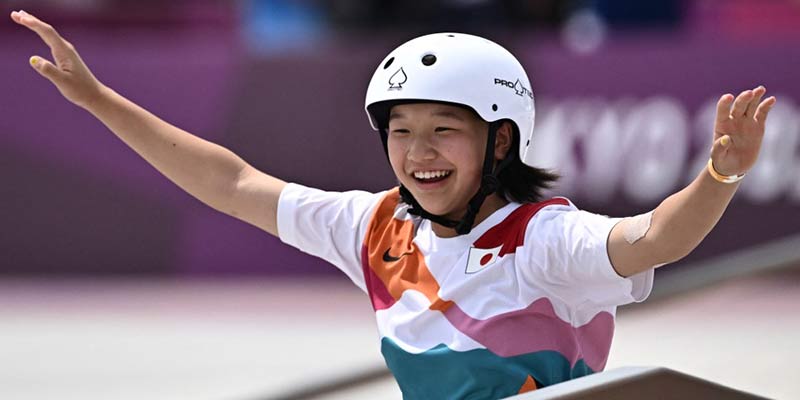
• Japan’s 13-year-old Momiji Nishiya clinched the Olympic title in the inaugural women’s skateboarding competition on July 26.
• Nishiya, at the age of 13 years and 330 days, came out on top of an unusually young field of competitors, with all three medallists in their teens.
• Brazil’s Rayssa Leal (13 years) bagged the silver and Japan’s Funa Nakayama (16 years), got bronze.
• US diver Marjorie Gestring remains the youngest individual Olympic champion after winning the 3m springboard at the 1936 Berlin Games at 13 years and 267 days.
Four new sports
The Tokyo Olympics have added four new sports — skateboarding, surfing, karate and sport climbing. Also, baseball and softball are returning to the Olympics. Last contested at Beijing 2008, baseball and softball have been reinstated to the Olympic programme.
With this, the Tokyo Games is the biggest-ever with 339 medal events in the line up.
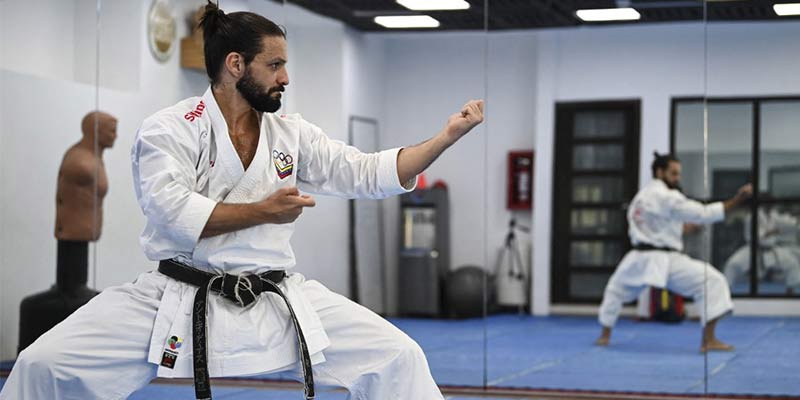
Karate
• Karate is a martial art that originated in Okinawa during the Ryukyu Dynasty period. It spread throughout Japan during the 1920s and then worldwide following World War II. It is predominantly a striking, kicking and punching art. A karate practitioner is called a karateka.
• Karate’s quest to secure a place on the Olympic programme dates back to the 1970s. In 2015, the Tokyo 2020 Organising Committee proposed the inclusion of karate as one of five additional sports, a decision that was approved by the International Olympic Committee.
• Athletes will compete at the Nippon Budokan, the spiritual home of Japanese martial arts and a legacy venue from the Tokyo 1964 Games.
• Karate competition consists of kata (forms) and kumite (sparring).
• Kata are demonstrations of forms consisting of a series of offensive and defensive movements targeting a virtual opponent. In kumite, two karateka face each other in a matted competition area measuring 8mx8m.
Sport climbing
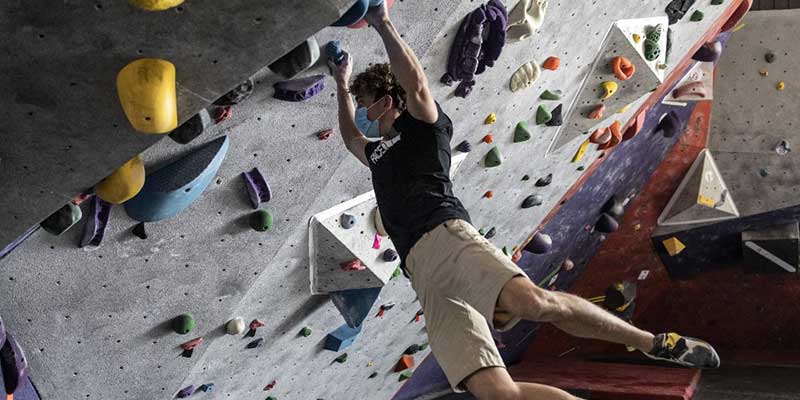
• Sport climbing takes the challenge of scaling steep ascents to a whole new level. Using a range of hand and foot holds of different shapes and sizes, climbers put their skills and strength into practice on a vertical wall.
• The wall may feature varying angles of either positive (known in climbing as a slab) or negative (steep, overhanging) sections.
• The sport will feature three disciplines: Speed, Bouldering and Lead.
• Speed climbing pits two climbers against each other, both climbing a route on a 15m wall. In Bouldering, athletes scale a number of fixed routes on a 4.5m wall in a specified time. In Lead, athletes attempt to climb as high as possible on a wall measuring over 15m in height within a specified time.
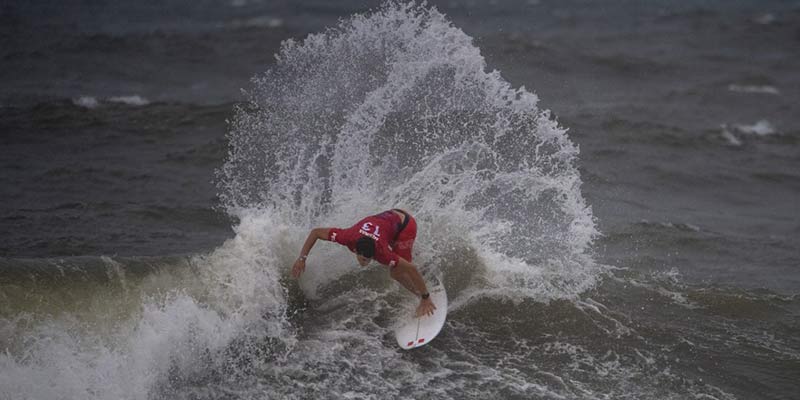
Surfing
• Surfing is included to bring more youthful and vibrant events and culture into the Olympic programme.
• The art of riding waves on a board is said to date back to ancient Polynesians living in Hawaii and Tahiti. Surfing was popularised by Duke Kahanamoku, from Hawaii, who won three gold medals in swimming at the Stockholm 1912 and Antwerp 1920 Games when competing for the US.
• Kahanamoku is considered “the father of modern surfing” and planted the seed for surfing’s future Olympic inclusion by expressing his dream to see the sport become an Olympic sport while accepting his medal on the podium at the 1912 Games.
• The competition will take place in the ocean, where the condition of the waves, the direction and strength of the wind, and the ebb and flow of the tide will all be factors. No two waves are alike, making surfing a competition where athletes compete against each other while balancing the changing conditions of nature.
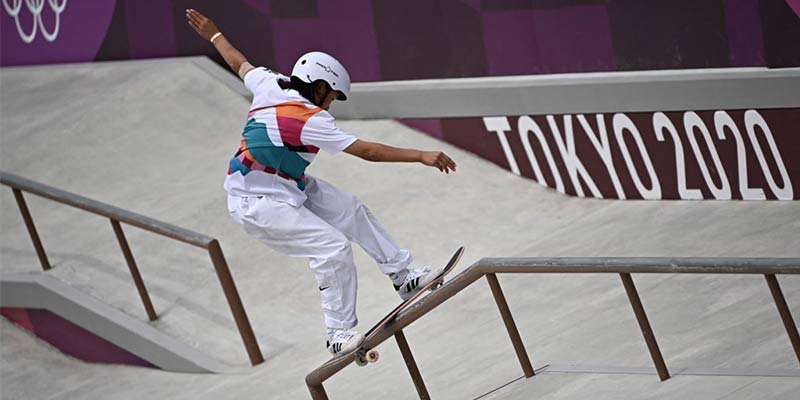
Skateboarding
• A skateboard is a short, narrow board with two small wheels attached to the bottom of either end. Skateboarders ride on this apparatus to perform tricks including jumps (ollies), flips and mid-air spins. The sport of skateboarding will make its Olympic debut at the Tokyo 2020 Games.
• There are various theories about the origins of skateboarding, but it is generally held that the sport began in the 1940s on the west coast of the US when metal wheels were attached to a narrow wooden board. In the 1950s, clay composite replaced metal as the material of choice for the wheels, and the first ‘Sidewalk Surfboard’ became commercially available, which in turn developed into the skateboard that we know today.
• The sport was a big hit with the younger generation and with the advent of the urethane wheel in the 1970s, grew in global popularity. Since the 1980s, skateboarding has been an essential part of street culture.
• There will be two disciplines on the Skateboarding programme at Tokyo 2020: street and park.
• In the street category, the competition is held on a straight ‘street-like’ course featuring stairs, handrails, curbs, benches, walls and slopes.
• Park competitions take place on a hollowed-out course featuring a series of complicated curves — some resembling large dishes and dome-shaped bowls.
Manorama Yearbook app is now available on Google Play Store and iOS App Store