
- World
- Sep 11
King Charles III formally proclaimed Britain’s new monarch
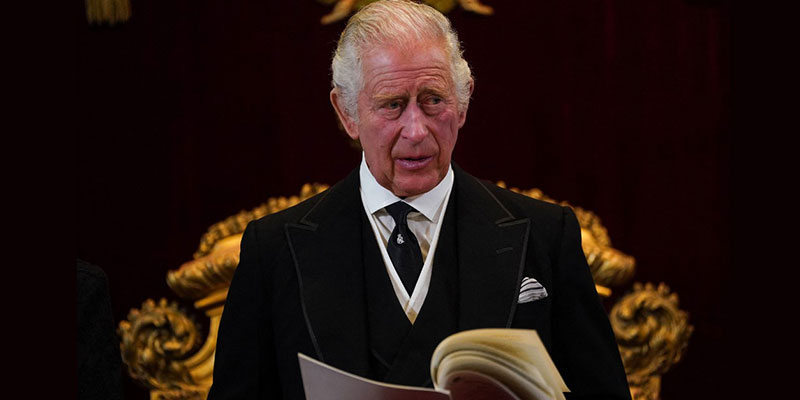
• King Charles III was proclaimed Britain’s new monarch on September 10 in a ceremony at St. James’s Palace in London, steeped in ancient tradition and political symbolism, televised for the first time in history.
• He was joined by his wife, Queen Consort Camilla, and his son and heir Prince William — the new Prince of Wales, who added their signatures to the formal proclamation documents.
• The throne had passed to the 73-year-old former Prince of Wales following the death of his mother, Queen Elizabeth II, on September 8.
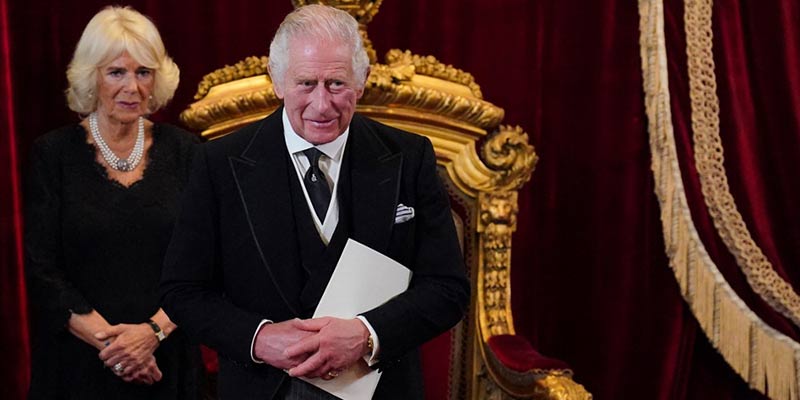
• The ceremony marked his formal declaration and oath-taking at St. James’s Palace in London.
• A Principal Proclamation was read in public for the first time by the Garter King of Arms from the balcony overlooking Friary Court at St James’s Palace. It was accompanied by a 41-gun salute fired by The King’s Troop Royal Horse Artillery at Hyde Park in London.
• The trumpeters sounded a Royal Salute and the Band of Coldstream Guards followed with the National Anthem.
• King Charles confirmed the tradition of surrendering all revenues and the Crown Estate to the country in return for the Sovereign Grant that covers royal costs in the UK.
• There will be months before the next big event — the King's coronation. This is to allow for a period of mourning and to leave time for officials to organize the ceremony.
• Queen Elizabeth II was crowned on June 2, 1953, some 16 months after her accession on February 6, 1952, when her father, King George VI, died.
• King Charles III, formerly known as The Prince of Wales, was born in 1948 and became heir apparent on the accession of Queen Elizabeth II in 1952.
• When his mother acceded to the throne in 1952, the 3-year-old prince became the Duke of Cornwall. He became Prince of Wales at 20.
• The King will be the head of state for the UK and 14 other countries, including Australia, Canada, New Zealand and Papua New Guinea.
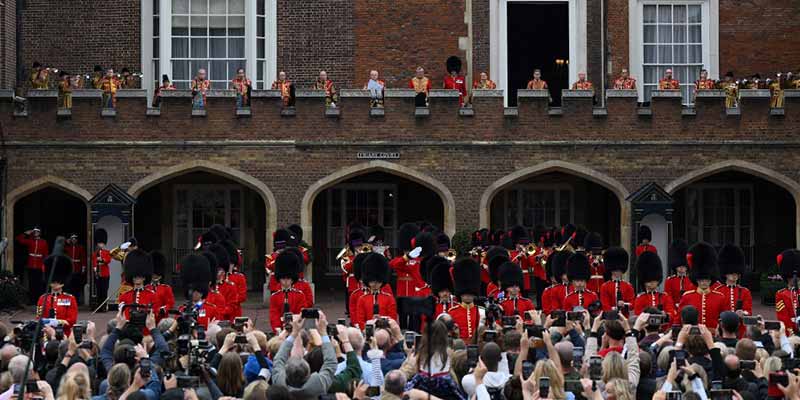
St. James’s Palace
• Located just off The Mall in central London, St. James’s Palace has a rich history having been a residence of Kings and Queens of England for over 300 years until the reign of Queen Victoria, who chose to live in Buckingham Palace, just a stone’s throw away.
• As the home of several members of the Royal Family and their offices, St. James’s Palace today hosts up to 100 receptions each year for charities associated with members of the Royal Family.
• St. James’s Palace retains an important ceremonial function. The Accession Council meets in St. James's Palace following the death of a monarch and the Accession of a new Sovereign is publicly proclaimed by Garter King of Arms from the Proclamation Gallery overlooking Friary Court.
• Garter King of Arms gives advice relating to Coats of Arms and other heraldic symbols to the Royal Household and the government. He or she also advises on and takes part in a number of traditional Royal ceremonies, including the annual Garter Day held at Windsor Castle.
What is the Commonwealth?
• The Commonwealth is a voluntary association of 56 independent and equal countries.
• It is home to 2.5 billion people, and includes both advanced economies and developing countries. As many as 32 of its members are small States, including many island nations.
• The member States have agreed to shared goals like development, democracy and peace.
• The Commonwealth’s roots go back to the British Empire. But today any country can join the modern Commonwealth. The last two countries to join the Commonwealth were Gabon and Togo in 2022.
• King Charles III is Head of the Commonwealth.
• The combined GDP of Commonwealth countries in 2021 was US$13.1 trillion and is estimated to reach $19.5 trillion in 2027, almost doubling in ten years from $10.4 trillion in 2017.
• The Commonwealth is often described as a ‘family’ of nations.
At the heart of this family are three intergovernmental organisations:
i) The Commonwealth Secretariat works with member governments to deliver on priorities agreed by Commonwealth Heads of government and promotes international consensus building. It provides technical assistance and advisory services to members, helping governments achieve sustainable, inclusive and equitable development. The Secretariat’s work programme encompasses areas such as democracy, rule of law, human rights, governance and social and economic development.
ii) The Commonwealth Foundation supports people's participation in democracy and development.
iii) The Commonwealth of Learning promotes open learning and distance education.
Manorama Yearbook app is now available on Google Play Store and iOS App Store