
- World
- Dec 16
619,000 malaria deaths recorded globally in 2021
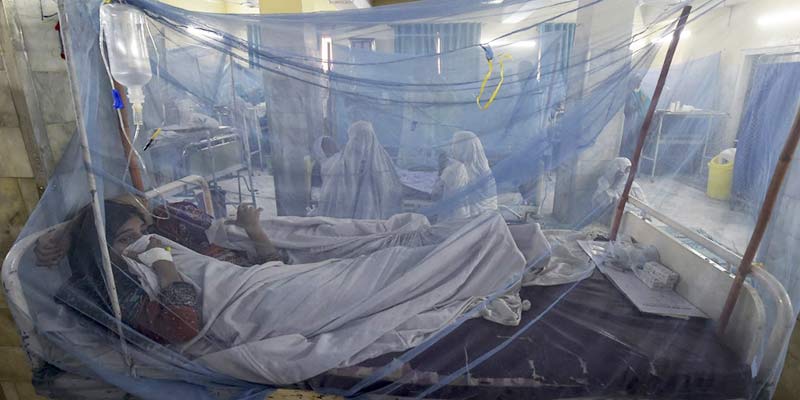
Despite the continued impact of COVID-19, malaria cases and deaths remained stable throughout last year, according to the World Malaria Report 2022 published by the World Health Organisation (WHO).
The World Malaria Report 2022 presents progress in several important health and development goals in the global efforts to reduce the burden of malaria overall and eliminate the disease where possible.
Some facts on malaria:
• Malaria is a life-threatening disease. It is caused by Plasmodium parasites. The parasites are spread to people through the bites of infected female Anopheles mosquitoes, called “malaria vectors”.
• The first symptoms – fever, headache, and chills – may be mild and difficult to recognise as malaria. If not treated within 24 hours, P. falciparum malaria can progress to severe illness, often leading to death.
Key points of the World Malaria Report 2022:
• The year 2021 saw an estimated 619,000 malaria deaths globally compared to 625,000 in 2020, and 568,000 in 2019.
• Although cases continued to rise between 2020 and 2021, the rate was slower than that from 2019 to 2020.
• The global tally of malaria cases reached 247 million in 2021, compared to 245 million in 2020 and 232 million in 2019.
• The WHO African Region, with an estimated 234 million cases in 2021, accounted for about 95 per cent of global cases.
• As many as 29 countries accounted for 96 per cent of malaria cases globally.
• Four countries – Nigeria (27 per cent), the Democratic Republic of the Congo (12 per cent), Uganda (5 per cent) and Mozambique (4 per cent) – accounted for almost half of all cases globally.
• India accounted for 79 per cent of cases in WHO South-East Asia Region.
• Sri Lanka was certified malaria free in 2016 and remains malaria free.
• Since 2015, the WHO European Region has been free of malaria.
• An estimated additional 13.4 million cases were attributed to disruptions during the COVID-19 pandemic.
• Globally, the malaria mortality rate (deaths per 100,000 population at risk) halved from about 30 in 2000 to 15 in 2015. In 2021, the mortality rate decreased to 14.8.
• About 96 per cent of malaria deaths globally were in 29 countries.
• Four countries accounted for just over half of all malaria deaths globally in 2021: Nigeria (31 per cent), the Democratic Republic of the Congo (13 per cent), the Niger (4 per cent) and the United Republic of Tanzania (4 per cent).
• In the WHO South-East Asia Region, malaria deaths reduced by 74 per cent, from about 35,000 in 2000 to 9,000 in 2019. The number of deaths has remained the same over the past three years.
• India accounted for about 83 per cent of all malaria deaths in the WHO South-East Asia Region.
• Progress towards malaria elimination is increasing. In 2021, there were 84 malaria endemic countries compared with 108 in 2000.
Preventive measures
• Insecticide treated bednets (ITNs) are considered the main drivers of the declines in malaria transmission and burden in the period 2005–2015, especially in settings with moderate to high transmission.
• Manufacturers delivered about 220 million ITNs to malaria endemic countries in 2021. Of these, 46 per cent were pyrethroid–piperonyl butoxide (PBO) nets and 9 per cent were dual active ingredient ITNs.
• By 2021, 68 per cent of households in sub-Saharan Africa had at least one ITN, an increase from about 5 per cent in 2000.
• Globally, the percentage of the population at risk protected by indoor residual spraying (IRS) in malaria endemic countries declined from 5.5 per cent in 2010 to 2.4 per cent in 2021. The percentage of the population protected by IRS has remained stable since 2016, with less than 6 per cent of the population protected in each WHO region.
• The number of people protected by IRS globally fell from 153 million in 2010 to 112 million in 2015, and further declined to 80 million in 2021.
• In 2021, seasonal malaria chemoprevention — a highly effective, community-based intervention — reached nearly 45 million children in 15 African countries, which was a substantial increase from 33.4 million in 2020 and 22.1 million in 2019.
• Despite supply chain and logistical challenges during the pandemic, a record number of rapid diagnostic malaria tests were distributed to health facilities in 2020.
• An estimated 242 million artemisinin-based combination therapies — the most effective treatment for P. falciparum malaria — were delivered worldwide in 2021 compared to 239 million in 2019.
Manorama Yearbook app is now available on Google Play Store and iOS App Store