
- World
- Dec 30
Brazilian football legend Pele dies
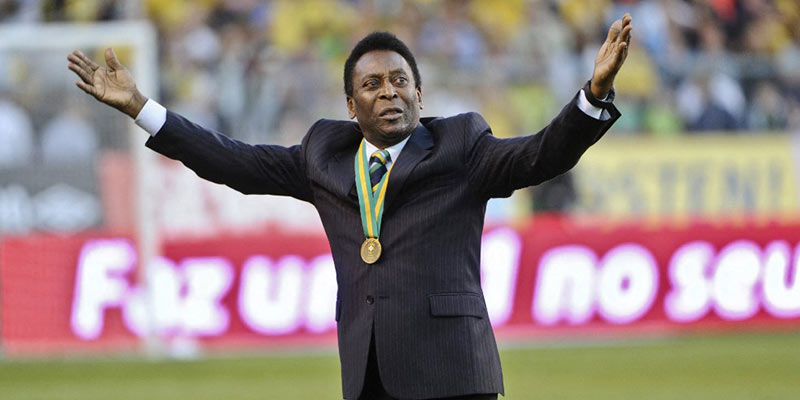
• Pele, the Brazilian king of football who won a record three World Cups and became one of the most commanding sports figures of the last century, died on December 29. He was 82.
• Widely regarded as one of football’s greatest players, Pele spent nearly two decades enchanting fans and dazzling opponents as the game’s most prolific scorer with Brazilian club Santos and the Brazil national team.
• Pele took home three World Cup winner’s medals, the first time as a 17-year-old in Sweden in 1958, the second in Chile four years later — even though he missed most of the tournament due to injury — and the third in Mexico in 1970.
• His grace, athleticism and mesmerising moves transfixed players and fans. He orchestrated a fast, fluid style that revolutionised the sport.
• He carried Brazil to footballing heights and became a global ambassador for his sport in a journey that began on the streets of Sao Paulo state, where he would kick a sock stuffed with newspapers or rags.
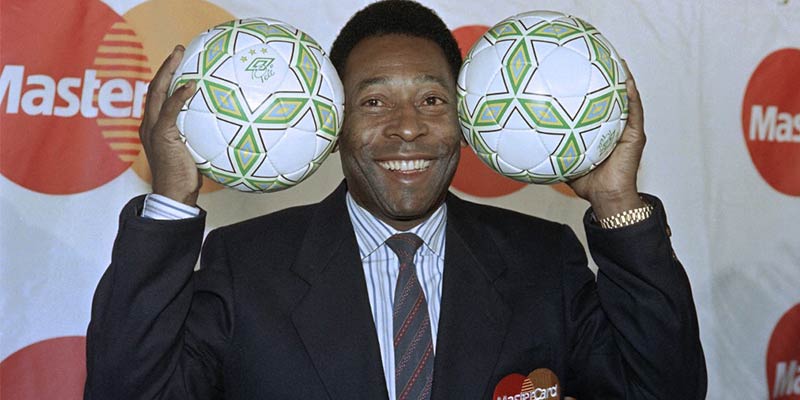
The rise of “The King”
• Born Edson Arantes do Nascimento, in the small city of Tres Coracoes in the interior of Minas Gerais state on October 23, 1940, Pele grew up shining shoes to buy his modest football gear.
• Pele’s talent drew attention when he was 11, and a local professional player brought him to Santos’s youth squads. It didn’t take long for him to make it to the senior squad.
• Despite his youth and 5-foot-8 frame, he scored against grown men with the same ease he displayed against friends back home. He debuted with the Brazilian club at 16 in 1956, and the club quickly gained recognition.
• The legendary Brazilian soccer player rose from barefoot poverty to become one of the greatest and best-known athletes in modern history.
• The player who would be dubbed “The King” was introduced to the world at 17 at the 1958 World Cup in Sweden, the youngest player ever at the tournament. He was carried off the field on teammates’ shoulders after scoring two goals in Brazil’s 5-2 victory over the host country in the final.
• Injury limited him to just two games when Brazil retained the world title in 1962, but Pele was the emblem of his country’s World Cup triumph of 1970 in Mexico.
• The image of Pele in a bright, yellow Brazil jersey, with the No. 10 stamped on the back, remains alive with fans everywhere.
• In addition to a host of regional and national titles, Pele won two Copa Libertadores, the South American equivalent of the Champions League, and two Intercontinental Cups, the annual tournament held between the best teams in Europe and South America.
• Pele’s fame was such that in 1967 factions of a civil war in Nigeria agreed to a brief ceasefire so he could play an exhibition match in the country. He was knighted by Britain's Queen Elizabeth II in 1997.
• On the field, Pele’s energy, vision and imagination drove a gifted Brazilian national team with a fast, fluid style of play that exemplified “O Jogo Bonito” — Portuguese for “The Beautiful Game”. His 1977 autobiography, “My Life and the Beautiful Game,” made the phrase part of football’s lexicon.
• Pele ended his career on October 1, 1977, in an exhibition between the Cosmos and Santos before a crowd in New Jersey of some 77,000.
• Pele was named “Athlete of the Century” by the International Olympic Committee, co-“Football Player of the Century” by world soccer body FIFA, and a “national treasure” by Brazil’s government.
• Pele’s life after football took many forms. He was a politician — Brazil’s Minister for Sport — and an ambassador for UNESCO and the United Nations.
Manorama Yearbook app is now available on Google Play Store and iOS App Store