
- World
- May 02
WFP resumes operations in Sudan
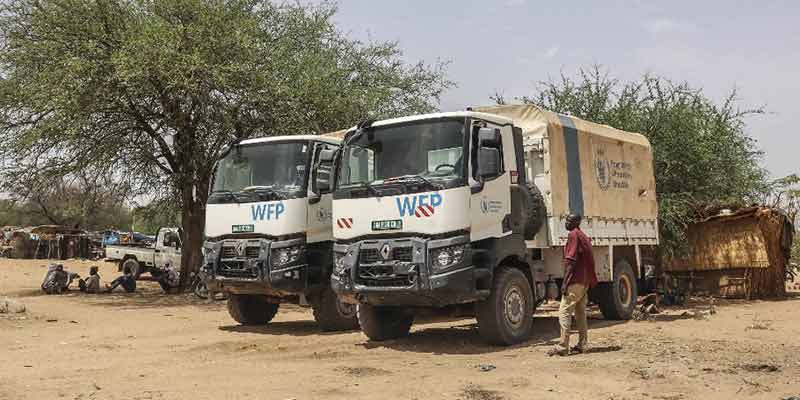
• The World Food Programme (WFP) has lifted a temporary suspension of operations in Sudan as fighting between rival military groups pushes millions into hunger.
• WFP had paused its life-saving activities after three staff were killed in North Darfur on April 15, the first day of clashes between the Sudanese army and the rival Rapid Security Forces (RSF).
• Hundreds of people have been killed since the fighting erupted. Tens of thousands have fled to safety, both inside and outside Sudan, while millions more have been confined to their homes, unable to access basic services.
• With a population of 46 million, Sudan is the third most populous country in Africa.
• The regional spillover effect of the conflict remains a serious concern. The fighting has displaced Sudanese citizens but also South Sudan refugees and third country nationals living in the country.
• The UN refugee agency (UNHCR) estimates that some 73,000 people have already fled to neighbouring countries such as Chad, Egypt, South Sudan, the Central African Republic, Ethiopia and Eritrea.
World Food Programme
• The World Food Programme (WFP) is a UN agency saving lives and changing lives, delivering food assistance in emergencies and working with communities to improve nutrition and build resilience.
• The WFP’s efforts focus on emergency assistance, relief and rehabilitation, development aid and special operations. Two-thirds of its work is in conflict-affected countries where people are three times more likely to be undernourished than those living in countries without conflict.
• On any given day, WFP has 5,600 trucks, 30 ships and nearly 100 planes on the move, delivering food and other assistance to those in most need.
• In 2022, WFP assisted about 158 million people, a historic high.
• The WFP was introduced in 1961 after the 1960 Food and Agriculture Organization (FAO) Conference, when George McGovern, director of the US Food for Peace Programmes, proposed establishing a multilateral food aid programme. The WFP was formally established in 1963 by the FAO and the UN General Assembly on a three-year experimental basis. In 1965, the programme was extended to a continuing basis.
• The headquarters of WFP is situated in Rome.
• It is governed by a 36-member executive board. It works closely with its two Rome-based sister organisations, the FAO of the United Nations and the International Fund for Agricultural Development.
• The WFP partners with more than 900 national and international NGOs to provide food assistance and tackle the underlying causes of hunger.
• The WFP raised a record $14.2 billion in contributions in 2022.
• It is the largest humanitarian organisation implementing school-feeding programmes worldwide and has been doing so for more than 50 years. In 2022, WFP had reached an estimated 19.6 million children through school feeding in 56 countries.
• In 2020, the WFP won the Nobel Peace Prize for its efforts to combat hunger, contribution to bettering conditions for peace in conflict-affected areas and acting as a driving force in efforts to prevent the use of hunger as a weapon of war and conflict.
• WFP has almost 21,000 staff worldwide, of whom over 90 percent are based in the countries where the agency provides assistance.
Manorama Yearbook app is now available on Google Play Store and iOS App Store