
- World
- Dec 20
UNSC agrees to early withdrawal of peacekeepers from Congo
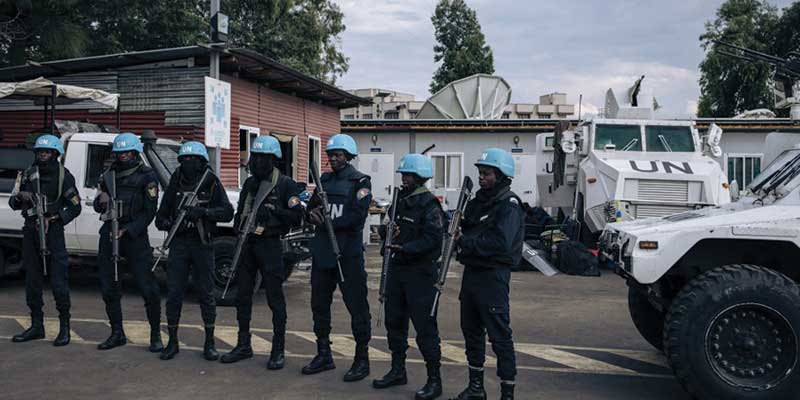
• The United Nations Security Council unanimously adopted a resolution starting to wind down its peacekeeping mission in the Democratic Republic of Congo (DRC).
• All 15 members voted in favour of the resolution.
• The United Nations Organisation Stabilisation Mission in the Democratic Republic of Congo (MONUSCO) took over from an earlier UN peacekeeping operation (MONUC) on July 1, 2010.
• MONUSCO had more than 12,300 troops and around 1,600 police deployed in Congo as of February 2023.
• The resolution adopted by the UNSC orders the gradual, responsible and sustainable withdrawal of the peacekeeping mission starting in South Kivu in eastern Congo, and the gradual handover of its responsibilities to the Congolese government.
• Democratic Republic of Congo President Felix Tshisekedi said in September at the UN General Assembly that he had asked his government to fast-track the withdrawal of the peacekeeping mission to ensure it begins at the end of the year.
A brief history of conflict in DRC
• Strategically located at the center of the African continent and sharing borders with nine countries, the DRC is the second largest country in Africa with the fourth largest population.
• DRC is endowed with exceptional natural resources, including minerals such as cobalt and copper, hydropower potential, significant arable land, immense biodiversity, and the world’s second-largest rainforest.
• Following the 1994 genocide in Rwanda and the establishment of a new government there, some 1.2 million Rwandese Hutus fled to the neighbouring Kivu regions of eastern DRC, formerly Zaire, an area inhabited by ethnic Tutsis and others.
• A rebellion began there in 1996, pitting the forces led by Laurent Desire Kabila against the army of President Mobutu Sese Seko. Kabila’s forces, aided by Rwanda and Uganda, took the capital city of Kinshasa in 1997 and renamed the country the Democratic Republic of the Congo (DRC).
• In 1998, a rebellion against the Kabila government started in the Kivu regions. Within weeks, the rebels had seized large areas of the country. Angola, Chad, Namibia and Zimbabwe promised President Kabila military support, but the rebels maintained their grip on the eastern regions. Rwanda and Uganda supported the rebel movement, the Congolese Rally for Democracy (RCD).
• The UN Security Council called for a ceasefire and the withdrawal of foreign forces, and urged states not to interfere in the country’s internal affairs.
• Following the signing of the Lusaka Ceasefire Agreement in July 1999 between the DRC and five regional States (Angola, Namibia, Rwanda, Uganda and Zimbabwe), the Security Council established the United Nations Organisation Mission in the Democratic Republic of the Congo (MONUC).
• The country’s first free and fair elections in 46 years were held on July 30, 2006, with voters electing a 500-seat National Assembly.
• Following the elections, MONUC remained on the ground and continued to implement multiple political, military, rule of law and capacity-building tasks as mandated by the Security Council resolutions, including trying to resolve ongoing conflicts in a number of the DRC provinces.
• On July 1, 2010, the UN Security Council renamed MONUC the United Nations Organisation Stabilisation Mission in the Democratic Republic of the Congo (MONUSCO) to reflect the new phase reached in the country.
• The new mission was authorised to use all necessary means to carry out its mandate relating, among other things, to the protection of civilians, humanitarian personnel and human rights defenders under imminent threat of physical violence and to support the government of the DRC in its stabilisation and peace consolidation efforts.
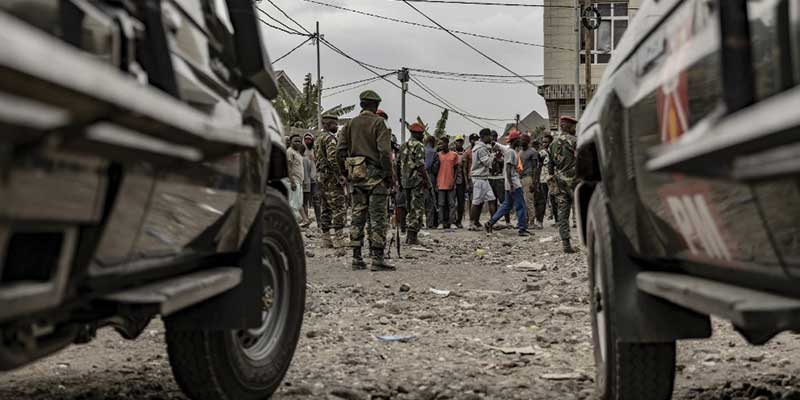
• But frustrated Congolese say that no one is protecting them from rebel attacks, leading to protests against the UN mission and others that have at times turned deadly.
• Frustrations against the mission were stoked by the resurgence last year of a rebel group known as the M23 in Congo’s rebel-plagued east, which has displaced thousands.
• Eastern Congo has long been overrun by dozens of armed groups seeking a share of the region’s gold and other resources. Some have been quietly backed by Congo's neighbours.
• A record 6.9 million people have been displaced by conflict across Congo, making it one of the world’s largest displacement and humanitarian crises, the International Organisation for Migration (IOM) said in October 2023.
• Years of rebel conflict and recurrent natural disasters have fuelled one of the largest humanitarian crises in the world.
• With ongoing conflict and escalating violence, the DRC is facing one of the largest internal displacement and humanitarian crises in the world.
Manorama Yearbook app is now available on Google Play Store and iOS App Store