
- World
- May 07
It could take 14 years to make Gaza safe from unexploded bombs
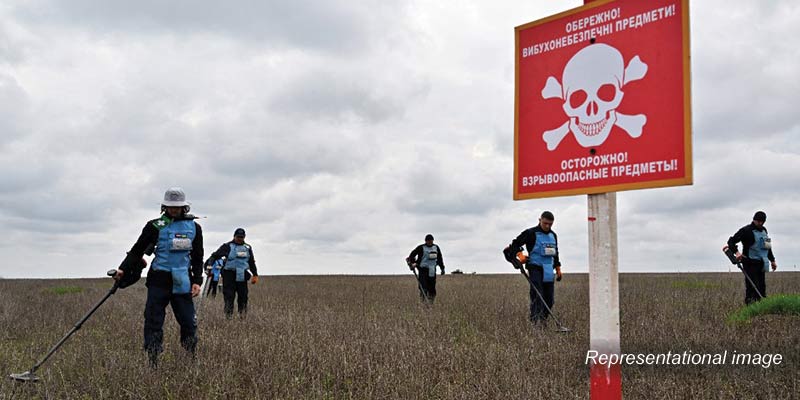
• UN mine action experts warned that even when current hostilities end, the risk remains lethally high for civilians in Gaza from unexploded weapons and contaminated rubble throughout the devastated enclave.
• The officials of the UN Mine Action Service (UNMAS) said the war has already left behind around 37 million tonnes of debris, and it could take 14 years to make Gaza safe from unexploded bombs.
• Every square metre in Gaza impacted by the conflict contains some 200 kilograms of rubble.
• The development comes amid reports that at least two individuals suffered serious injuries in Gaza after opening tin cans initially misidentified as booby-trapped food, but which in fact contained fuses for mines.
• It is these devices that the Israeli military have been using to detonate larger explosive charges to destroy tunnels and demolish buildings allegedly connected to Hamas militants.
• To the inexperienced eye, the metal cans appear harmless. The problems begin when they are opened using the old-fashioned ring-pull provided.
• The fuses are not dangerous if they are handled by a qualified person due to safe to arm features. However, when taken out of the tin and messed with by individuals not understanding what they are and their purpose it can and will lead to arming and functioning of the fuse, causing serious injury.
• Although many Gazans who have been uprooted several times by almost seven months of war are well aware today of the need to stick to relatively safe evacuation corridors to protect themselves, it’s when the hostilities finally end and they go home to start clearing their land that the dangers will become apparent.
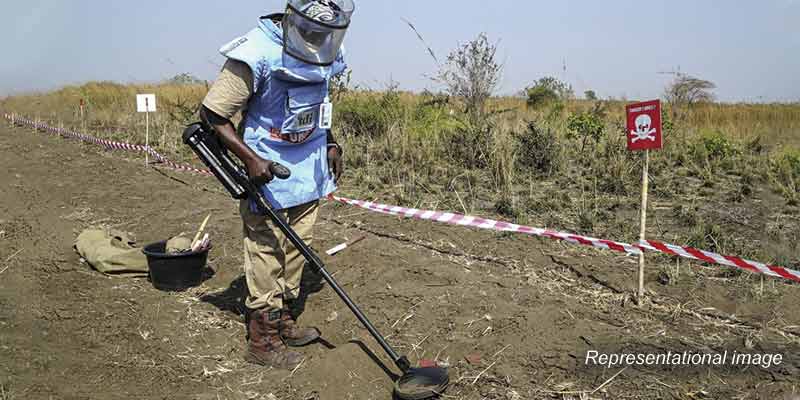
United Nations Mine Action Service (UNMAS)
• The United Nations Mine Action Service (UNMAS) was established in 1997.
• It works to eliminate the threat posed by mines, explosive remnants of war and improvised explosive devices by coordinating United Nations mine action, leading operational responses at the country level, and in support of peace operations, as well as through the development of standards, policies and norms.
• For over 25 years, the work of UNMAS has been driven by the needs of affected people and tailored to the threat of explosive hazards faced by civilians, peacekeepers and humanitarians.
• UNMAS works to save lives, to facilitate deployment of UN missions and the delivery of humanitarian assistance, to protect civilians, to support the voluntary return of the internally displaced and refugees, to enable humanitarian and recovery activities and to advocate for international humanitarian and human rights law.
• As a specialised service of the United Nations located within the Department of Peace Operations, UNMAS operates under UN legislative mandates of both the General Assembly and the Security Council.
• UNMAS also responds to specific requests for support from the UN Secretary-General or designated official.
• It collaborates with 11 other UN departments, agencies, programmes and funds to ensure an effective, proactive and coordinated response to the problems of landmines and explosive remnants of war.
• UNMAS is mandated to coordinate the mine action work of the United Nations system as Chair of the Inter-Agency Coordination Group on Mine Action (IACG-MA) and its subsidiary groups.
• It is also the global lead for the Mine Action Area of Responsibility within the Global Protection Cluster, the Chair of the International Mine Action Standards (IMAS) Review Board and its Steering Committee and leads the United Nations Coordinating Task Force on a Whole-of-System Approach to IEDs, consistent with the Disarmament Agenda of the Secretary-General.
• UNMAS supports the entire UN system through a small team at headquarters, a humanitarian hub in Geneva, and some 3,000 women and men employed through UNMAS funding in the field.
• It is a specialised, agile organisation, which delivers concrete results in dynamic operating environments across the world. UNMAS approach is needs-driven and people-centred, guided by humanitarian principles.
• UNMAS provides direct support and assistance to 19 countries/territories/missions including Abyei (UNISFA), Afghanistan, Burkina Faso, Central African Republic (MINUSCA), Colombia, Cyprus (UNFICYP), Congo (MONUSCO), Ethiopia, Iraq, Lebanon (UNIFIL), Libya (UNSMIL), Nigeria, Palestine, Somalia (UNSOM & UNSOS), South Sudan (UNMISS), Sudan (UNITAMS), Syria, Western Sahara (MINURSO), and Yemen as well as rapid response and technical support.
International Day for Mine Awareness and Assistance in Mine Action
• The International Day for Mine Awareness and Assistance in Mine Action is commemorated on April 4 every year.
• On this day, the UN reaffirms its commitment to a world free from the threat of mines, explosive remnants of war (ERW), including cluster munitions, and improvised explosive devices (IEDs).
The rising threat posed by IEDs
• Mines, explosive remnants of war, and improvised explosive devices (IEDs) continue to cause death and injury, especially in situations of armed conflict.
• On average, one person is killed or injured by such an explosive device every hour. Many children are among the victims.
• The use of IEDs has expanded, terrorising civilians and threatening humanitarian actors and United Nations missions and personnel.
• IED is a device placed or fabricated in an improvised manner incorporating destructive, lethal, noxious, pyrotechnic or incendiary chemicals and designed to destroy, incapacitate, harass or distract.
• The rise in conflicts typified by asymmetric warfare and the increased use of IEDs is widespread.
• Explosive ordnance and IEDs affected at least 50 different countries and territories and all continents except Antarctica, resulting in over 170,000 casualties over the last decade.
• IEDs are predominantly used by non-state actors and usually disproportionately affect civilian populations, who account for 80 per cent of IED-related casualties.
• IEDs are designed to create maximum casualties and to impede political or social processes. The design, size and methods of emplacement are varied and continue to evolve to circumvent the counter-measures adopted to locate and mitigate these insidious devices.
• Access to the technology and components for their construction is easily shared across borders at the speed of the Internet.
• They are inexpensive to fabricate and simple to produce using unsecured military munitions or easily available precursors that have legitimate dual uses, such as chemicals used for agricultural purposes.
Manorama Yearbook app is now available on Google Play Store and iOS App Store