
- World
- Sep 16
- Kevin Savio Antony
Ozone pollution reduces yearly tropical forest growth
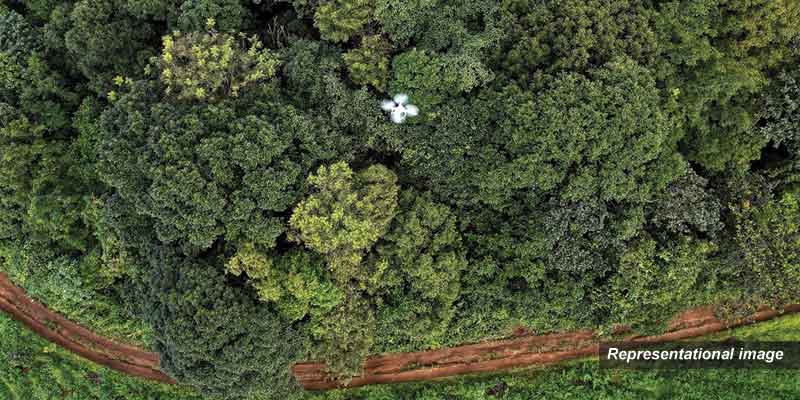
• Ozone pollution is stunting the growth of tropical forests, with the effect being stronger in Asia, where such forests are losing nearly 11 per cent of new growth, research has found.
• Air quality will continue to play an important, yet often overlooked, part in how forests absorb and store carbon, according to lead author Flossie Brown, a recent graduate of the University of Exeter.
Key findings:
• While ozone in the upper layers of the Earth’s atmosphere protects people from harmful ultraviolet radiations from the Sun, ozone closer to the ground level is harmful to plant and human health. The gas is formed when pollutants from human activities combine in the presence of sunlight.
• The researchers explained that urbanisation, industrialisation and burning fossil fuels and fires have resulted in an increase in ‘precursor’ gases, such as nitrogen oxides, that form ozone.
• The team found that ozone at the ground level can stunt new growth in tropical forests by over five per cent, translating into an estimated 290 million tonnes of uncaptured carbon every year since 2000.
• Tropical forests are vital ‘carbon sinks’, which capture and store carbon dioxide, an important greenhouse gas driving climate change.
• Furthermore, this impact (due to ozone pollution) shows a great deal of geographic variation, from a decrease of 1.5 per cent in Central Africa to 10.9 per cent in Asian tropical forests.
• The ozone has prevented the capture of 290 million tonnes of carbon per year since 2000. The resulting cumulative loss equates to a 17 per cent reduction in carbon removal by tropical forests so far this century.
• Under a warming climate, an increase in ozone levels across the tropics is expected due to an increase in ‘precursor’ emissions.
Tropical Forests
• Tropical forests are among the most diverse and vital ecosystems on Earth, predominantly located in the regions surrounding the equator.
• Covering around 6 per cent of Earth’s land surface, these forests are distinguished by their dense upper canopy of broad-leaved trees and the ability to support an incredibly diverse range of plant and animal life.
Key features of tropical forests:
• Over 50 per cent of the world’s plant and animal species are found in tropical forests.
• The dense upper canopy forms a layered ecosystem, offering habitats for many species.
• Nutrients decompose rapidly and are quickly recycled, making the soil relatively poor in long-term nutrients.
Types of tropical forests:
Tropical Rainforests:
• Found in regions with high temperatures and annual rainfall between 1,800 to 2,500 mm.
• Rainfall is evenly distributed throughout the year, creating lush, evergreen vegetation.
• These forests are the quintessential rainforests found in the Amazon, Congo Basin, and Southeast Asia.
Tropical Deciduous Forests:
• Occur in hot climates with seasonal rainfall, receiving between 800 and 1,800 mm annually.
• They experience a distinct dry season, during which many trees shed their leaves to conserve water.
Geographic Distribution:
• Brazil is home to the largest area of tropical forests, including two-thirds of the Amazon rainforest, making it a critical hub for global biodiversity.
• Other countries with vast tropical forest coverage include the Democratic Republic of the Congo, Indonesia, Peru, and Colombia.
• Additional countries with significant tropical rainforests include Cameroon, Malaysia, Papua New Guinea, India, Venezuela, and Mexico.
Environmental Importance:
• Tropical forests are vital to the Earth’s water cycle, helping to regulate humidity and precipitation.
• They act as major carbon sinks, storing about 25 per cent of all terrestrial carbon. This makes them crucial in mitigating the impacts of climate change.
(The author is a trainer for Civil Services aspirants.)