
- World
- Apr 30
Ongoing aftershocks spread fear in Myanmar
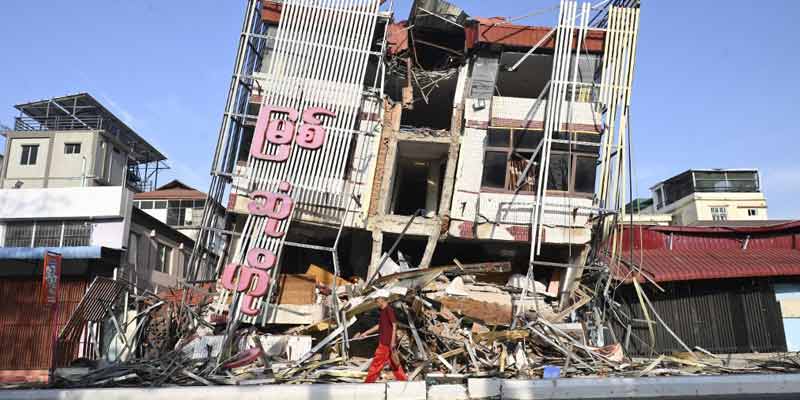
• Aftershocks continue to sow fear across Myanmar, where millions remain in desperate need of humanitarian aid a full month since a 7.7 magnitude earthquake killed more than 3,800 people and injured 5,100.
• On March 28, a major 7.7 magnitude earthquake struck near Mandalay, Myanmar.
• More than 140 aftershocks have rocked the region since the initial tremors, exacerbating the psychological toll, particularly on children and displaced families.
• Aid agencies warned that more than 6.3 million people remain in urgent need of support in the worst-affected central areas around Mandalay.
• In badly affected areas including Mandalay and Bago in the south of the country, some communities already suffered unprecedented floods last September. The earthquakes brought another wave of devastation.
• The latest aftershock struck on April 27 and measured 4.4 on the Richter scale, said UN partner the International Federation of Red Cross and Red Crescent Societies (IFRC).
• People are forced to sleep outside, safe water is scarce, health services are disrupted, United Nations Office for the Coordination of Humanitarian Affairs (OCHA) said in an appeal for more support from the international community.
• While the attention of the international community has faded, dispossessed families still need help rebuilding their lives.
Foreshock, aftershock and swarms
• Foreshocks are earthquakes that precede larger earthquakes in the same location. An earthquake cannot be identified as a foreshock until after a larger earthquake in the same area occurs.
• Aftershocks are smaller earthquakes that occur in the same general area during the days to years following a larger event or mainshock. Aftershocks represent minor readjustments along the portion of a fault that slipped at the time of the mainshock. Aftershocks become less frequent with time, although they can continue for days, weeks, months, or even years for a very large mainshock.
• A swarm is a sequence of mostly small earthquakes with no identifiable mainshock. Swarms are usually short-lived, but they can continue for days, weeks, or sometimes even months. They often recur at the same locations. Most swarms are associated with geothermal activity.
Manorama Yearbook app is now available on Google Play Store and iOS App Store