
- World
- Jul 14
Explainer - FAO’s Globally Important Agricultural Heritage Systems
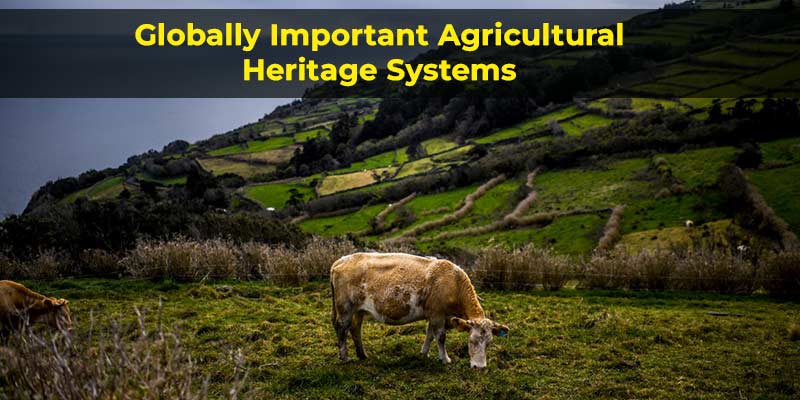
• An integrated mountain agropastoral system in Tajikistan has become the first Central Asian addition to the Globally Important Agricultural Heritage Systems.
• A pine tree agroforestry system and traditional bamboo and fishery system in South Korea and an agrosilvopastoral system in Portugal were also recognised.
• The systems were formally designated under FAO’s flagship programme during a meeting of the GIAHS Scientific Advisory Group held in July.
• The newest additions bring FAO’s worldwide agricultural heritage network to 99 systems in 29 countries around the globe.
• Along with the first for Tajikistan, the newly designated systems take the number in South Korea to nine and in Portugal to two.
• With rising interest from across the globe the GIAHS designations are set to exceed 100 by the time a Certificate Award Ceremony will take place on October 31 in the context of FAO’s 80th anniversary celebrations.
Four new sites added to the list:
i) Uljin Pinetree Agroforestry System, South Korea: Farming communities in this eastern area of the country have developed a unique pine-based agroforestry system adapted to mountainous terrain and coastal climates. For generations, red pine forests (Pinus densiflora) have been co-managed with beekeeping, mushroom foraging, dryland farming, and traditional salt production. Its pine forests support over 300 species, including wild edible plants, fungi, and pollinators vital to ecosystem health. The forest structure protects against erosion, regulates microclimates, and stabilises mountain slopes.
ii) Traditional Jukbangryeom Fishery System in Jijok Straits, South Korea: In the tidal waters of Korea’s Jijok Straits, the Jukbangryeom system uses bamboo fish weirs to harvest anchovy without fuel, bycatch, or habitat damage. Practised for centuries, it reflects traditional ecological knowledge and a semi-agricultural coastal lifestyle. Local fishers use a passive trap system with fixed structures placed perpendicular to tidal flow to guide fish into holding chambers. The technique, involving high selectivity, has a history of at least 500 years of documented use.
iii) Montado Agrosilvopastoral System of the Serpa Hills, Portugal: The Montado da Serra de Serpa, located in southern Portugal, stands out as one of Europe’s oldest agrosilvopastoral (it integrates trees, crops, and livestock on the same land area) systems, where cork and holm oak woodlands are managed with remarkable ecological awareness. Through low-intensity and extensive grazing, dryland farming, and forest stewardship, communities have shaped a multifunctional landscape that conserves biodiversity, sustains rural economies and embodies a Mediterranean model of climate resilience and land restoration.
iv) Almosi Valley, Tajikistan: This integrated agropastoral system combines seasonal transhumance of sheep with the cultivation of grapes, cereals, orchards, and vegetables across harsh mountain landscapes. Shaped over centuries, it supports food and livelihood security, conserves agrobiodiversity, and preserves cultural heritage. Rooted in ancestral knowledge, it sustains resilient communities facing soil erosion, water scarcity, and climate variability.
Globally Important Agricultural Heritage Systems
• The UN’s Food and Agriculture Organisation (FAO) launched the GIAHS programme at the World Summit for Sustainable Development in 2002 in response to global threats to family farming and traditional agricultural systems, such as climate change, community displacements and biodiversity loss.
• Aiming to strike a balance between conservation, sustainable adaptation and socioeconomic development, the programme helps to mitigate the threats faced by farmers while enhancing the benefits of farming systems.
• Using a multistakeholder approach, GIAHS provides technical assistance, promotes the value of traditional agricultural knowledge and stimulates markets for agricultural products, agrotourism and other market opportunities.
• Agricultural communities have developed ingenious systems which optimize the utilisation of resources while respecting, safeguarding and protecting them from exploitation.
• In response to local challenges, communities have developed sustainable farming systems by conserving and using traditional knowledge, biodiversity and landscapes, while supporting their livelihoods and food security.
• GIAHS represent a pool of knowledge and practices that can provide solutions to current global issues and challenges and also contribute to achieving the objectives of the 2030 Agenda for Sustainable Development.
• For over two decades, the GIAHS programme has assisted farming communities to safeguard traditional agricultural systems and associated landscapes, agricultural biodiversity, knowledge systems and cultures.
• The FAO has designated 99 systems in 29 countries as agricultural heritage sites.
GIAHS sites in India
i) Koraput Traditional Agriculture, Odisha.
ii) Kuttanad Below Sea Level Farming System, Kerala.
iii) Saffron Heritage of Kashmir.
Manorama Yearbook app is now available on Google Play Store and iOS App Store