
- World
- Nov 08
- Sreesha V.M
FAO Food Price Index declines in October
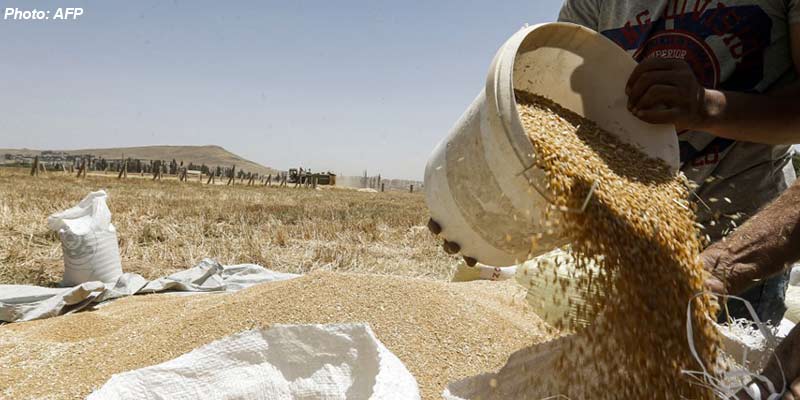
• World food commodity prices generally declined in October, driven largely by ample global supplies, according to the benchmark measure released by the Food and Agriculture Organisation of the United Nations (FAO) on November 7.
• The FAO Food Price Index, which tracks monthly changes in the international prices of a set of globally-traded food commodities, averaged 126.4 points in October, down 1.6 per cent from its revised September level.
• Lower price indices for cereals, dairy products, meat and sugar outweighed an increase in the vegetable oil index.
• Overall, the FFPI was slightly below its October 2024 level and remained 33.8 points (21.1 per cent) lower than its peak in March 2022.
• The FAO Food Price Index (FFPI) is a measure of the monthly change in international prices of a basket of food commodities.
• It consists of the average of five commodity group price indices weighted by the average export shares of each of the groups over 2014-2016.
• The FAO Cereal Price Index declined by 1.3 per cent from September, with declines recorded across all the major cereals.
• The FAO Meat Price Index declined by 2 per cent in the month, led by sharp drops in pig and poultry prices. Bovine meat prices, however, continued to rise, driven by higher quotations from Australia due to firm global demand.
• The FAO Dairy Price Index declined by 3.4 per cent in October, led by a sharp decline in butter quotations tied to ample export availability from the European Union and New Zealand. Milk powder quotations also fell, due to limited import demand and strong export competition.
• The FAO Sugar Price Index declined by 5.3 per cent from the previous month to its lowest level since December 2020, driven by strong production trends in Brazil and anticipated larger outputs in Thailand and India. Lower crude oil prices also exerted further downward pressure on world sugar prices through lower demand from the biofuel sector.
• The FAO Vegetable Oil Price Index moved against the overall downward trend, rising by 0.9 per cent in October to its highest level since July 2022. Quotations for palm, rapeseed, soy and sunflower oils all rose, due to a mix of factors including biofuel mandates and harvest delays in the Black Sea region.
New forecasts point to record cereal output and stocks
• FAO also released updated forecasts for global cereal markets. World cereal production is expected to rise by 4.4 percent in 2025 to reach 2,990 million tonnes, a new record level, with foreseen output increases across all major cereals.
• Based on the updated forecasts, global cereal stocks are predicted to expand by 5.7 per cent to a record high of 916.3 million tonnes.
• The resulting global cereal stocks-to-use ratio in 2025-26 is predicted to rise to 31.1 per cent, the highest level since 2017-18.
(The author is a trainer for Civil Services aspirants.)