
- World
- Nov 29
African Union suspends Guinea-Bissau after military coup
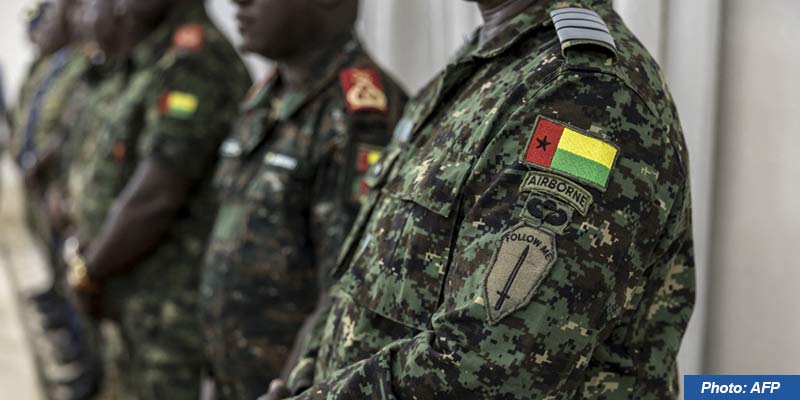
• The African Union suspended Guinea-Bissau following a military coup.
• In a resolution adopted by the AU Peace and Security Council, the organisation reiterated it has zero tolerance on unconstitutional changes of government and moved to immediately suspend the Republic of Guinea-Bissau from participating in all activities of the Union, its organs and institutions, until constitutional order is restored in the country.
• The West African regional bloc — Economic Community of West African States (ECOWAS) — also suspended Guinea-Bissau from its decision-making bodies until the constitutional order is restored.
• The military takeover came after presidential and legislative elections on November 23.
• Incumbent President Umaro Sissoco Embalo and opposition candidate Fernando Dias each claimed victory.
• Following the coup, the military high command in the West African nation inaugurated former army chief of staff, General Horta Inta-a, as the head of the military government, which will oversee a one-year transition period, according to a declaration broadcast on state television.
• The ousted President, Umaro Sissoco Embalo, later arrived in Senegal.
• The coup marks the latest military takeover in West and Central Africa, underscoring persistent regional instability.
• There are also fears of escalating rights violations following the coup, amid reports of politically motivated arrests and excessive use of force by the military.
• At least 18 people – including government officials, magistrates and opposition figures – have been arbitrarily detained, most reportedly held incommunicado.
• The United Nations has strongly condemned the military coup in Guinea-Bissau, warning that the overthrow of elected authorities just days after national elections represents a grave violation of constitutional order and democratic principles.
Key facts on Guinea-Bissau:
• Guinea-Bissau is a West African nation with a population of around 2.2 million.
• Located in the Sub-Sahel region, the country’s capital city is Bissau.
• It is one of the world’s poorest and most fragile countries.
• The country is known as a hub for drug trafficking between Latin America and Europe, a trend that experts say has fueled its political crises.
• It has experienced political instability and institutional and economic fragility since gaining independence in 1974 from Portugal.
• Guinea-Bissau’s coastal location presents opportunities to develop its fisheries sector, a cornerstone of its economy.
• Guinea-Bissau borders Senegal to the north and Guinea to the south, and its Atlantic Ocean coast features the Bijagos archipelago, with 88 islands. Despite its small size, Guinea-Bissau is home to a large variety of ethnic groups, languages, and religions.