
- World
- Dec 11
International Mountain Day
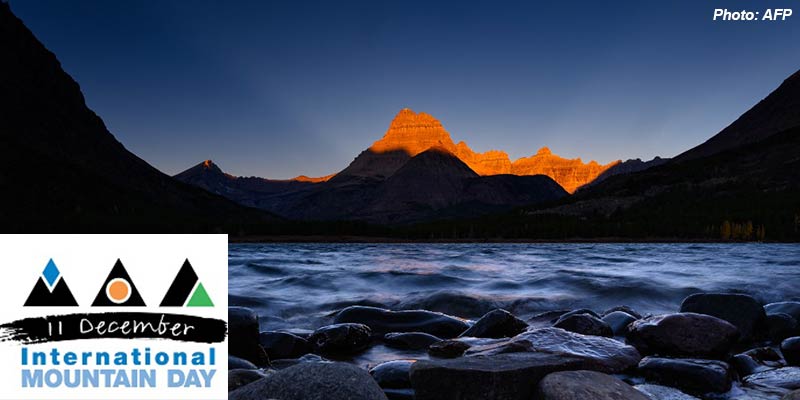
• The United Nations observes International Mountain Day on December 11.
• It is observed to create awareness about the importance of mountains to life, to highlight the opportunities and constraints in mountain development and to build alliances that will bring positive change to mountain peoples and environments around the world.
• The Food and Agriculture Organisation of the United Nations (FAO) is mandated to lead observance of it at the global level.
• This year’s theme “Glaciers matter for water, food and livelihoods in mountains and beyond”, highlights the critical role mountain regions play as a key source of global freshwater and calls for immediate measures to avoid the glaciers’ disappearance.
• Glaciers, vast reserves of ice and snow found across the planet, are far more than frozen landscapes — they are lifelines for ecosystems and communities.
• Yet, these critical components of the Earth’s systems are undergoing rapid and alarming transformations with profound consequences for us all.
• The United Nations General Assembly proclaimed 2025 as the International Year of Glaciers’ Preservation to raise awareness on the vital role glaciers, snow and ice play in the climate system and water cycle, as well as the far-reaching impacts of rapid glacial melt.
• It aims to promote global collaboration, strengthen scientific research, and promote policies and actions to protect glaciers and cryospheric systems.
• Glaciers and ice sheets hold around 70 per cent of the world’s freshwater.
• Their accelerated melting represents not only an environmental crisis, but a humanitarian one, threatening agriculture, clean energy, water security and billions of peoples’ lives.
• Their retreat, driven by rising global temperatures, is a stark indicator of the climate crisis.
• Melting glaciers and thawing permafrost increase risks such as floods, glacier lake outburst floods, landslides or enhanced erosion and sediment, endangering downstream populations and critical infrastructure.
• Economically, sectors like agriculture, hydropower, mountain tourism and transportation feel the strain of glacier changes.
• For many Indigenous Peoples, glaciers are sacred, and their disappearance signifies a loss of identity and connection to nature.
• Nearly 2 billion people depend on water from mountains for their essential daily needs, livelihoods and cultural practices.
• Five of the past six years have seen the most rapid glacier retreat on record. Some 600 glaciers have already disappeared and many more will vanish if temperatures continue to rise.
• Today over 15 million people globally are highly vulnerable to flooding from glacier lakes.