
- World
- Dec 11
WHO, European Commission ink deal to combat antimicrobial resistance
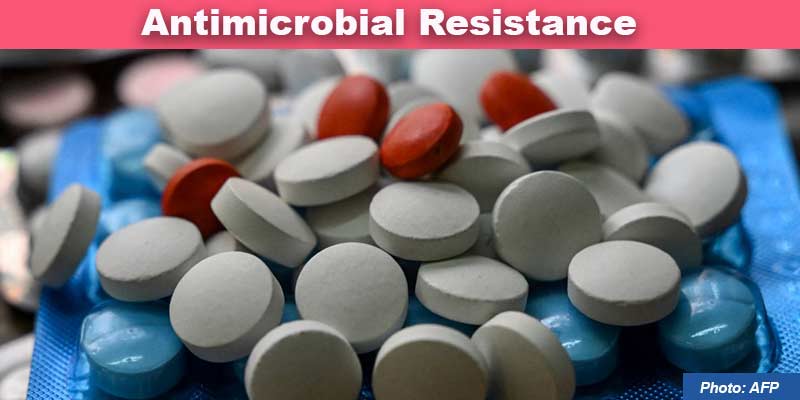
• The World Health Organisation (WHO) and the European Commission’s Health Emergency Preparedness Authority (HERA) have signed a €3.5 million agreement to expand their partnership to combat antimicrobial resistance under the EU4Health programme.
• Antimicrobial resistance is one of the most urgent threats to global health and security.
• Recognising AMR as a major and growing health threat, WHO and HERA first launched the partnership in 2022 to support the development of new medical countermeasures for tackling AMR and ensure their equitable access.
• Since then, the partnership has focused on advancing new antibiotics capable of combating the most dangerous drug-resistant pathogens.
• The new funding agreement will enable WHO to scale up work on research and development for new antibiotics, anti-fungals, and non-traditional therapies such as bacteriophages which use viruses to infect and kill bacteria.
What is antimicrobial resistance?
• Antimicrobials — including antibiotics, anti-virals, antifungals, and antiparasitics — are medicines used to prevent and treat infectious diseases in humans, animals and plants.
• Antimicrobial Resistance (AMR) occurs when bacteria, viruses, fungi and parasites no longer respond to antimicrobial medicines.
• As a result of drug resistance, antibiotics and other antimicrobial medicines become ineffective and infections become difficult or impossible to treat, increasing the risk of disease spread, severe illness, disability and death.
• AMR is a natural process that happens over time through genetic changes in pathogens. Its emergence and spread is accelerated by human activity, mainly the misuse and overuse of antimicrobials to treat, prevent or control infections in humans, animals and plants.
• Micro-organisms that develop antimicrobial resistance are sometimes referred to as “superbugs”.
• AMR threatens the very core of modern medicine and the sustainability of an effective, global public health response to the enduring threat from infectious diseases.
• AMR threatens the safety and effectiveness of procedures such as surgical interventions, cancer treatment, and organ transplants thereby having the potential to reverse the advancements made not just in modern medicine but also the growth and economy at the global and national levels.
• It is estimated that bacterial AMR was directly responsible for 1.27 million global deaths in 2019 and contributed to 4.95 million deaths.
• In addition to death and disability, AMR has significant economic costs. The World Bank estimates that AMR could result in $1 trillion additional healthcare costs by 2050, and $1 trillion to $3.4 trillion Gross Domestic Product (GDP) losses per year by 2030.
• Antimicrobial resistance is a drain on the global economy with economic losses due to reduced productivity caused by sickness (of both human beings and animals) and higher costs of treatment.
• Systematic misuse and overuse of these drugs in human medicine and food production have put every nation at risk. Few replacement products are in the pipeline.
• Without harmonised and immediate action on a global scale, the world is heading towards a post-antibiotic era in which common infections could once again kill.
• To counter it needs long-term investment, such as financial and technical support for developing countries and in development of new medicines, diagnostic tools, vaccines and other interventions, and in strengthening health systems to ensure more appropriate use of and access to antimicrobial agents.