
- World
- Feb 03
Is the world better prepared for next pandemic?
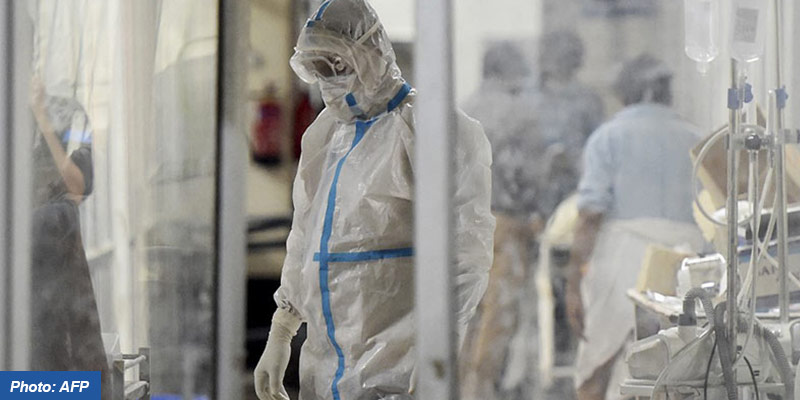
• Six years ago, the Director-General of the World Health Organisation sounded the highest global alarm available under international law at the time, declaring the outbreak of a new coronavirus disease (later known as COVID-19) a Public Health Emergency of International Concern (PHEIC).
• Cases of novel coronavirus (nCoV) were first detected in China in December 2019, with the virus spreading rapidly to other countries across the world.
• This led WHO to declare a PHEIC on January 30, 2020 and to characterise the outbreak as a pandemic on March 11, 2020.
• According to WHO data, COVID-19 has killed more than seven million people since the outbreak began in December 2019, with most deaths reported in the United States (1.2 million), Brazil (702,000), India (534,000) and Russia (403,000).
• While the PHEIC was declared over in May 2023, the impact of COVID-19 remains etched in our collective memory, and continues to be felt worldwide.
• In many ways, the world is better prepared because meaningful, concrete steps have been taken to strengthen preparedness.
• However, at the same time, the progress made is fragile and uneven, and more still needs to be done to keep humanity safe.
Progress since COVID-19
• The pandemic taught one important lesson — solidarity is the best immunity.
Applying lessons learned from COVID-19, WHO, Member States, and partners have delivered significant advances in pandemic preparedness, prevention and response, including:
i) The historic WHO Pandemic Agreement was adopted in May 2025, setting out a truly comprehensive approach to pandemic prevention, preparedness and response that improves both global health security and global health equity. Its conclusion demonstrated the strength of multilateralism. The Member States are now negotiating the Pathogen Access and Benefits Sharing (PABS) system annex to the WHO Pandemic Agreement ahead of this year’s World Health Assembly. Its adoption would open the Pandemic Agreement for signature, and entry into force as international law.
ii) Amendments to the International Health Regulations (IHR) to strengthen national capacities entered into force in September 2025.
iii) The Pandemic Fund, co-founded and implemented by WHO and the World Bank, has provided grant funding totalling over $1.2 billion in its first three rounds, which has helped catalyse an additional $11 billion that has so far supported 67 projects in 98 countries across six regions, to expand surveillance, lab networks, workforce training and multisectoral coordination.
iv) WHO’s Hub for Pandemic and Epidemic Intelligence launched a major update of the Epidemic Intelligence from Open Sources (EIOS) system, leveraging artificial intelligence (AI) to support more than 110 countries in identifying and reacting to new threats faster.
v) Genomic sequencing capacities globally have surged in recent years and through the International Pathogen Surveillance Network, more than 110 countries have strengthened genomic surveillance to track pathogens with epidemic and pandemic potential and accelerate preparedness and response actions.
vi) The WHO BioHub expanded as a trusted global mechanism, supported by 30 countries and territories, coordinating 25 sample shipments to 13 laboratories. Since launching in late 2020, the BioHub has acquired 34 variants of the following viruses: SARS-CoV-2; mpox clades Ia, Ib, IIb; the Oropouche virus; and MERS-CoV. Close to 80 laboratories from 30 countries across all WHO regions have engaged in the system by sharing and requesting biological materials.
vii) Global efforts to expand local, equitable development and production of vaccines, diagnostics and treatments have accelerated through initiatives including the mRNA technology transfer hub in Cape Town, its training centre in Seoul, and the Interim Medical Countermeasures Network.
viii) The Global Training Hub for Biomanufacturing, established by South Korea and WHO, is boosting workforce capacities in manufacturing high-quality vaccines and biologics. By providing training in this critical field, the aim is to increase equitable access to such products globally through expanded manufacturing capacity in low- and middle-income countries.
ix) The Global Health Emergency Corps was set up by WHO in 2023 in response to the gaps and challenges identified during the COVID-19 response. The Corps supports countries experiencing public health emergencies by assessing emergency workforce capacities, rapidly deploying surge support, and creating a network of emergency leaders from multiple countries to share best practices and coordinate responses.
x) The Universal Health and Preparedness Review (UHPR) continues to help countries identify gaps and strengthen accountability.
xi) As many as 121 countries have national public health agencies responsible for their health emergency prevention, preparedness, response and resilience efforts.
• These are remarkable achievements, reflecting a shared global commitment to work together across national borders, across sectors to never again face a pandemic unprepared and leave anyone behind.
• WHO Member States have taken decisions that have strengthened the world’s ability not only to respond more rapidly and to mitigate the impact of future pandemics but also to prevent them in the first place.
Ebola and Marburg outbreak responses
• Recent Ebola and Marburg outbreak responses show this progress clearly at national levels with support from WHO.
• Ebola, a disease that once had no vaccines, no rapid diagnostics, and limited treatment options — leading to catastrophic loss of life in West Africa 10 years ago — has since been transformed.
• The most recent outbreaks of Ebola in the Democratic Republic of the Congo and Marburg, in Rwanda, Tanzania and Ethiopia, were contained in a fraction of the time, with limited spread and lower case fatality rates.
• The responses to these outbreaks were led by national institutions, supported by WHO.
Challenges remain
• The past years have brought profound turbulence to global health.
• Funding continues to shift away from health toward defence and national security — placing at risk the very systems that were strengthened during COVID-19 to protect countries from future pandemics.
• WHO has warned that cuts to international aid and persistent funding gaps are undermining the global health system.
• The impact of workforce reductions in 2025 due to “significant cuts to funding”, had significant consequences.
• Sudden and severe cuts to bilateral aid have also caused huge disruptions to health systems and services in many countries.
• The funding crisis exposed deeper vulnerabilities in global health governance, particularly in low and middle-income countries struggling to maintain essential services.
• According to WHO, 4.6 billion people still lack access to essential health services, while 2.1 billion face financial hardship because of health costs.
• At the same time, the world faces a projected shortage of 11 million health workers by 2030, more than half of them nurses.
• Without sufficient financing, the world risks being less prepared for the next health emergency.
Measures taken by India to deal future pandemics
• The government of India has taken several initiatives through ‘whole-of-government’ approach during the COVID-19 pandemic to ensure effective management and availability of sufficient health care infrastructure to meet the increased demand during the pandemic.
• To strengthen the public health infrastructure and to effectively manage and respond towards any future pandemics and outbreaks, Pradhan Mantri-Ayushman Bharat Health Infrastructure Mission (PM-ABHIM) was launched on October 25, 2021 with an outlay of Rs 64,180 crore to be implemented over five years from 2021-22 to 2025-26, to fill critical gaps in health infrastructure, surveillance and health research — spanning both the urban and rural areas.
• It is a Centrally Sponsored Scheme.
• The measures under the scheme focus on developing capacities of health systems and institutions across the continuum of care at all levels — primary, secondary and tertiary and on preparing health systems in responding effectively to the current and future pandemics/disasters.