
- World
- Feb 04
What is the Culture of Peace?
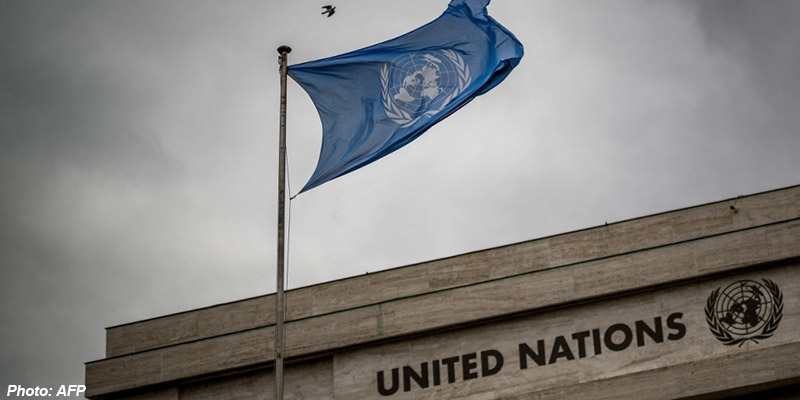
• The United Nations observes February 4 as ‘International Day of Human Fraternity’.
• The day reminds us that we belong to one human family: diverse in culture and belief; equal in dignity; stronger when we choose respect over suspicion.
• At a time of growing tensions and polarisation, human fraternity is a practical commitment to live together peacefully and to protect the rights and dignity of every person.
Background
• In 1999, The General-Assembly adopted the Declaration and Programme of Action on a Culture of Peace, which serves as the universal mandate for the international community, particularly the United Nations system, to promote a culture of peace and non-violence that benefits all of humanity, including future generations.
• The declaration came about as a result of the long-held and cherished concept — contained within the Constitution of UNESCO — that “since wars begin in the minds of men, it is in the minds of men that the defences of peace must be constructed”.
• The Declaration embraces the principle that peace is not merely the absence of conflict, but also requires a positive, dynamic participatory process, in which dialogue is encouraged and conflicts are resolved in a spirit of mutual understanding and cooperation.
• On October 20, 2010, a General Assembly resolution pointed out that mutual understanding and inter-religious dialogue constitute important dimensions of a culture of peace and established World Interfaith Harmony Week as a way to promote harmony between all people regardless of their faith.
• In December 2020, the UN General Assembly proclaimed February 4 as the International Day of Human Fraternity.
2026 Theme: Dialogue Over Division
• This year’s theme is ‘Dialogue Over Division’.
• Dialogue does not mean we must agree on everything. It means we listen with care, speak with responsibility, and recognise each other’s humanity. Especially when we feel afraid, angry or uncertain.
• It also means rejecting discrimination, racism, xenophobia, and hate speech.
• It means creating spaces — online and offline — where differences can be discussed without turning into harm.
• Human fraternity for peace and cooperation is grounded in a simple recognition: people of all religions and beliefs make a valuable and lasting contribution to humanity.
• Dialogue among religious and belief communities can deepen understanding and highlight shared values.
• Promoting awareness of different cultures, religions and beliefs helps foster tolerance that is rooted in respect, inclusion and acceptance of diversity, including the free expression of religious identity.
• Education plays a vital role in nurturing these principles and in preventing discrimination based on religion or belief.
• Tolerance, mutual respect and living well with differences are essential to human fraternity and social harmony, which is why inter-religious and intercultural dialogue matter at every level: global, regional, national and local.
What is the Culture of Peace?
A culture of peace is a set of values, attitudes, traditions, modes of behaviour and ways of life based on:
i) Respect for life, ending of violence and promotion and practice of non-violence through education, dialogue and cooperation.
ii) Full respect for the principles of sovereignty, territorial integrity and political independence of States and non-intervention in matters which are essentially within the domestic jurisdiction of any State, in accordance with the Charter of the United Nations and international law.
iii) Full respect for and promotion of all human rights and fundamental freedoms.
iv) Commitment to peaceful settlement of conflicts.
v) Efforts to meet the developmental and environmental needs of present and future generations.
vi) Respect for and promotion of the right to development.
vii) Respect for and promotion of equal rights and opportunities for women and men.
viii) Respect for and promotion of the right of everyone to freedom of expression, opinion and information.
ix) Adherence to the principles of freedom, justice, democracy, tolerance, solidarity, cooperation, pluralism, cultural diversity, dialogue and understanding at all levels of society and among nations; and fostered by an enabling national and international environment conducive to peace.