
- World
- Feb 10
UN observes ‘International Day of the Arabian Leopard’ on Feb 10
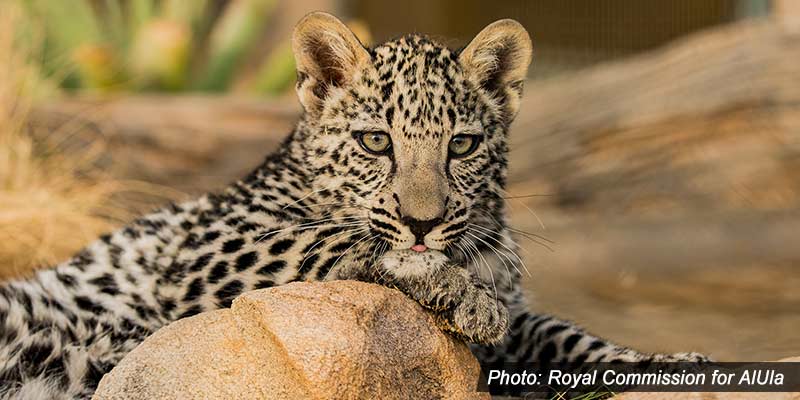
• The United Nations observes the ‘International Day of the Arabian Leopard’ on February 10.
• It aims to raise awareness about the critically endangered status of the Arabian leopard.
• In June 2023, the United Nations General Assembly unanimously passed a resolution designating February 10 as the ‘International Day of the Arabian Leopard’.
Arabian leopard
• The Arabian leopard (Panthera pardus nimr) is a critically endangered leopard sub-species that inhabits the Arabian Peninsula.
• It is one of the smallest leopard sub-species, with an average weight of 30-40 kg for males and 25-35 kg for females.
• Its fur is pale and buff-colored with rosettes that are small and closely spaced.
• The Arabian leopard has a very limited distribution, being found only in a few isolated pockets of habitat in Saudi Arabia, Oman, Yemen, and the United Arab Emirates.
• Estimates suggest there may be fewer than 200 Arabian leopards left in the wild.
• Arabian Leopard is classified as “Critically Endangered” by the International Union for Conservation of Nature (IUCN).
• Threats to the species include urbanisation, farming, overgrazing by livestock, poaching, and the illegal wildlife trade.
• The leopard has been listed in appendix I to the Convention on International Trade in Endangered Species (CITES) of Wild Fauna and Flora since 1975.
• The rapid disappearance of the Arabian leopard from large areas of its former range on the Arabian Peninsula represents a major setback for conservation of biodiversity and sustainability in the region.
• Conservation efforts focus on habitat protection, restoration of natural prey populations, and public education programmes to reduce human-leopard conflict.
• The Arabian leopard is legally protected across its range, but greater enforcement of laws and active management of surviving populations are needed to ensure the species’ survival.
• The UN seeks to restore the Arabian leopard as a flagship species for conservation and sustainability in its native region while emphasizing the critical role of biodiversity in maintaining the health and resilience of our planet’s ecosystems.